
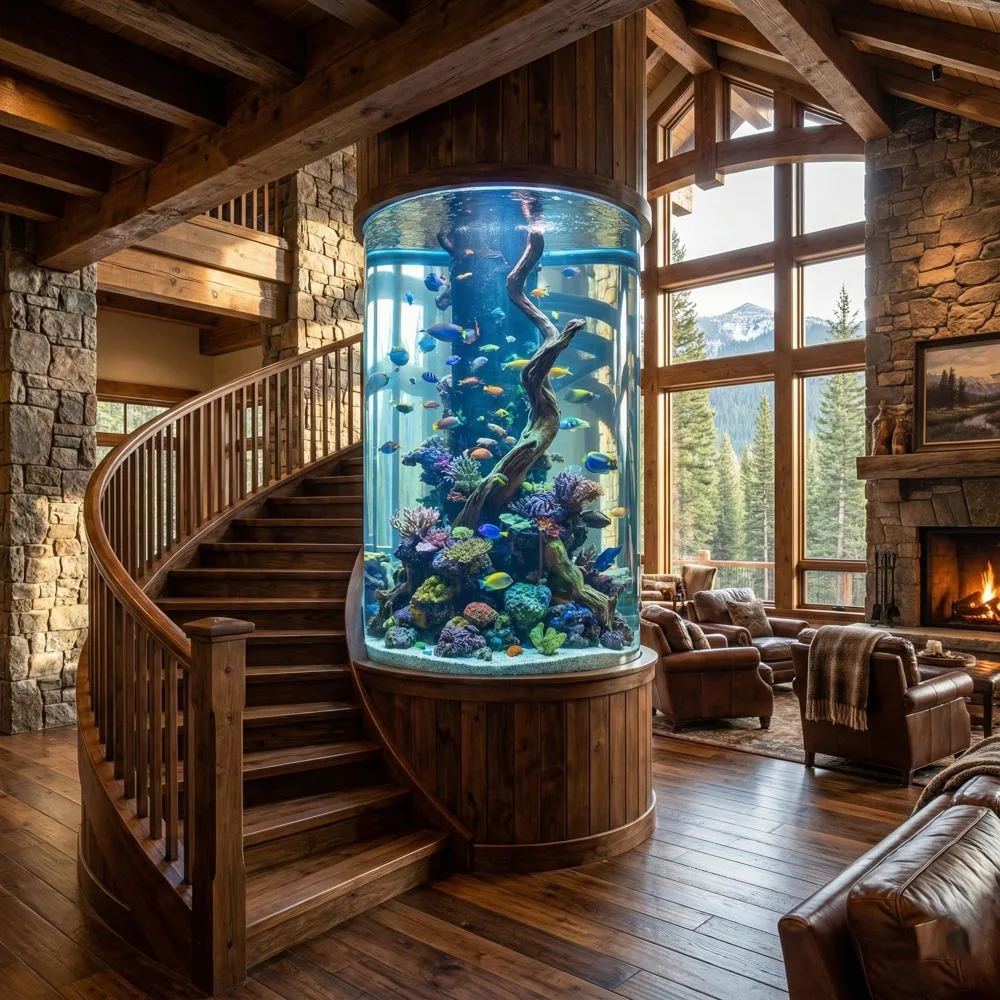
Walking up a staircase shouldn’t be just functional. It should be an experience. Imagine ascending through a tunnel of shimmering water, with colorful fish gliding past you on both sides, coral formations casting dancing shadows, and the gentle sound of bubbling water accompanying each step. This isn’t a scene from a luxury resort or high end hotel. It’s what you can create in your own home with an aquarium staircase.
The concept of integrating an aquarium into a staircase has captured the imagination of architects, interior designers, and homeowners who want something truly extraordinary. These installations have evolved from simple wall mounted tanks near stairs to fully integrated systems where the staircase literally passes through the aquarium environment. The result is a living sculpture that serves as both functional architecture and a constantly changing art installation.
What Makes an Aquarium Staircase So Special
An aquarium staircase represents the perfect marriage of form and function. Unlike traditional aquariums that sit against a wall or in a corner, a staircase aquarium becomes an integral part of your home’s structure. Every time you move between floors, you’re immersed in an underwater world. The aquarium doesn’t just occupy space; it defines and transforms it.
The psychological benefits are remarkable. Studies have shown that watching fish swim reduces stress, lowers blood pressure, and promotes a sense of calm. When you incorporate this into a daily activity like climbing stairs, you’re essentially building wellness into your home’s architecture. Children are naturally drawn to these installations, making the simple act of going upstairs an adventure rather than a chore.
From a design perspective, an aquarium staircase creates a stunning focal point that immediately elevates your home’s aesthetic. The play of light through water creates constantly shifting patterns on walls and ceilings. At night, strategic lighting can transform the space into something magical. The gentle movement of fish and plants provides visual interest that static artwork simply cannot match.
Different Types of Aquarium Staircase Designs
The Surrounding Wall Aquarium
The most common approach involves building aquarium walls on one or both sides of the staircase. These vertical tanks run parallel to the stairs, creating the sensation of walking through an underwater tunnel. The thickness of these walls typically ranges from twelve to thirty inches, depending on structural requirements and desired visual impact.
This design works exceptionally well in modern homes with open floor plans. The aquarium walls can serve as room dividers, providing privacy while maintaining visual connection between spaces. The transparent or semi transparent nature means natural light can filter through, reducing the need for artificial lighting during daytime hours.
The Cylinder Wrap Design
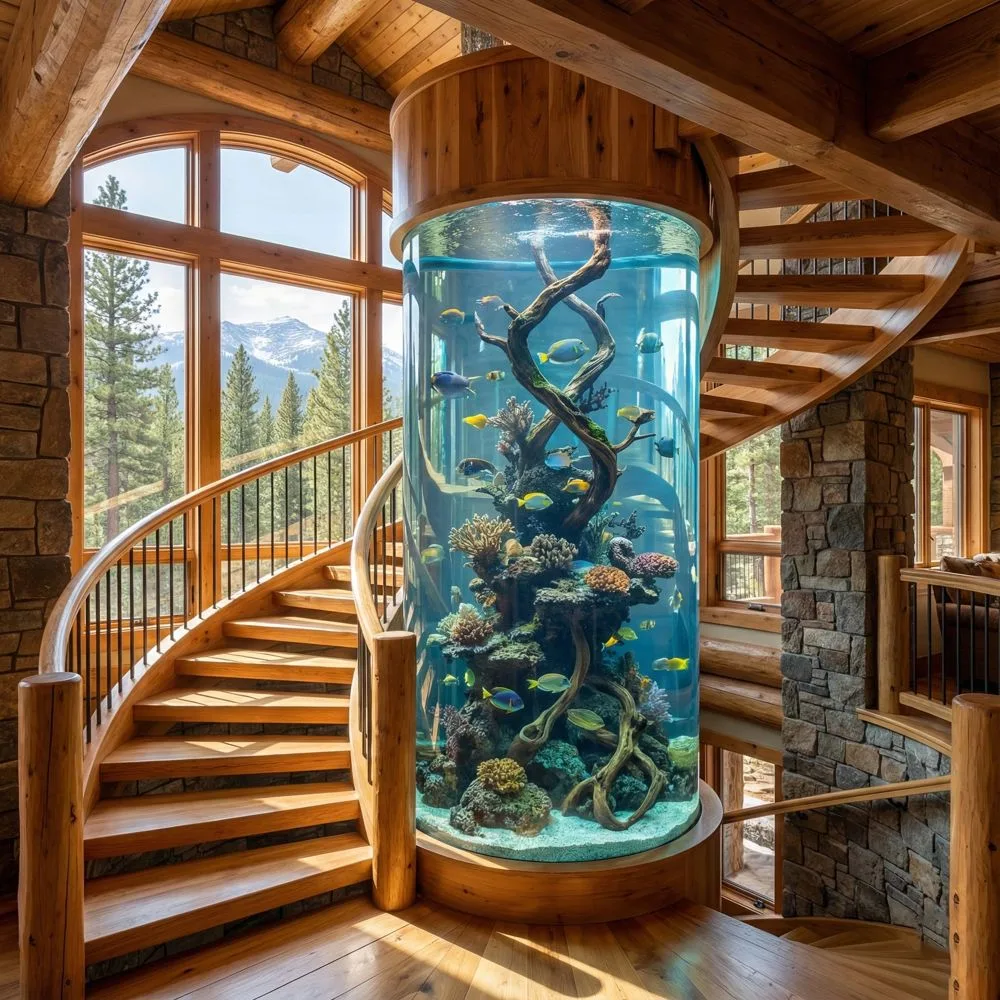
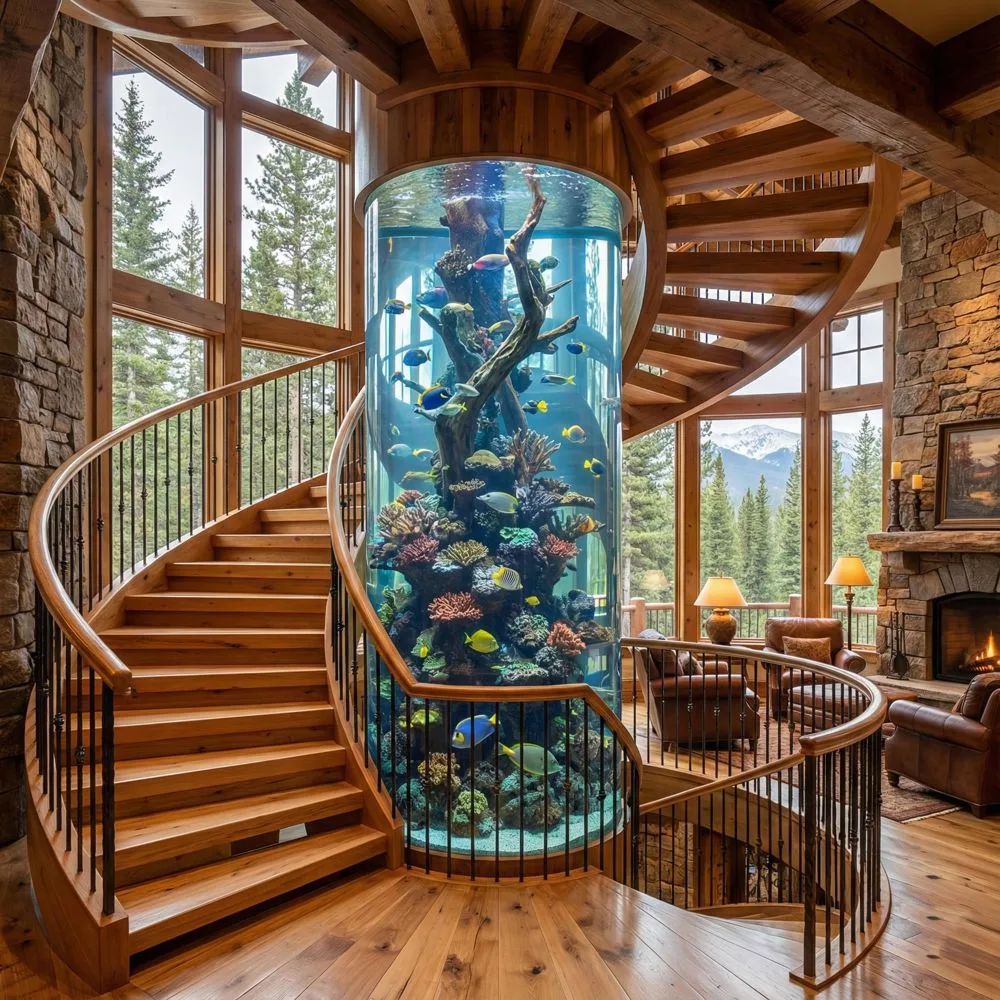
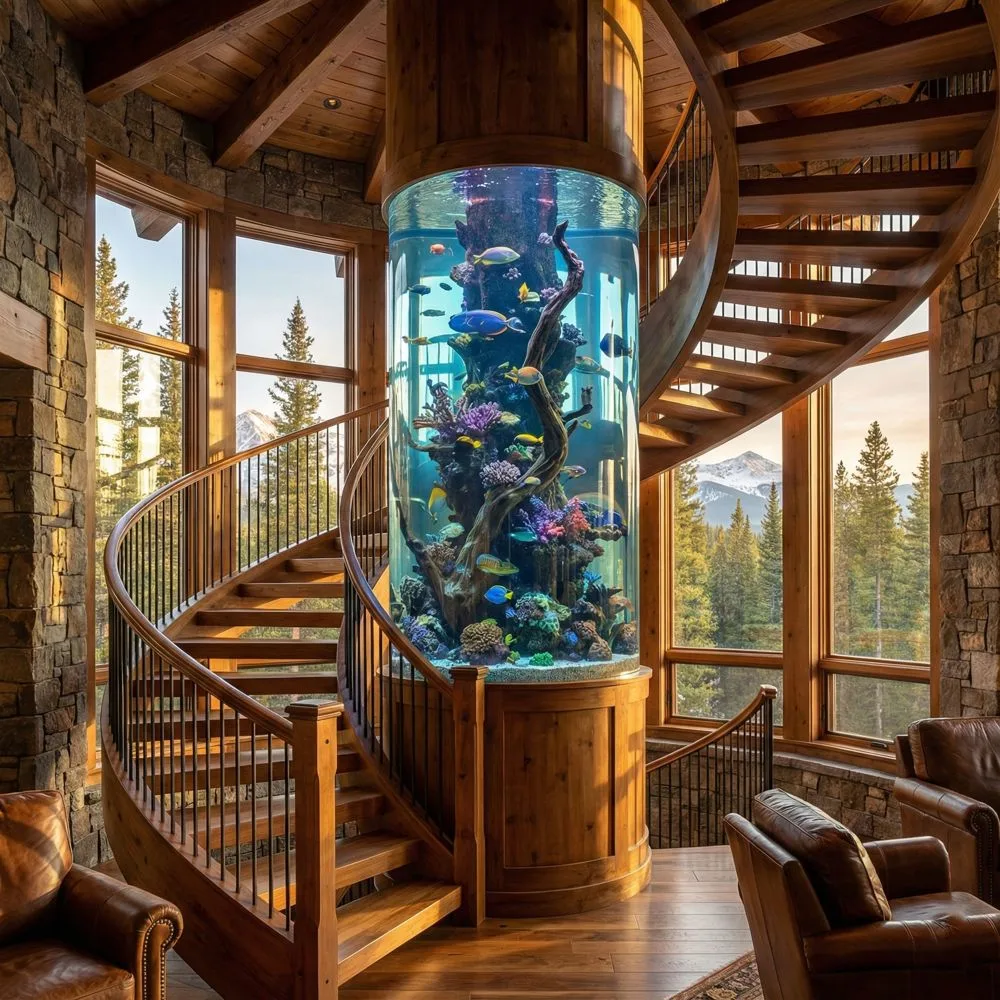
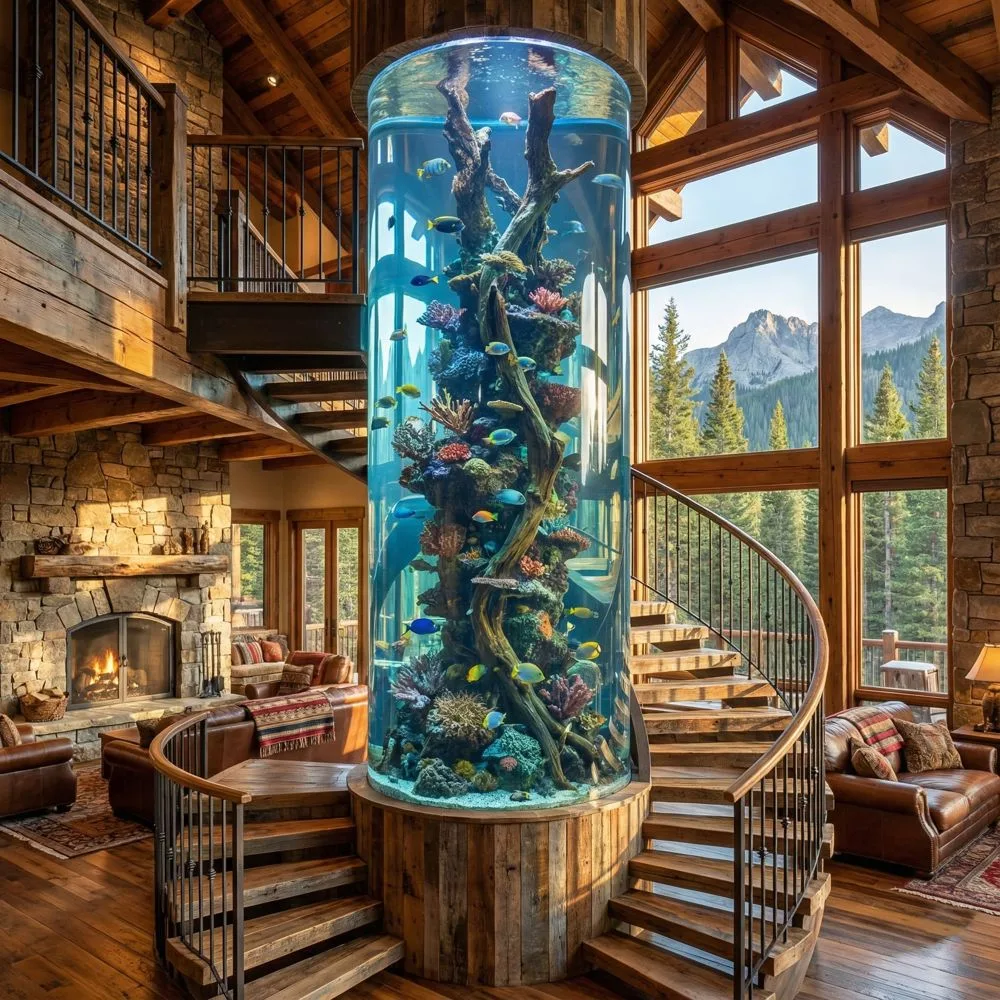
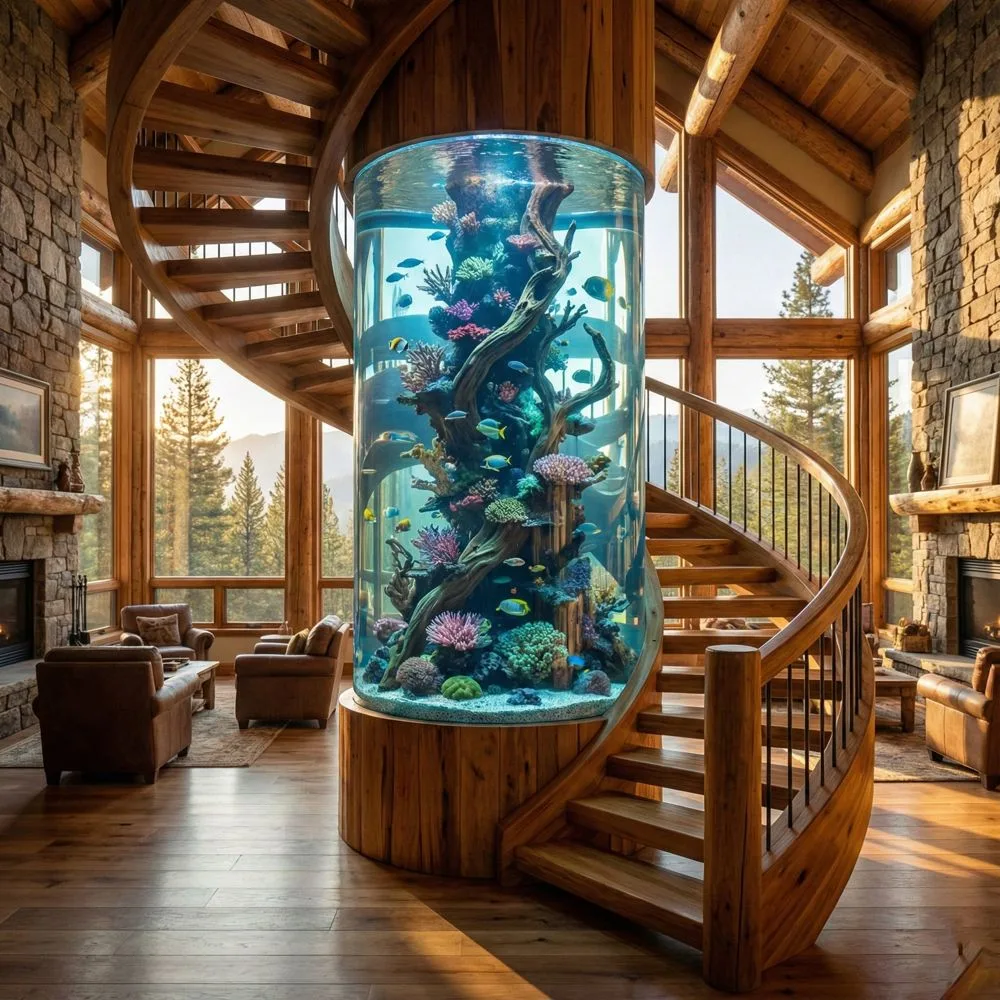
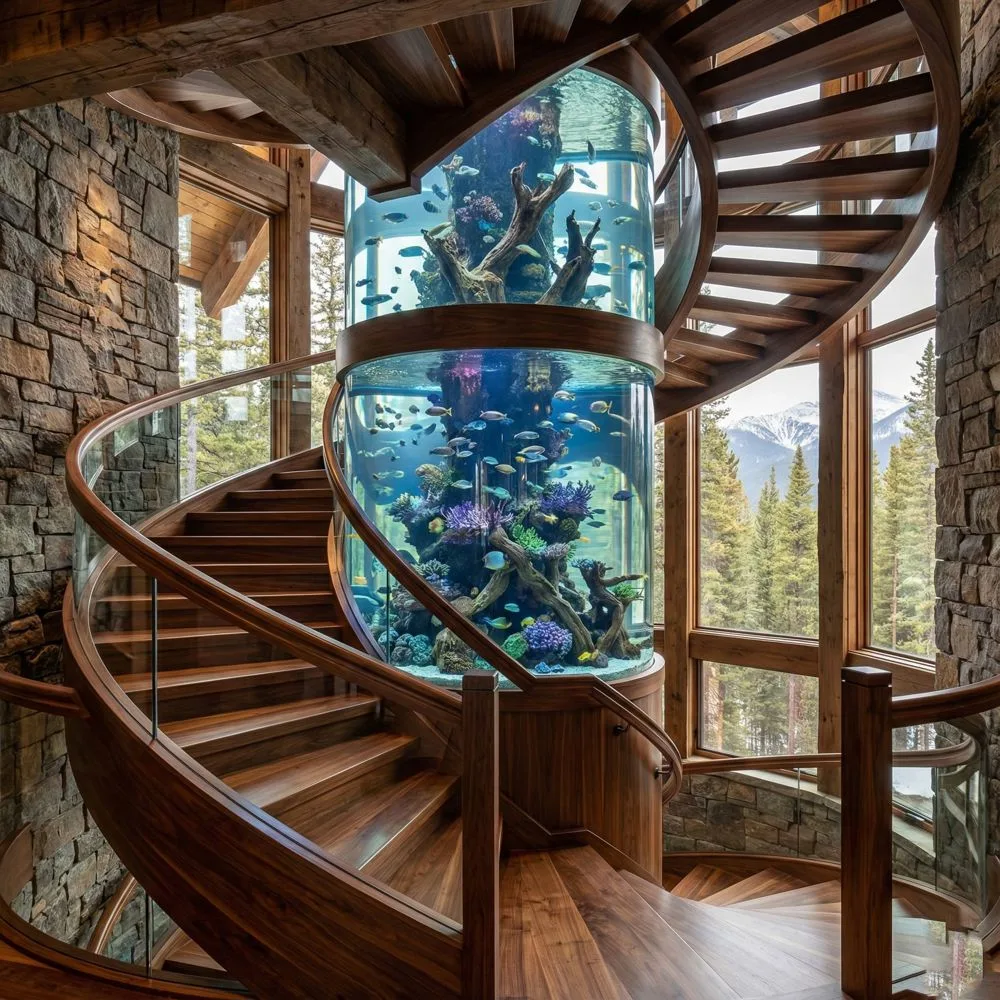
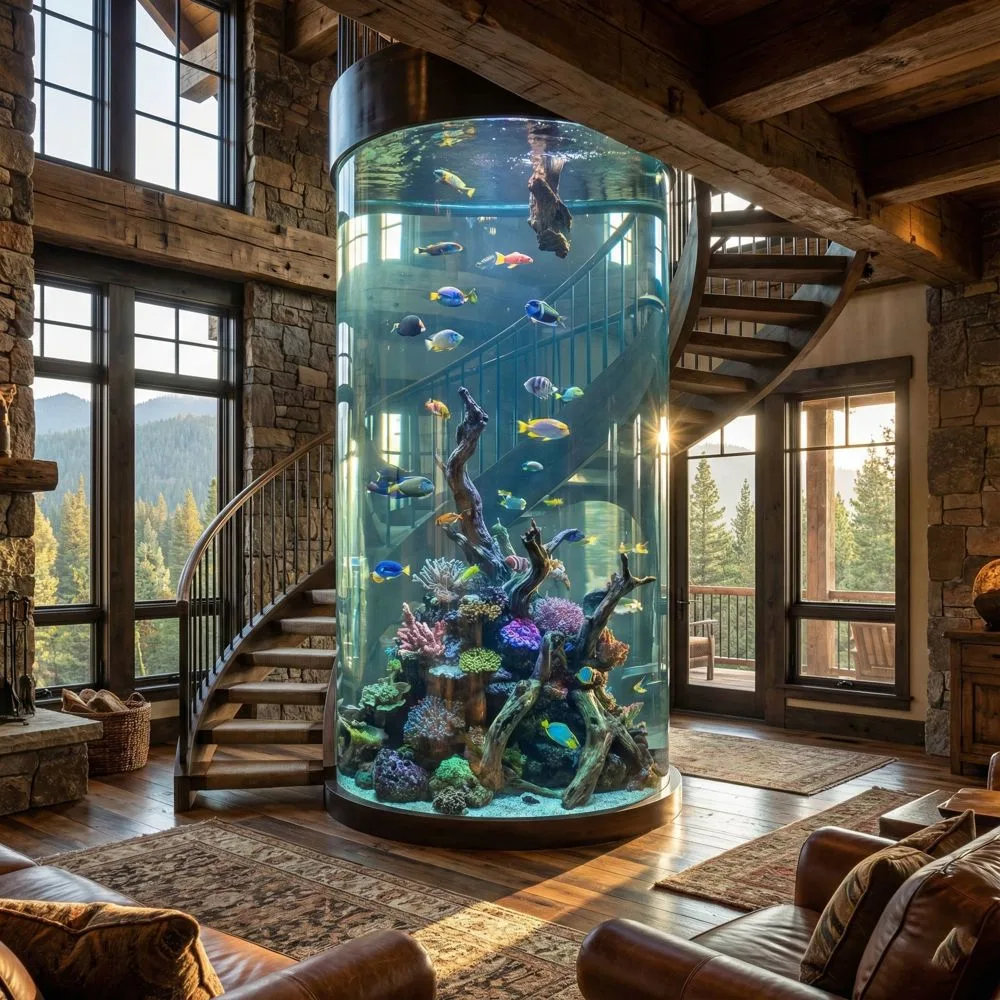
Some homeowners opt for a cylindrical aquarium that the staircase spirals around. This works particularly well with spiral or curved staircases. The central column becomes a tall cylindrical tank, and as you ascend or descend, you get a 360 degree view of the aquatic environment at different levels.
This design creates incredible depth perception. Fish swimming at eye level on the ground floor appear below you as you climb, offering constantly changing perspectives. The cylindrical shape also provides excellent viewing angles and can be spectacular when placed in an entryway or central atrium.
The Under Stair Aquarium Integration
For those with floating or open riser staircases, aquariums can be installed beneath the steps themselves. Reinforced glass treads allow you to literally walk over the aquarium, looking down at fish swimming below your feet. This requires exceptional engineering but creates an absolutely unforgettable effect.
This approach works best with straight run staircases and requires careful consideration of weight distribution, waterproofing, and structural support. The visual effect is worth the complexity, as it creates the illusion of walking on water.
Planning Your Aquarium Staircase Project
Structural Considerations You Cannot Ignore
Water is heavy. A gallon of water weighs approximately eight pounds, so even a modest 500 gallon aquarium staircase system weighs over two tons when you factor in the water, glass, substrate, rocks, and equipment. This weight must be properly supported by your home’s structure.
Before starting any aquarium staircase project, you need a structural engineer to evaluate your home’s load bearing capacity. Floor joists, foundation, and walls may require reinforcement. In multi story homes, the weight distribution becomes even more critical. Professional assessment isn’t optional; it’s essential for safety and longevity.
Building codes and permits are another crucial consideration. Most jurisdictions require permits for structural modifications, plumbing alterations, and electrical work. An aquarium staircase touches on all three. Working with licensed contractors who understand these requirements will save you headaches and potential legal issues down the road.
Choosing the Right Location and Layout
Not every staircase is suitable for aquarium integration. The ideal location has several characteristics. First, it should be relatively central to your home, maximizing the number of people who can enjoy it. Second, it needs to be away from direct sunlight, which can cause excessive algae growth and temperature fluctuations. Third, accessibility for maintenance is crucial.
Consider traffic patterns in your home. High traffic staircases experience more vibration, which can stress fish. You’ll need to balance visibility and accessibility with the welfare of your aquatic inhabitants. Some homeowners choose to integrate aquariums into secondary staircases specifically to reduce disturbances.
The relationship between the staircase and existing HVAC systems matters too. Aquariums generate humidity, and the increased moisture in your stairwell needs to be properly managed to prevent mold growth and structural damage. Your HVAC system may need upgrading to handle the additional humidity load.
Technical Requirements for Success
Filtration Systems for Large Scale Aquariums
An aquarium staircase isn’t just larger than typical home aquariums; it presents unique filtration challenges. The water volume is substantial, often ranging from 300 to over 1000 gallons. This requires commercial grade filtration systems capable of processing the entire water volume multiple times per hour.
Most installations use a combination of mechanical, biological, and chemical filtration housed in a separate equipment room. Mechanical filtration removes particulates and debris. Biological filtration uses beneficial bacteria to break down harmful ammonia and nitrites. Chemical filtration, typically activated carbon, removes dissolved organic compounds and odors.
Redundancy is critical in these systems. If your filtration fails, the sheer volume of water means water quality can deteriorate rapidly, potentially harming or killing your fish. Many installations include backup pumps and filters that automatically engage if primary systems fail. Remote monitoring systems can alert you to problems via smartphone, even when you’re away from home.
Lighting Design That Enhances Beauty
Lighting serves dual purposes in an aquarium staircase. It must support the health of fish and live plants while creating visual drama. LED technology has revolutionized aquarium lighting, offering programmable systems that can simulate sunrise, midday brightness, and sunset, following natural circadian rhythms.
For planted aquariums, lighting intensity and spectrum must support photosynthesis. For fish only systems, you have more creative freedom. Many designers use lighting to create moonlight effects at night, keeping the space usable while maintaining the aquatic environment’s beauty.
Strategic placement of lights can highlight specific features. Uplighting from the substrate creates dramatic shadows. Backlighting can silhouette rockwork and driftwood. Many installations include color changing LEDs that can transform the mood of the space for special occasions, though these should be used sparingly as frequent color changes can stress fish.
Temperature Control and Climate Management
Maintaining stable water temperature is crucial for fish health. Most tropical species thrive between 75 and 80 degrees Fahrenheit, requiring heaters in most climates. However, large volume aquariums lose heat slowly, so temperature stability is actually easier to maintain than in smaller tanks.
Chillers become necessary in warm climates or if your staircase receives significant ambient heat. These systems cool the water during summer months or in homes without adequate air conditioning. The equipment room housing your filtration system needs climate control as well, as pumps and lighting generate heat that can affect water temperature.
Evaporation is accelerated in open top aquariums and in environments with good air circulation, which staircases typically have. An auto top off system automatically replaces evaporated water, maintaining consistent water levels and preventing salinity fluctuations in saltwater systems. These systems use float switches and reverse osmosis water to ensure purity.
Selecting Fish and Aquatic Life
Freshwater Options for Active Displays
Freshwater community aquariums are the most accessible option for aquarium staircase projects. Species like angelfish, discus, and rainbowfish provide color and graceful movement. Schooling fish such as tetras, rasboras, and barbs create mesmerizing coordinated swimming patterns that look spectacular in large volumes.
Bottom dwelling species add another dimension. Corydoras catfish, plecos, and loaches patrol the substrate, providing activity at different levels. This layering of species creates a more naturalistic and visually interesting environment.
For planted aquariums, you can create stunning underwater landscapes with java fern, amazon swords, and various mosses. These plants not only look beautiful but improve water quality by absorbing nitrates and producing oxygen. A well planted aquarium staircase becomes a living ecosystem that requires less maintenance than fish only systems.
Saltwater Possibilities for Bold Statements
Marine aquariums offer unparalleled color and diversity but require more expertise and maintenance. Reef aquariums with corals and invertebrates create breathtaking displays but demand precise water parameters and specialized lighting.
Fish only saltwater systems are somewhat simpler while still providing the vibrant colors of species like tangs, anthias, and clownfish. The larger water volume of an aquarium staircase actually makes saltwater systems more stable than small marine tanks, as parameters change more slowly.
The cost of saltwater systems is significantly higher, both initially and for ongoing maintenance. Salt mix, live rock, and marine fish command premium prices. However, for those seeking the ultimate visual impact, few things compare to a thriving reef aquarium integrated into your staircase.
Maintenance and Long Term Care
Daily and Weekly Tasks
Despite automated systems, aquarium staircases require regular attention. Daily feeding is essential, though automatic feeders can handle this during travel. Quick visual inspections ensure all equipment is functioning and fish appear healthy. Checking water temperature takes seconds but can alert you to heater or chiller problems.
Weekly water testing monitors ammonia, nitrite, nitrate, and pH levels. Test kits are inexpensive and results guide your maintenance schedule. Cleaning the viewing panels maintains clarity, as algae naturally accumulates on glass surfaces. Magnetic scrubbers make this task easy without entering the aquarium.
Monthly Deep Maintenance
Monthly tasks include partial water changes, typically 10 to 20 percent of total volume. For a 500 gallon system, this means changing 50 to 100 gallons. Many installations include plumbing that simplifies this process, connecting directly to your water supply and drainage systems.
Filter media cleaning or replacement prevents clogging and maintains efficiency. Some media is cleaned and reused, while other types are disposable. Following the manufacturer’s recommendations prevents disruptions to biological filtration.
Trimming plants, removing accumulated debris, and inspecting all equipment for wear should be part of monthly maintenance routines. Catching small problems early prevents major failures that could threaten your aquatic inhabitants or cause water damage to your home.
Professional Maintenance Services
Many aquarium staircase owners contract with professional maintenance services. These specialists handle all routine tasks, from water changes to equipment servicing. They bring expertise in identifying problems early and have relationships with suppliers for replacement parts and specialty equipment.
Professional maintenance typically costs between 200 and 500 dollars monthly, depending on system size and complexity. This investment ensures your aquarium remains healthy and beautiful while freeing you from technical tasks. Many services offer emergency response for equipment failures or water quality crises.
Cost Considerations and Budgeting
Initial Investment Breakdown
Creating an aquarium staircase is a significant financial commitment. Basic installations start around 15,000 dollars but can easily exceed 100,000 dollars for elaborate custom systems. The wide range reflects differences in size, complexity, and finish quality.
Structural modifications and engineering typically cost 5,000 to 15,000 dollars depending on required reinforcements. Custom aquarium fabrication runs 3,000 to 10,000 dollars per linear foot for complex installations. Life support equipment including filtration, lighting, and climate control adds another 5,000 to 20,000 dollars.
Labor for installation can equal or exceed materials costs. Coordinating plumbers, electricians, carpenters, and aquarium specialists requires project management expertise. Many homeowners hire design build firms that handle all aspects of the project, simplifying coordination but adding management fees.
Operating Costs You Should Expect
Monthly operating costs include electricity, water, and consumables. Large aquarium systems can add 100 to 300 dollars to monthly utility bills depending on equipment efficiency and local rates. Pumps, heaters, and lighting run constantly, consuming significant power.
Water changes, salt mix for marine systems, food, and replacement filter media add another 50 to 200 dollars monthly. Professional maintenance services, if used, represent the largest ongoing expense. Fish and coral replacements when inhabitants die or outgrow the system add occasional costs.
Setting aside money for equipment replacement is wise. Pumps, heaters, and lighting systems have finite lifespans, typically three to seven years depending on quality and usage. Budgeting 1,000 to 2,000 dollars annually for equipment replacement prevents financial surprises.
Bringing Your Vision to Life
An aquarium staircase transforms your home into something extraordinary. It’s a commitment that requires planning, investment, and ongoing care, but the rewards extend far beyond aesthetics. You’re creating a living environment that promotes wellness, sparks conversation, and provides endless fascination for family and guests.
The key to success lies in thorough planning, working with qualified professionals, and maintaining realistic expectations about costs and maintenance requirements. Start by consulting with architectural aquarium specialists who can assess your specific situation and provide detailed proposals. Visit existing installations if possible to see different approaches and ask owners about their experiences.
Technology continues advancing, making these systems more reliable and easier to maintain than ever before. Remote monitoring, automated feeding and water changes, and energy efficient equipment reduce the burden of ownership while improving outcomes for aquatic life. What was once only feasible for public aquariums and luxury hotels is now accessible to dedicated homeowners willing to invest in their vision.
The journey from concept to completion typically takes six months to over a year, but the result is a truly unique feature that enhances your home’s value and your daily quality of life. An aquarium staircase isn’t just a renovation; it’s a lifestyle upgrade that brings nature’s beauty into the heart of your home in the most unexpected and delightful way possible. Whether you choose a simple surrounding wall design or an elaborate cylinder wrap system, you’ll create something that never fails to amaze and inspire everyone who experiences it.