

The kitchen has evolved from a purely functional space into the heart of the modern home, where design meets practicality in spectacular ways. Among the most captivating trends to emerge in recent years is the epoxy beach kitchen island, a stunning centerpiece that brings the serene beauty of coastal landscapes right into your cooking space. This innovative design concept combines artistry with functionality, creating a conversation piece that serves as both a practical workspace and a breathtaking work of art.
Imagine preparing your morning coffee while gazing down at what appears to be a crystalline ocean shore, complete with sandy beaches and turquoise waters frozen in time beneath a glass-like surface. This is the magic that an epoxy beach kitchen island brings to your home. The design captures the essence of coastal living, making it perfect for beach house enthusiasts, coastal property owners, or anyone who simply wants to bring a piece of paradise into their daily routine.
The popularity of these islands has skyrocketed as homeowners seek unique ways to personalize their spaces and create Instagram worthy features that stand out from traditional granite or marble countertops. With proper planning and execution, an epoxy beach kitchen island becomes more than just a surface for meal preparation. It transforms into a focal point that tells a story and reflects your personality.
Understanding the Art Behind Epoxy Beach Kitchen Islands

Creating an epoxy beach kitchen island involves a sophisticated process that blends artistic vision with technical expertise. The foundation typically starts with a wooden base, often made from high quality plywood or solid wood, which provides structural integrity for the entire piece. This base is carefully prepared, sealed, and leveled to ensure the epoxy application goes smoothly.
The beach effect is achieved through multiple layers of specially formulated epoxy resin mixed with various pigments, dyes, and natural materials. Artists and craftspeople carefully arrange sand, crushed shells, pebbles, and specially tinted resin to mimic the gradual transition from deep ocean blues to shallow turquoise waters and finally to sandy shores. Some creators even incorporate actual beach sand collected from favorite vacation spots, adding a deeply personal touch to the design.
The layering process is where the magic truly happens. Each layer of epoxy must cure properly before the next is applied, which means creating a single island can take several weeks from start to finish. The artist pours darker blues and greens first to represent deeper waters, then gradually transitions to lighter aquamarine shades that suggest shallow coastal areas. White pigments create the appearance of waves and seafoam, while carefully placed sand and shells complete the beach illusion.
Advanced techniques include creating depth perception through strategic placement of materials at different levels within the resin, adding metallic powders for shimmer that mimics sunlight on water, and even embedding small decorative elements like starfish or sea glass. The final clear coat of epoxy not only protects the artwork but also creates that signature glass-like finish that makes these islands so mesmerizing.
Design Variations and Customization Options
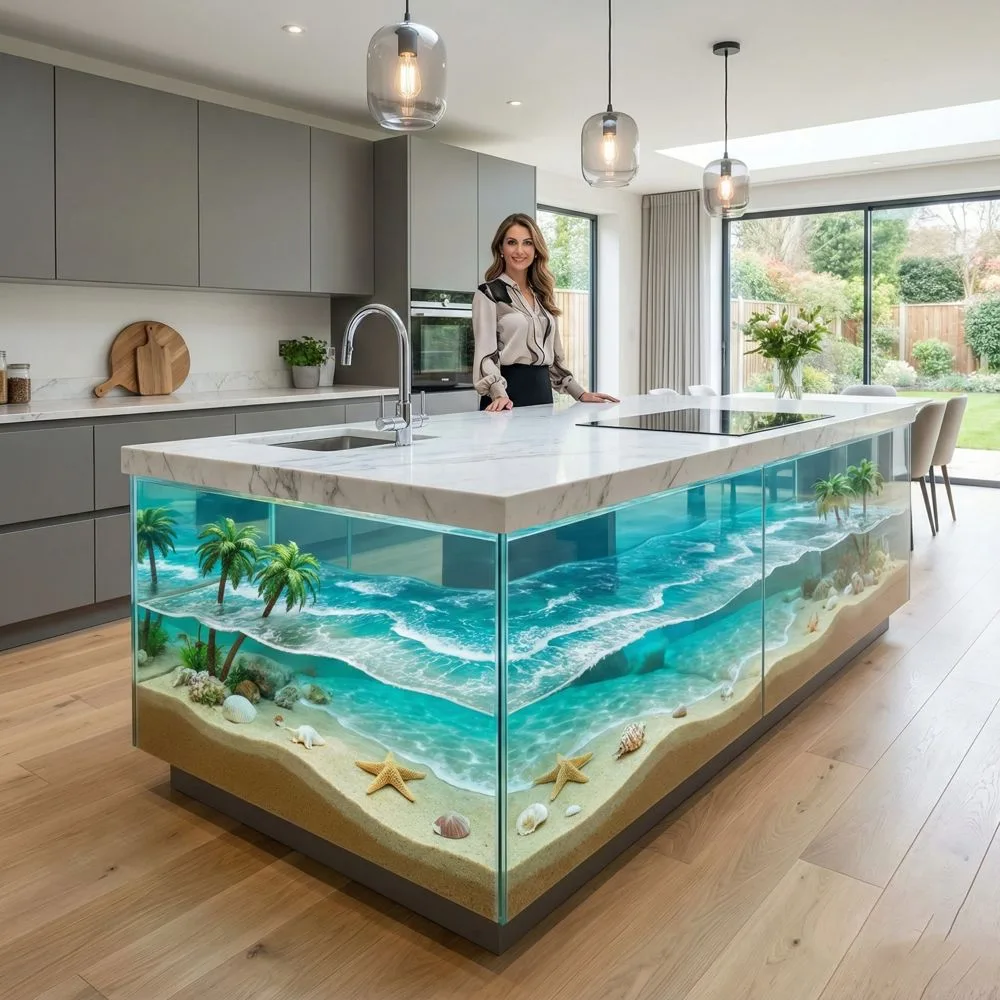
One of the most appealing aspects of choosing an epoxy beach kitchen island is the virtually unlimited customization potential. Each piece can be tailored to reflect specific coastal memories, color preferences, or design aesthetics that complement your existing kitchen decor.
Color Palette Choices
The traditional Caribbean inspired palette features brilliant turquoise and azure blues that evoke tropical paradise waters. However, homeowners are increasingly exploring alternative color schemes that match different coastal environments. Mediterranean designs might incorporate deeper sapphire blues with touches of emerald green. Pacific Northwest themes could include cooler grays and deep navy shades with rocky elements rather than sand. Gulf Coast inspired islands often feature warmer green tinted waters and cream colored sand.
Shape and Size Considerations
While rectangular islands remain the most popular choice for their practicality, the fluid nature of epoxy design lends itself beautifully to organic shapes. Curved edges can enhance the beach aesthetic by mimicking natural coastlines. Some designers create irregular shapes that suggest actual shorelines, with the “beach” portion extending into a peninsula formation that provides additional seating or workspace.
The size of your island will naturally depend on your kitchen dimensions and layout, but epoxy beach designs scale beautifully from compact apartment islands measuring four feet in length to grand installations spanning ten feet or more in luxury homes. Larger surfaces allow for more elaborate beach scenes with greater detail and complexity.
Embedded Elements and Personal Touches
Beyond sand and shells, creative homeowners are incorporating meaningful elements into their islands. Vacation souvenirs like coral pieces, unique stones from memorable beach walks, or even small waterproof photographs laminated within the resin layers can transform your island into a three dimensional memory keeper. Some people include coins from the year their home was built, creating a time capsule effect.
Practical Benefits Beyond Aesthetic Appeal

While the visual impact of an epoxy beach kitchen island is undeniable, these surfaces offer numerous practical advantages that make them more than just pretty faces in your kitchen.
Durability and Longevity
High quality epoxy resin, when properly applied and maintained, creates one of the most durable kitchen surfaces available. The material is highly resistant to impacts, scratches, and general wear that would damage traditional countertops. The seamless nature of epoxy means there are no grout lines to trap bacteria or food particles, making it naturally more hygienic than tiled surfaces.
The chemical resistance of cured epoxy means it stands up well to most household cleaners, wine, coffee, and acidic foods that might stain other materials. When applied correctly with appropriate UV inhibitors, quality epoxy maintains its color and clarity for decades, though direct sunlight exposure should still be minimized when possible.
Heat and Moisture Resistance
While epoxy can withstand moderate heat, it’s important to use trivets or hot pads for pots and pans directly from the stove or oven. The material is naturally waterproof, making it ideal for kitchen use where spills and splashes are daily occurrences. This water resistance also means your beach scene will never fade or water damage the decorative elements embedded within.
Easy Maintenance Requirements
Daily maintenance of an epoxy beach kitchen island is refreshingly simple. Regular cleaning with mild soap and water keeps the surface sparkling. Unlike natural stone that requires periodic sealing, epoxy maintains its protective qualities without additional treatments. The non-porous surface resists staining, and most spills wipe away effortlessly without leaving marks.
Installation Process and Professional Considerations

Creating an epoxy beach kitchen island is a specialized skill that typically requires professional expertise, though experienced DIY enthusiasts with proper training can attempt smaller projects.
Professional Installation Benefits
Hiring skilled artisans who specialize in epoxy resin work ensures your island will be structurally sound and visually stunning. Professionals have access to commercial grade materials, specialized tools, and years of experience troubleshooting common issues like bubbles, uneven curing, or color inconsistencies. They understand proper ventilation requirements, safety protocols for working with chemical resins, and techniques for achieving perfectly level surfaces.
The consultation process with a professional allows you to discuss your vision, see samples of previous work, and understand realistic timelines and costs. Many artists provide digital mockups showing how your chosen colors and design elements will appear in the finished piece.
DIY Considerations and Challenges
For those considering a DIY approach, it’s crucial to understand the learning curve involved. Epoxy work requires precise measuring, mixing, and timing. The working time once epoxy components are mixed is limited, meaning you must work efficiently and confidently. Temperature and humidity in your workspace significantly affect curing times and final results.
Investment in proper safety equipment including respirators, gloves, and protective clothing is non-negotiable when working with epoxy resins. The workspace must be extremely clean and dust free, as any contaminants that settle on wet epoxy will be permanently visible. Practice projects on smaller pieces before attempting a full kitchen island can help develop necessary skills and confidence.
Cost Factors and Budget Planning
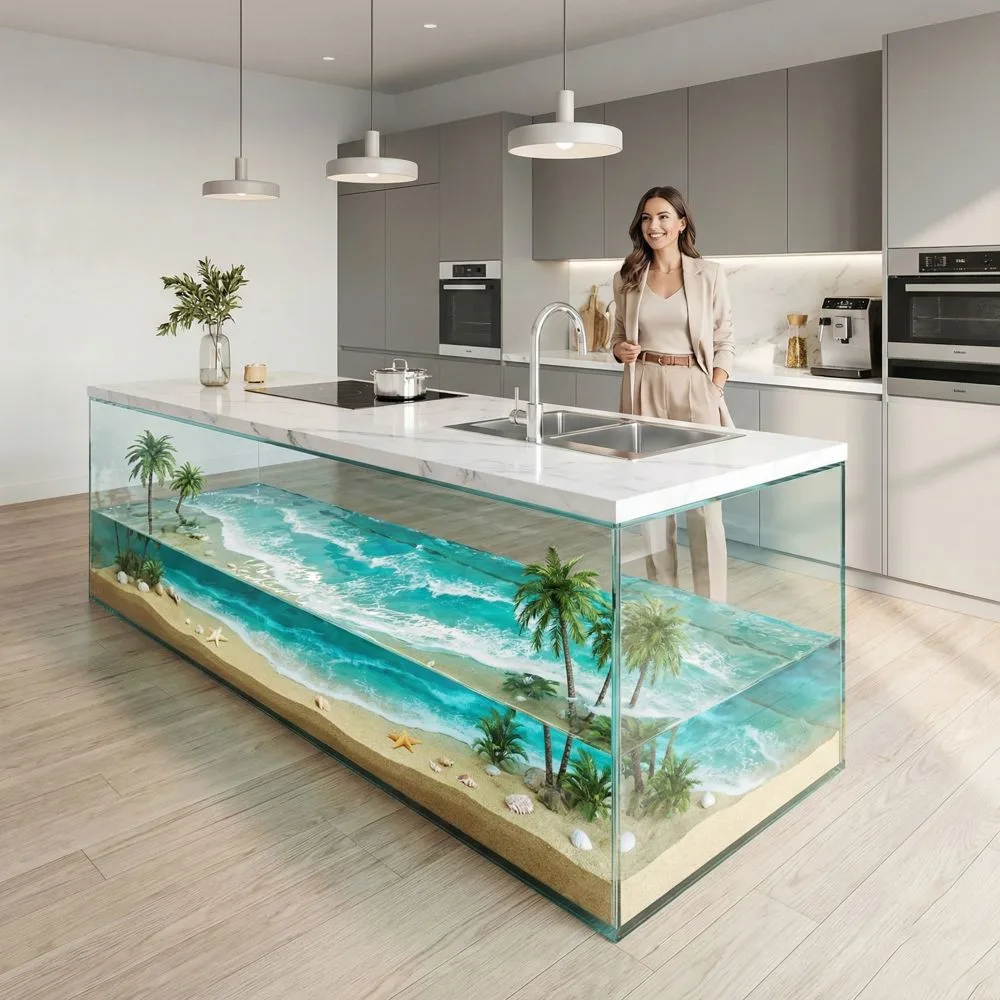
Understanding the investment required for an epoxy beach kitchen island helps in making informed decisions and setting realistic expectations.
Material Costs
Quality epoxy resin is the largest material expense, with prices varying based on the brand and quantity needed. A standard kitchen island might require several gallons of resin, with costs ranging significantly depending on whether you choose basic epoxy or premium formulations with enhanced UV resistance and clarity. Pigments, dyes, and specialty additives add to material costs, as do decorative elements like sand, shells, and embedded objects.
The base structure costs vary depending on whether you’re retrofitting an existing island or building from scratch. Quality plywood or solid wood bases provide the necessary stability, and proper sealing materials ensure the wood doesn’t absorb moisture or release gases that could create bubbles in the epoxy.
Labor and Artistic Expertise
Professional installation costs reflect the specialized skills and time investment required. Artisans typically charge based on the island’s size, design complexity, and customization level. A basic beach design on a standard sized island might cost considerably less than an elaborate scene with multiple embedded elements and intricate color work. Labor costs often represent the majority of the total project expense, but this investment ensures professional results that will last for decades.
Rush orders or projects requiring travel to remote locations may incur additional fees. Some artists offer payment plans or staged pricing where you pay deposits at different project phases.
Long Term Value Considerations
While the initial investment in an epoxy beach kitchen island exceeds standard countertop materials, the long term value proposition is compelling. The durability means you won’t need replacements or repairs that other surfaces might require. The unique aesthetic can increase your home’s appeal to potential buyers if you decide to sell, particularly in coastal markets where beach themed decor resonates strongly with purchasers.
Maintenance and Care Guidelines
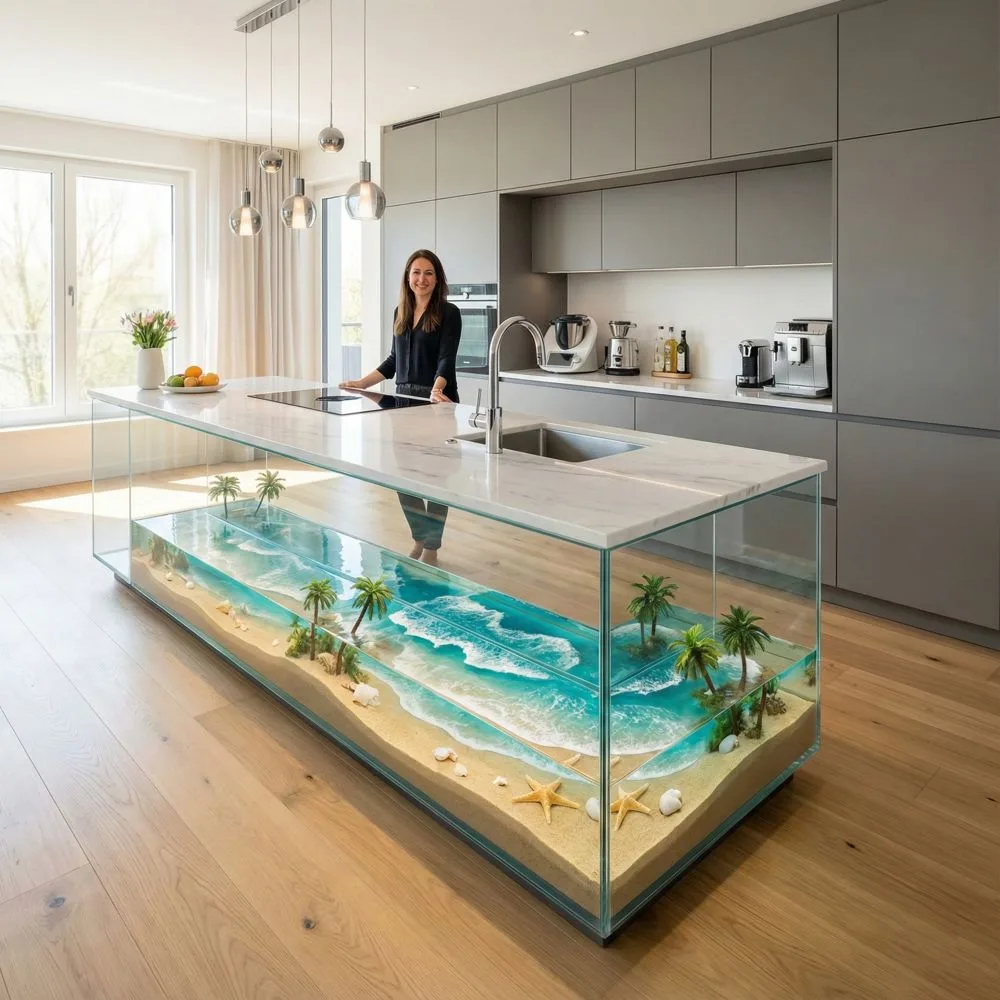
Preserving the beauty of your epoxy beach kitchen island requires minimal effort but consistent attention to best practices.
Daily Cleaning Routine
Wipe up spills promptly using soft cloths or paper towels to prevent any potential staining from prolonged exposure. For daily cleaning, use a mild dish soap mixed with warm water and a soft microfiber cloth. Avoid abrasive scrubbers or harsh chemical cleaners that might dull the glossy finish over time. After cleaning, buff the surface dry with a clean cloth to maintain the brilliant shine.
Preventing Damage
Always use cutting boards rather than cutting directly on the epoxy surface, even though the material is scratch resistant. Place hot pots and pans on trivets or heat resistant pads to protect against thermal shock. While epoxy is durable, heavy impacts from dropped cast iron cookware or other heavy objects can cause chips or cracks, so exercise reasonable caution.
Direct sunlight exposure over many years can cause some yellowing in lower quality epoxies, so consider window treatments if your island receives strong sun for extended periods. However, quality marine grade epoxy with UV inhibitors resists this yellowing significantly better.
Periodic Deep Cleaning
Every few months, give your island a deeper clean using specialized epoxy polish or a mixture of white vinegar and water for a streak free shine. Some homeowners apply a thin coat of mineral oil or specialized epoxy conditioner annually to enhance the glossy appearance and add an extra layer of protection, though this isn’t strictly necessary with high quality installations.
Integration with Various Kitchen Styles
The versatility of epoxy beach kitchen islands means they can complement diverse design aesthetics when thoughtfully incorporated into your space.
Coastal and Nautical Kitchens
The most natural home for an epoxy beach kitchen island is in coastal themed kitchens where the ocean inspired centerpiece harmonizes perfectly with other beach elements. White or light colored cabinetry, rope accents, weathered wood finishes, and blue tile backsplashes create a cohesive seaside atmosphere. Nautical lighting fixtures and open shelving displaying collected shells or beach glass complete the look.
Modern and Contemporary Spaces
Surprisingly, epoxy beach islands work beautifully in sleek modern kitchens. The smooth, glossy surface and clean lines align with contemporary design principles. Paired with minimalist white cabinets, stainless steel appliances, and geometric lighting fixtures, the island becomes a stunning artistic statement piece that provides the perfect pop of color and organic beauty against the modern backdrop.
Transitional and Eclectic Designs
Transitional kitchens that blend traditional and contemporary elements provide ideal settings for epoxy beach islands. The natural materials and colors bridge the gap between different style periods, while the innovative material speaks to modern sensibilities. In eclectic spaces that celebrate diverse influences, the island can serve as a unifying element that ties together various design threads.
Environmental Considerations and Sustainability
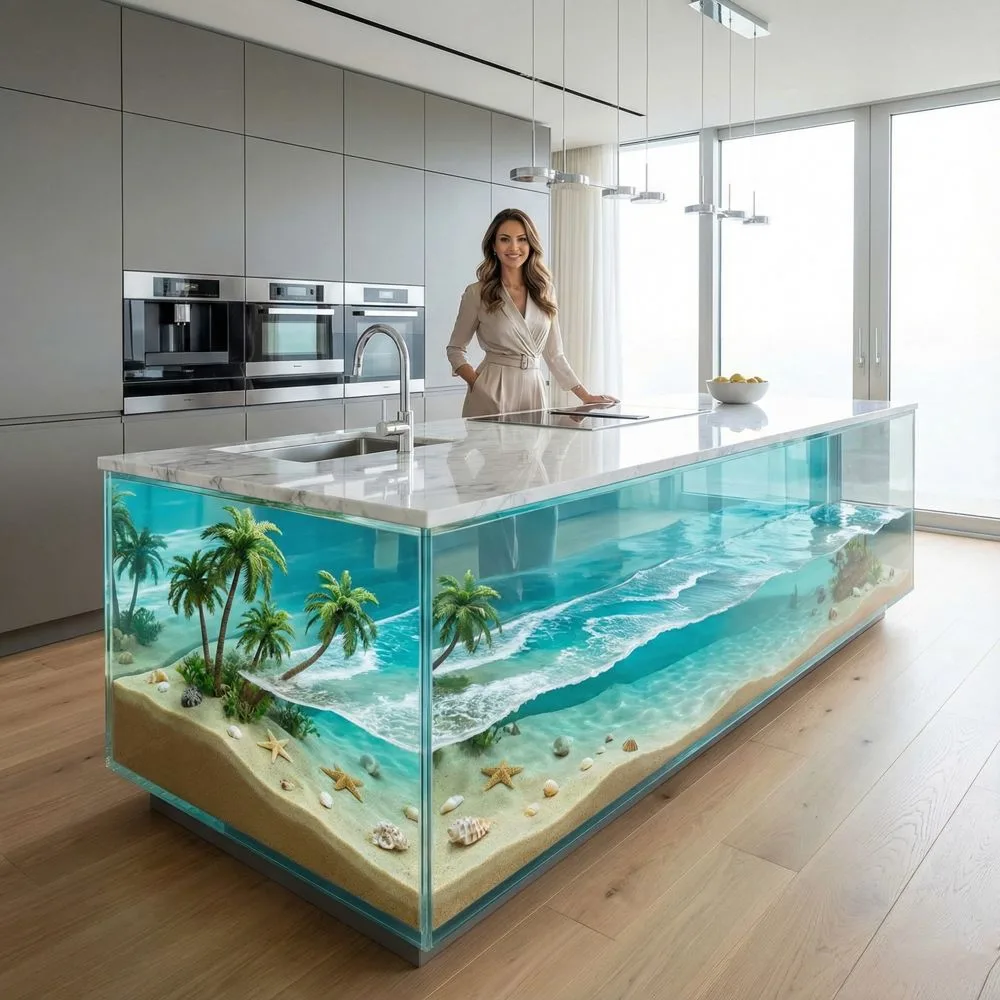
As environmental consciousness grows, it’s important to consider the ecological aspects of choosing an epoxy beach kitchen island.
Eco Friendly Epoxy Options
The resin industry has made significant strides in developing more environmentally responsible products. Bio based epoxies derived from plant materials rather than petroleum offer lower carbon footprints while maintaining excellent performance characteristics. Some manufacturers now produce low VOC volatile organic compound formulations that emit fewer harmful chemicals during the curing process, improving indoor air quality.
Longevity as Sustainability
One of the most sustainable aspects of epoxy islands is their exceptional longevity. Unlike cheaper materials that require replacement every decade or so, a well maintained epoxy beach kitchen island can last fifty years or more. This durability means fewer resources consumed over your lifetime, less construction waste in landfills, and reduced environmental impact from manufacturing replacement materials.
Responsible Material Sourcing
If you’re incorporating natural elements like sand and shells into your design, source these materials responsibly. Use sand from commercial suppliers rather than removing it from protected beaches where it plays crucial ecological roles. Choose shells from ethical sources or use those naturally collected rather than purchasing shells that were harvested specifically for decoration, which can impact marine populations.
Bringing Your Coastal Dream Kitchen to Life
An epoxy beach kitchen island represents more than a surface for food preparation. It embodies a lifestyle choice, a commitment to unique personal expression, and a celebration of the natural beauty that inspires us. Whether you’re drawn to the tranquil turquoise waters of Caribbean beaches, the rugged coastlines of the Pacific, or warm memories of family vacations by the sea, this innovative design element brings those feelings into your everyday life.
The process of creating your island, from initial design concepts through final installation, becomes a journey of creative collaboration. You’ll work with skilled artisans to translate abstract ideas about color, texture, and emotion into a tangible piece that greets you every morning and serves as the backdrop for countless family meals and gatherings.
As you consider whether an epoxy beach kitchen island is right for your home, think beyond simple aesthetics. Consider how this feature will make you feel each time you enter your kitchen. Imagine the conversations it will spark with guests, the way natural and artificial light will play across its surface throughout the day, and how it will anchor your kitchen’s design for years to come.
The investment in an epoxy beach kitchen island is an investment in daily beauty, in quality craftsmanship, and in creating a space that truly feels like home. For those who hear the call of the ocean and long to bring a piece of coastal paradise into their lives, few design elements deliver such profound impact. Your kitchen island can be more than functional furniture. It can be a daily reminder of what you love, a celebration of nature’s artistry, and a testament to the remarkable things humans can create when imagination meets skill.
Whether you’re building a new kitchen from scratch, renovating an existing space, or simply dreaming of future possibilities, the epoxy beach kitchen island stands as one of today’s most exciting design innovations. As this trend continues evolving with new techniques, materials, and artistic approaches, the potential for creating truly unique pieces only grows. Your perfect island awaits, ready to transform your kitchen into a coastal sanctuary where function and beauty merge in spectacular harmony.