

When it comes to creating an outdoor living space that truly stands out, few design elements can match the striking beauty of an epoxy wood slab patio. This innovative approach to outdoor design combines the raw, organic appeal of natural wood with the protective qualities of epoxy resin, resulting in a space that’s both visually stunning and remarkably durable. Whether you’re a seasoned DIY enthusiast or someone exploring options for a professional patio installation, understanding the potential of epoxy wood slabs can open up exciting possibilities for your backyard transformation.
The concept of incorporating epoxy treated wood into outdoor spaces has gained tremendous momentum in recent years, and for good reason. These installations offer a unique blend of functionality and artistry that conventional patio materials simply cannot replicate. The translucent quality of epoxy resin allows the natural grain, knots, and character of the wood to shine through while providing a glass smooth surface that resists weathering, moisture, and everyday wear.
Understanding the Basics of Epoxy Wood Slab Patios
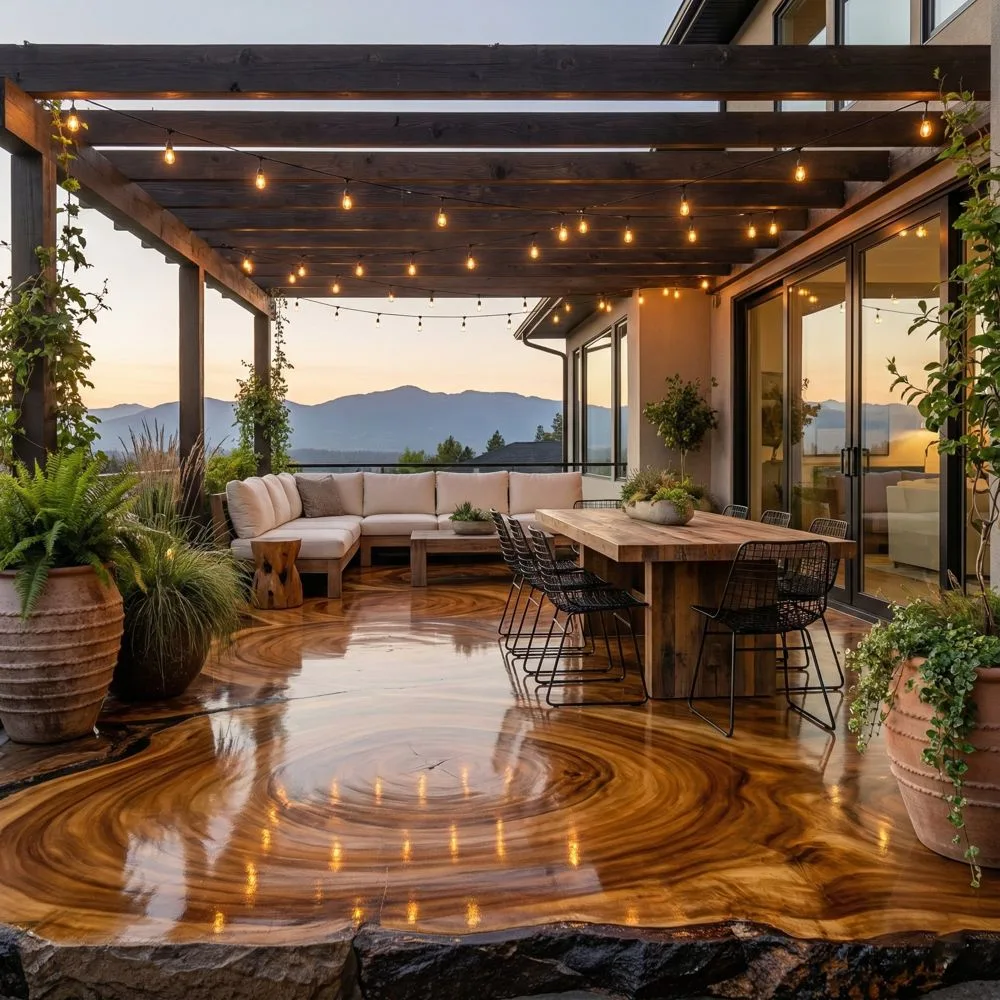
An epoxy wood slab patio typically consists of large wood sections, often featuring live edges that preserve the natural contours of the tree, which are then sealed and protected with layers of clear epoxy resin. The wood slabs can serve various purposes in your patio design, from dramatic tabletops and counters to decorative wall features and even flooring elements when properly installed with adequate drainage considerations.
The beauty of this approach lies in its versatility. You can incorporate a single statement piece, such as a massive dining table made from a river wood slab with blue epoxy flowing through the natural split, or you can design an entire seating area featuring multiple epoxy treated elements that create a cohesive outdoor living room. The wood species you choose, combined with the color and finish of the epoxy, allows for virtually unlimited customization to match your personal aesthetic preferences.
One of the most compelling aspects of using epoxy with wood slabs for outdoor applications is the protection it provides. Quality marine grade epoxy creates a barrier that shields the wood from moisture penetration, UV damage, temperature fluctuations, and the general wear that outdoor furniture typically endures. This protective layer significantly extends the lifespan of your wooden elements while maintaining their natural beauty.
Selecting the Right Wood Species for Your Outdoor Epoxy Project
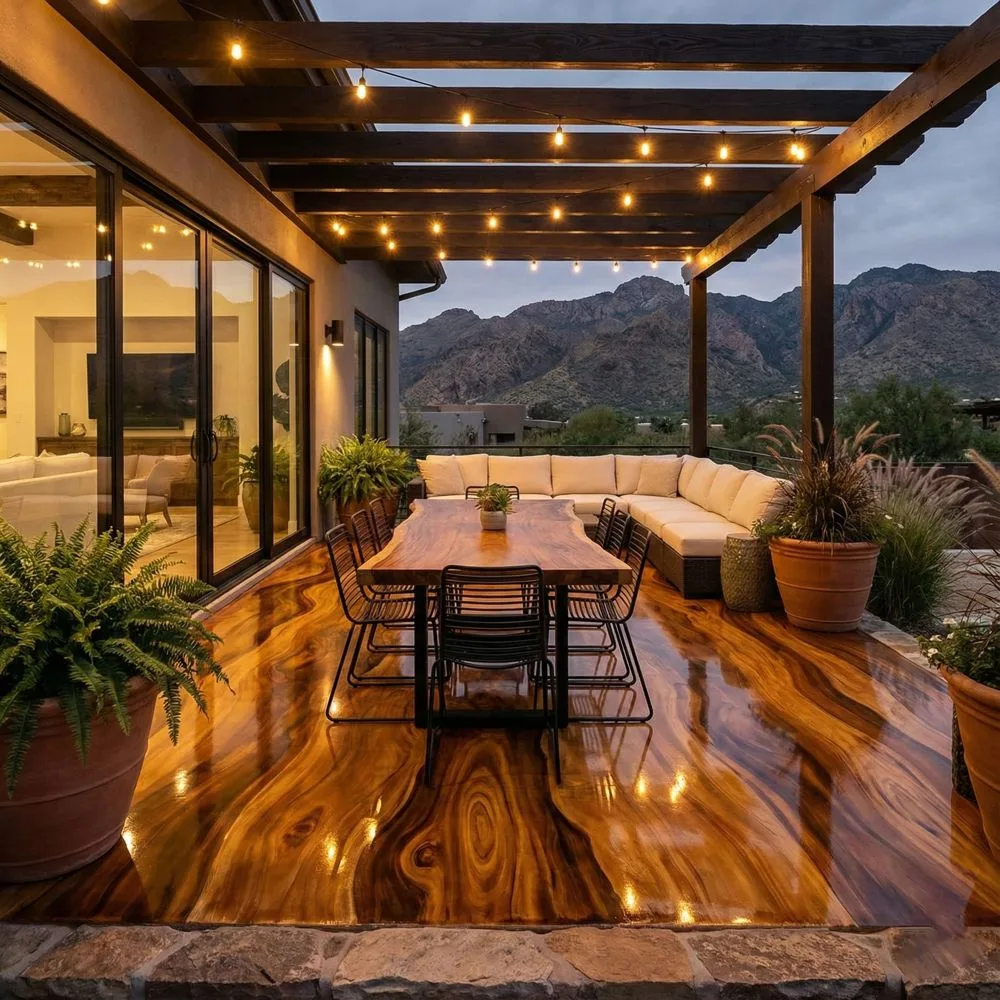
The foundation of any successful epoxy wood slab patio begins with choosing appropriate wood species. Not all woods perform equally well in outdoor environments, even when protected by epoxy. Dense hardwoods generally offer superior longevity and stability compared to softer varieties. Species like walnut, oak, maple, and teak have proven track records in outdoor applications, with teak being particularly renowned for its natural resistance to moisture and decay.
Live edge slabs have become especially popular for outdoor epoxy projects because they preserve the natural edge of the tree, complete with bark and irregular contours. These slabs celebrate the organic beauty of wood and create striking visual interest. When selecting live edge pieces for your patio, look for slabs that have been properly dried to prevent warping and cracking after the epoxy application. The moisture content should typically be below twelve percent for optimal results.
The thickness of your wood slab matters significantly for outdoor use. Thicker slabs, generally ranging from two to four inches, provide better structural integrity and are less susceptible to warping from temperature changes. They also offer a more substantial, premium appearance that elevates the entire patio aesthetic. When planning your epoxy wood slab patio, consider how the proportions of your wood pieces will relate to the overall space and the scale of your outdoor area.
Grain patterns and natural characteristics like knots, burls, and spalting add unique personality to each piece. Many designers specifically seek out slabs with dramatic figure or interesting defects that become focal points once highlighted by clear epoxy. These imperfections tell the story of the tree’s life and create conversation pieces that mass produced patio furniture simply cannot offer.
The Epoxy Selection Process for Outdoor Applications
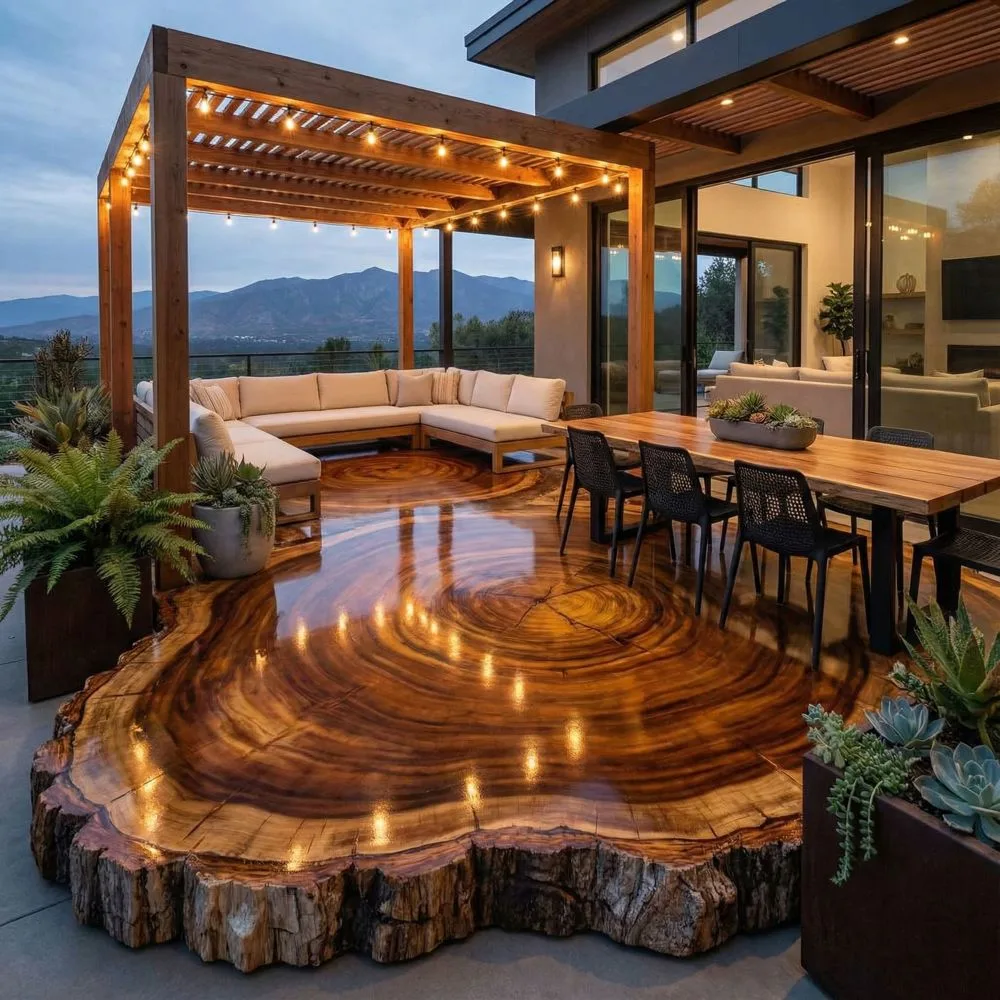
Choosing the correct type of epoxy resin is absolutely critical for outdoor success. Standard tabletop epoxies designed for indoor use will not withstand prolonged UV exposure and temperature extremes. Marine grade epoxy formulations specifically engineered for outdoor applications should be your first choice. These specialized resins contain UV inhibitors and stabilizers that prevent yellowing and degradation from sunlight exposure.
Two part epoxy systems are the industry standard for wood slab projects. These consist of a resin and a hardener that, when mixed in precise ratios, create a chemical reaction resulting in a hard, glass like surface. The working time, or pot life, of your epoxy mixture determines how long you have to pour and spread the material before it begins to cure. For larger patio projects, longer working times are generally preferable as they allow for proper application without rushing.
Viscosity is another important consideration. Thinner epoxies flow more easily into cracks and crevices, making them ideal for seal coating and filling deep voids. Thicker epoxies are better for building up layers and creating domed surfaces. Many outdoor wood slab projects benefit from using multiple epoxy types in sequence, starting with a thin seal coat to prevent air bubbles from escaping the wood, followed by thicker flood coats that build up the protective surface.
Color options for epoxy have expanded dramatically in recent years. While crystal clear epoxy showcases the natural wood beauty, pigmented epoxies can create stunning effects. Metallic epoxies add shimmer and depth, while solid color pigments can fill voids and cracks with contrasting hues that make the wood grain pop. Popular outdoor color choices include ocean blues, forest greens, and even bold blacks that create dramatic contrast with lighter wood species.
Design Ideas That Make Your Patio Extraordinary
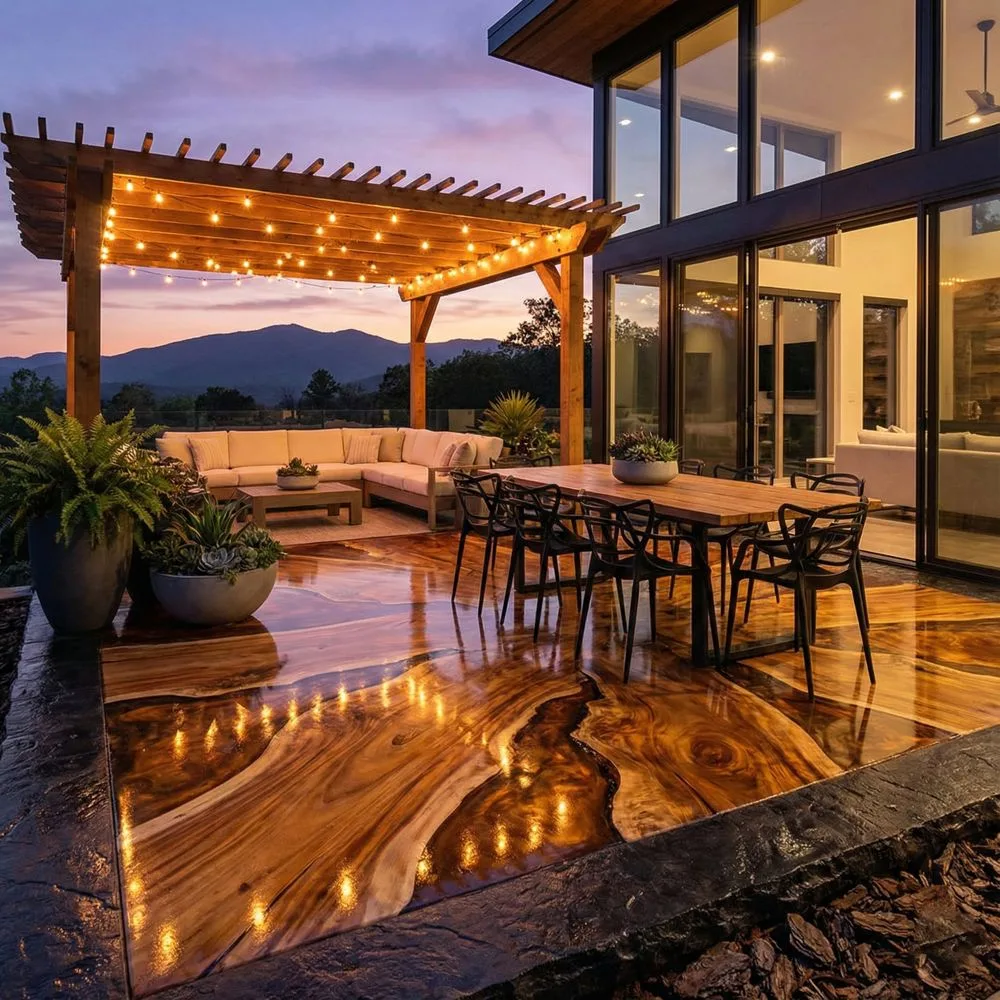
When planning your epoxy wood slab patio, the design possibilities extend far beyond a simple table. Consider creating a complete outdoor dining ensemble with a spectacular river table as the centerpiece. River tables feature a natural split or void in the wood slab that’s filled with colored epoxy, creating the appearance of a river flowing through the wood. This design works beautifully for outdoor dining tables, coffee tables, and even serving bars.
Built in seating areas incorporating epoxy wood slabs create permanent, weather resistant outdoor furniture that becomes part of your patio architecture. Imagine a curved bench with a thick walnut slab seat, edges preserved in their natural state, the entire surface sealed beneath layers of protective epoxy. These permanent installations add significant value to your home while providing functional seating that can withstand years of use.
Countertops and serving areas represent another excellent application for epoxy wood slabs in outdoor kitchens. An outdoor bar featuring a live edge wood top with epoxy coating creates a rustic yet refined gathering spot for entertaining. The epoxy surface provides a sanitary, easy to clean workspace that resists staining from food and beverages, making it practical as well as beautiful.
Vertical applications should not be overlooked when planning your epoxy wood slab patio. Accent walls or privacy screens made from epoxy sealed wood slabs add texture and visual interest while defining different zones within your outdoor space. These vertical elements can incorporate lighting, creating ambiance for evening entertaining while showcasing the natural wood grain illuminated from within.
Fire pit surrounds crafted from epoxy wood slabs combine the primal appeal of open flames with the sophisticated beauty of finished wood. While the wood itself should never be in direct contact with high heat, creating seating or tabletop surfaces around a fire feature using epoxy protected slabs ties together the natural and refined elements of outdoor living.
Installation Considerations and Best Practices
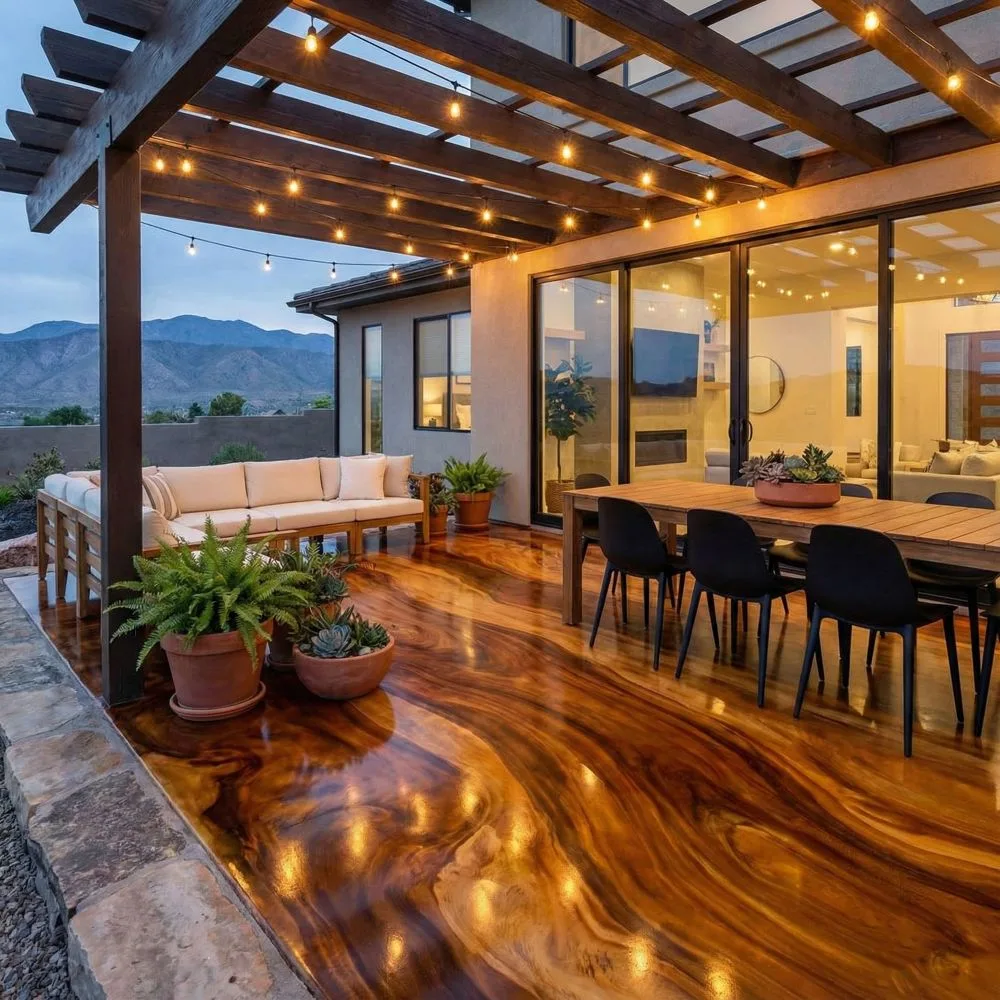
Successfully installing an epoxy wood slab patio requires careful planning and proper execution. The foundation supporting your wood pieces must be absolutely stable. Any movement or shifting in the base structure can cause stress cracks in the epoxy or even structural failure of the wood itself. For table bases and furniture legs, ensure they are level and firmly anchored. For larger installations, proper footings and supports are essential.
Weather protection during the epoxy curing process cannot be overstated. Epoxy requires specific temperature and humidity conditions to cure properly. Most formulations need temperatures between 70 and 85 degrees Fahrenheit and low humidity for optimal curing. Rain, dew, or extreme temperature fluctuations during the curing process can ruin the finish, creating cloudiness, uncured soft spots, or surface imperfections.
Ventilation deserves serious consideration, even for outdoor projects. Epoxy fumes can be strong during mixing and initial curing. Ensure your work area has adequate air circulation, and consider using appropriate respiratory protection during the application process. Follow all manufacturer safety recommendations regarding protective equipment.
The application process itself demands attention to detail. Begin with thorough sanding of the wood surface, progressively moving through finer grits to create a smooth foundation. Remove all dust completely before applying your seal coat. This initial thin layer prevents air bubbles trapped in the wood from rising into subsequent layers. After the seal coat cures, sand lightly and apply your flood coats, building up to your desired thickness.
Edges require special attention in outdoor applications. The sides of your wood slab are particularly vulnerable to moisture infiltration if not properly sealed. Many professionals recommend applying extra epoxy coats to edges or even creating a slight buildup that wraps over the edge, ensuring complete protection from all angles.
Maintenance and Long Term Care Strategies
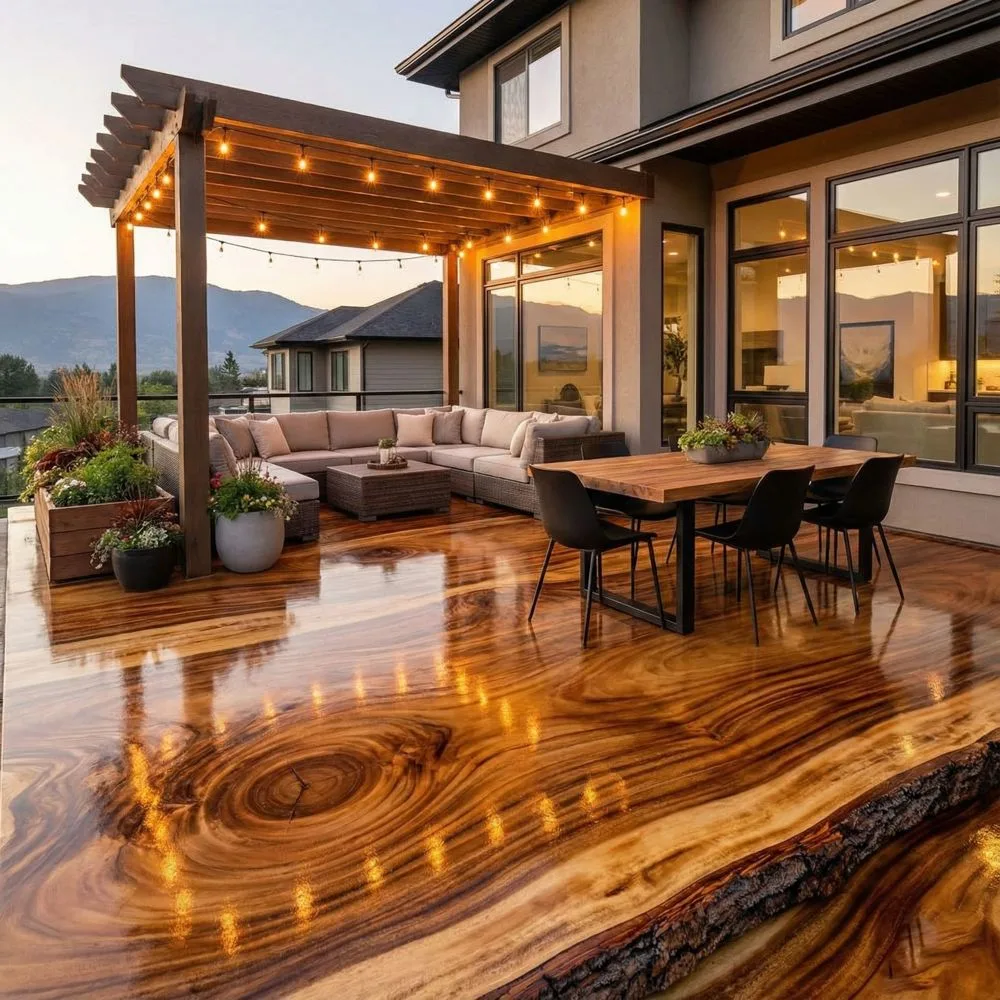
While epoxy wood slab patio installations are relatively low maintenance compared to untreated wood, they still benefit from proper care routines. Regular cleaning with mild soap and water keeps the surface looking its best and prevents buildup of organic material that could eventually compromise the finish. Avoid harsh chemical cleaners or abrasive scrubbing tools that might scratch the epoxy surface.
UV protection remains a concern even with marine grade epoxy. While quality outdoor epoxies resist yellowing far better than indoor varieties, prolonged direct sunlight exposure over years can still cause some discoloration. When possible, provide shade coverage for your epoxy wood slab patio features during the harshest sun hours. Retractable awnings, pergolas with shade cloth, or strategically placed umbrellas all help extend the pristine appearance of your installation.
Seasonal maintenance should include thorough inspections for any signs of epoxy damage or separation from the wood. Small chips or cracks can be repaired before they become larger problems. If you notice any areas where the epoxy has lifted or separated, address these immediately to prevent moisture from reaching the wood beneath.
Reapplication of protective topcoats may be necessary every few years, depending on your climate and the amount of sun exposure your patio receives. This maintenance step is far simpler than the original application and significantly extends the life of your investment. Some outdoor epoxy formulations include sacrificial UV layers designed to be refreshed periodically, providing ongoing protection for the deeper epoxy and wood layers.
Winter protection in colder climates involves covering your epoxy wood slab patio furniture or, when possible, storing pieces in a garage or shed. While epoxy and properly dried wood can handle freeze thaw cycles, minimizing exposure to harsh winter conditions will keep your pieces looking newer longer.
Budget Considerations and Cost Factors
Creating an epoxy wood slab patio involves several cost components that vary based on your choices and whether you tackle the project yourself or hire professionals. Quality wood slabs represent the largest material expense, with prices depending on species, size, and character. Live edge slabs from premium hardwoods can range from several hundred to several thousand dollars for statement pieces large enough for dining tables.
Epoxy resin costs add up quickly, especially for large projects. Marine grade outdoor epoxy typically runs higher than indoor formulations, and you’ll need more than you might initially estimate. A single gallon of quality outdoor epoxy might cover approximately 12 square feet at an eighth inch thickness, but you’ll need multiple coats. Factor in extra material for inevitable waste, mixing errors, and future repairs.
Tools and supplies include mixing containers, stir sticks, spreaders, brushes, protective equipment, and sanding materials. If you don’t already own quality sanders and proper workspace equipment, these additions increase initial costs. However, these are generally one time investments that serve multiple projects.
Professional installation costs vary widely based on location and project complexity. Custom furniture builders who specialize in epoxy work typically charge premium rates that reflect their expertise and equipment. However, the results often justify the investment, particularly for large or complex installations where mistakes could prove costly.
DIY approaches offer significant savings but require substantial time investment and learning curve navigation. First time epoxy workers should expect some trial and error. Starting with smaller projects before tackling a full patio installation allows skill development without risking major material waste or project failure.
Environmental Impact and Sustainability Considerations
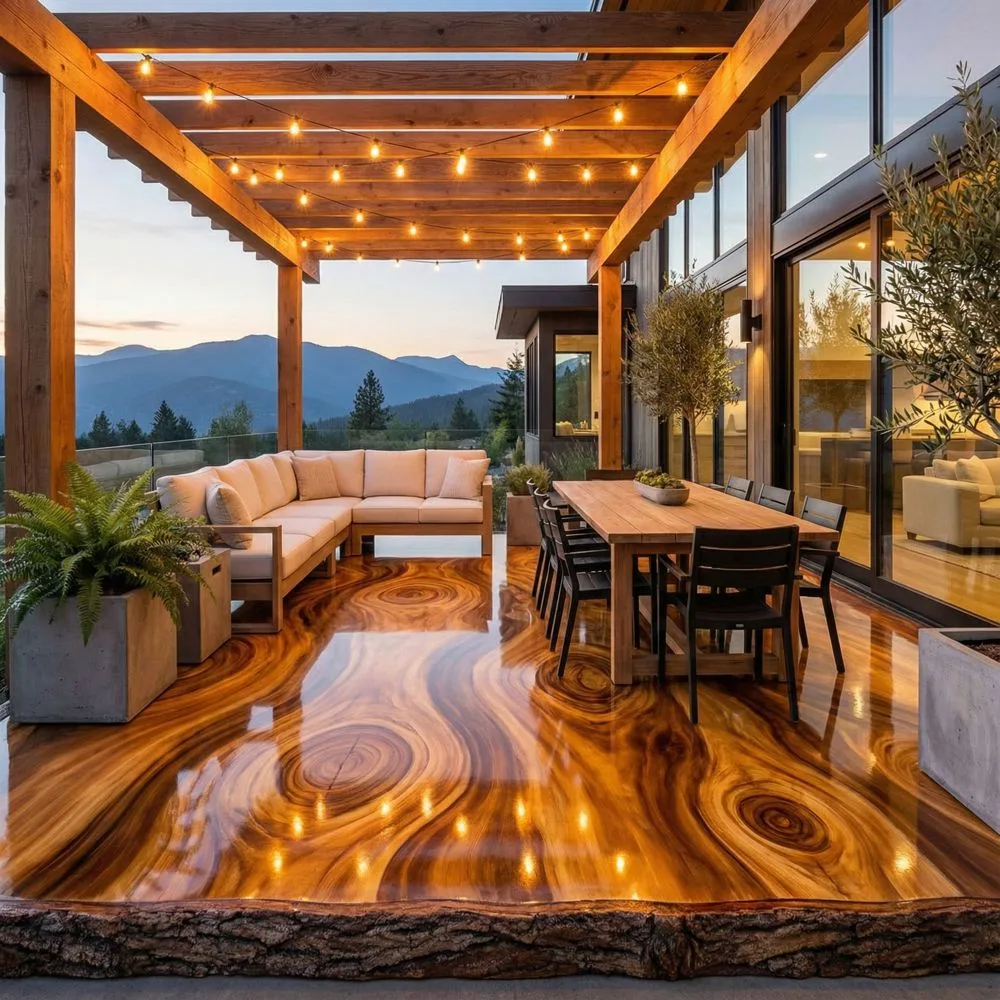
For environmentally conscious homeowners, the sustainability aspects of an epoxy wood slab patio merit consideration. Using reclaimed or salvaged wood slabs gives new life to trees that might otherwise become waste. Urban salvage operations recover wood from trees removed due to disease, development, or storm damage, providing beautiful slabs while reducing landfill burden.
Epoxy resin production and disposal carry environmental implications. Most epoxy resins are petroleum based products that do not biodegrade. However, the extreme durability of properly applied outdoor epoxy means your furniture can last decades, potentially offsetting the environmental cost through longevity compared to frequently replaced conventional outdoor furniture.
Some manufacturers now offer bio based epoxy formulations derived partially from renewable resources like plant oils. While these products may not yet match the performance characteristics of traditional marine epoxy for demanding outdoor applications, the technology continues improving. Researching eco friendlier options and discussing them with suppliers can help you make more sustainable choices.
Proper disposal of unused epoxy and application materials is important. Never pour liquid epoxy down drains or into the environment. Allow excess mixed epoxy to cure completely in a disposable container, then dispose of the hardened material according to local regulations. Used mixing containers and applicators should be cleaned with appropriate solvents when possible or disposed of as directed by local waste management authorities.
Bringing Your Vision to Life
An epoxy wood slab patio represents more than just outdoor furniture or decoration. It embodies a connection to nature, showcasing the beauty of trees while creating functional spaces for memory making and relaxation. The combination of organic wood character and modern epoxy technology produces results that are simultaneously timeless and contemporary, fitting seamlessly into design aesthetics ranging from rustic farmhouse to sleek modern.
Starting your project with clear vision and realistic expectations sets the foundation for success. Browse inspiration galleries, visit showrooms, and if possible, see completed epoxy wood projects in person to understand the look and feel you want to achieve. Sketch your patio layout, considering how epoxy wood elements will integrate with other features like plantings, hardscaping, and existing structures.
Connect with experienced craftspeople who can guide your material selection and process decisions. Many custom furniture builders and epoxy specialists offer consultations that can save you from costly mistakes while helping refine your design vision. Even if you plan to DIY the project, professional advice on material selection and technique can prove invaluable.
Remember that creating an epoxy wood slab patio is a journey that rewards patience and careful execution. Rushing through steps or cutting corners on materials typically leads to disappointing results and potentially expensive do overs. Take your time, follow proper procedures, and don’t hesitate to pause if conditions aren’t optimal for the next step.
The Perfect Finishing Touch for Your Outdoor Oasis
The magic of an epoxy wood slab patio lies in its ability to elevate ordinary outdoor space into something truly special. Each piece tells a unique story through the growth rings, grain patterns, and natural characteristics of the wood, preserved and enhanced beneath crystalline epoxy. Whether you’re creating an intimate seating area for morning coffee or designing an expansive entertainment space for gatherings with friends and family, epoxy wood slabs bring warmth, character, and conversation starting beauty to your outdoor environment.
This investment in your home extends beyond monetary value to encompass quality of life improvements. A thoughtfully designed patio becomes an extension of your living space, a place where indoor comfort meets outdoor freedom. The durability of epoxy protection means your beautiful wood features will serve your family for years to come, aging gracefully and perhaps even appreciating in character as they become part of your home’s story.
As you embark on creating your own epoxy wood slab patio, embrace both the creative possibilities and the technical challenges. The result will be a truly custom outdoor space that reflects your personal style while showcasing nature’s artistry. With proper planning, quality materials, and careful execution, your patio will become a source of pride and enjoyment for decades, a testament to the enduring appeal of wood and the modern magic of epoxy resin.