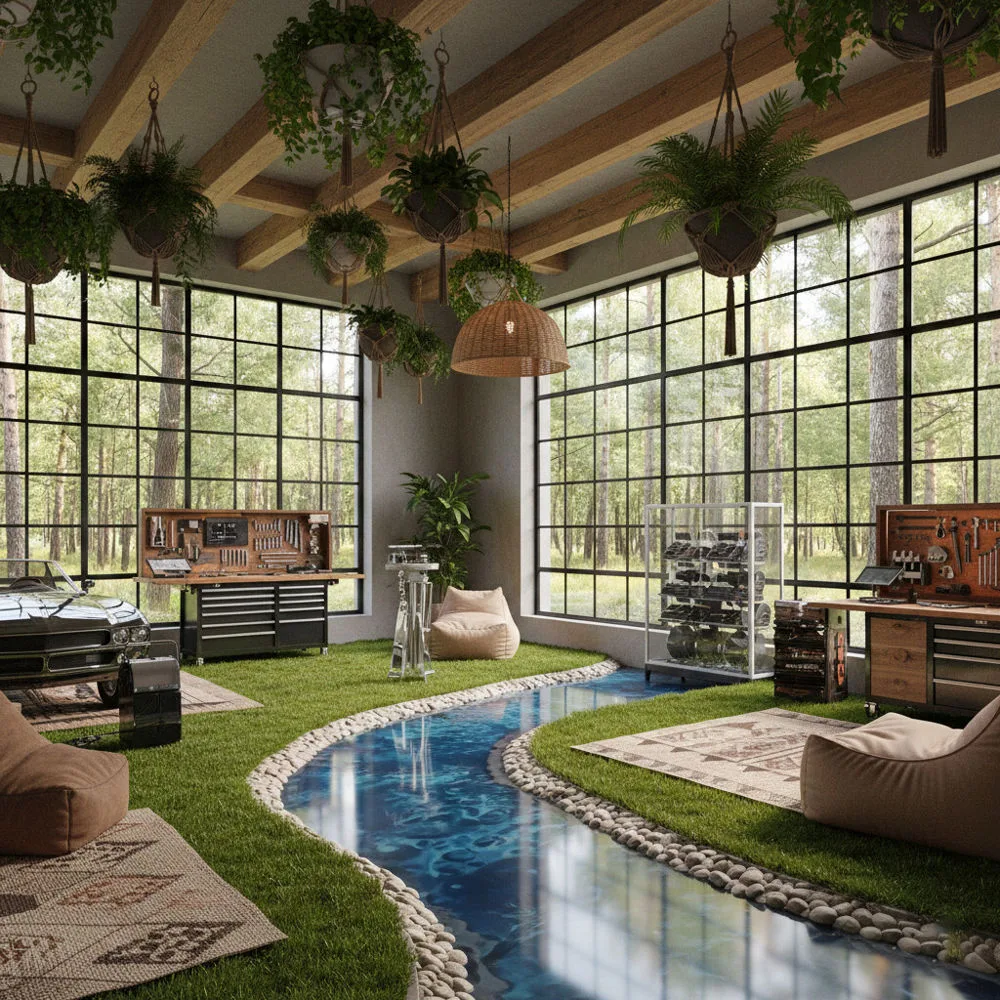
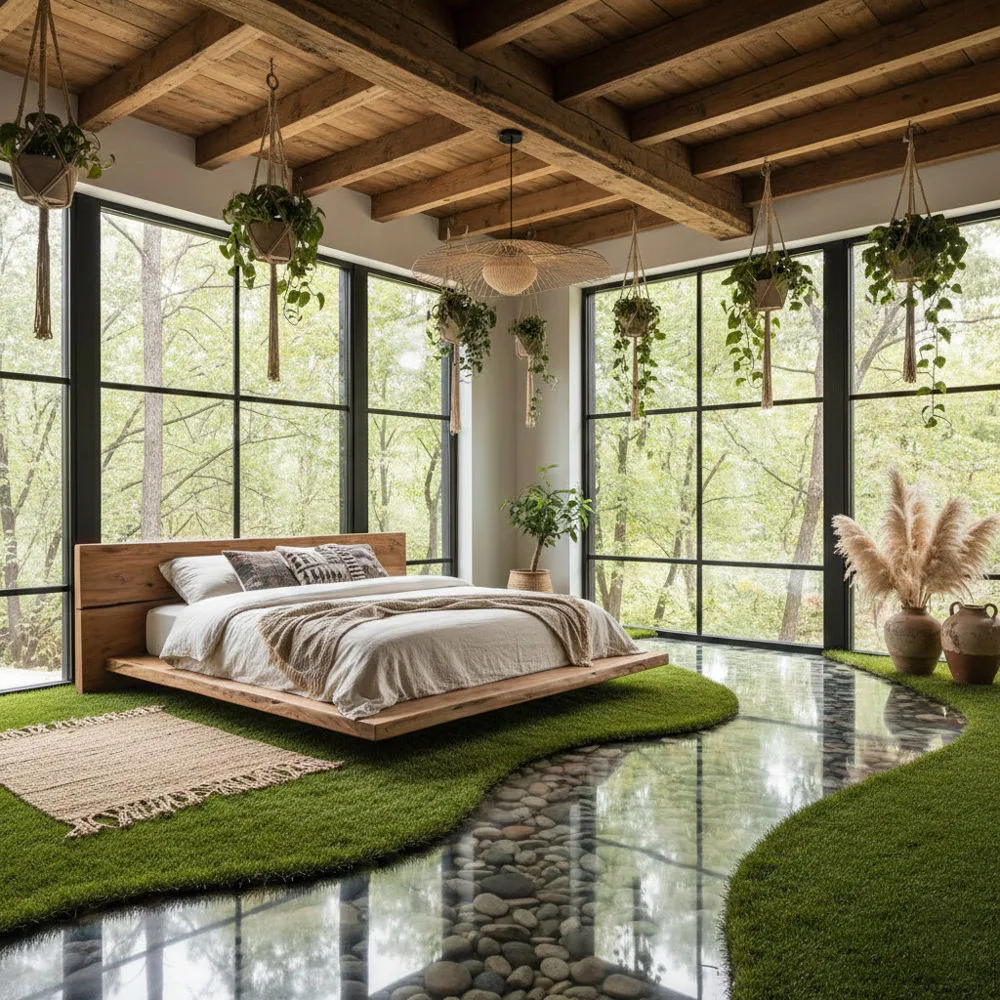
Walking into a space where nature meets modern design creates an instant connection with the natural world. Grass and river flooring represents one of the most captivating trends in contemporary interior design, blending the organic beauty of grasslands with the fluid elegance of water features to create floors that tell a story. This innovative approach to flooring transforms ordinary rooms into extraordinary spaces that celebrate the harmony between earth and water.
The concept draws inspiration from natural landscapes where rivers wind through meadows, creating that perfect balance of texture, movement, and tranquility. When translated into interior spaces, this design philosophy produces flooring that not only looks stunning but also promotes wellness and connects inhabitants with the natural environment they often miss in urban settings.
Understanding the Concept Behind Nature Inspired Floor Design
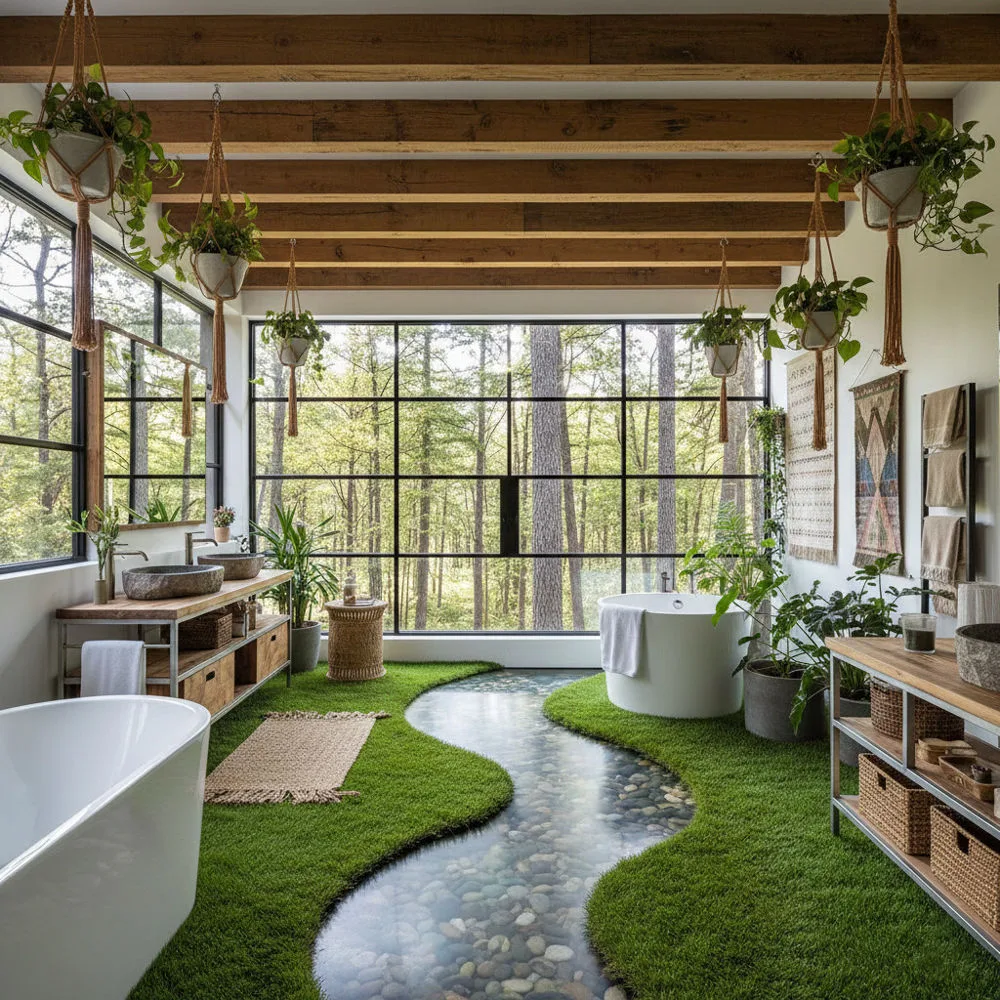
The philosophy behind incorporating natural elements into flooring goes beyond mere aesthetics. Biophilic design, the practice of connecting building occupants with nature, has proven psychological and physiological benefits. Studies show that exposure to natural elements reduces stress, improves cognitive function, and enhances overall wellbeing.
When designers conceptualize grass and river flooring, they aim to capture specific moments in nature. Picture standing at the edge of a crystal clear stream as it meanders through a lush green meadow. The interplay of textures, the visual flow, and the sense of peace that scene evokes becomes the foundation for these remarkable floor designs.
Modern technology now allows us to recreate these natural scenes with incredible accuracy. Advanced printing techniques, innovative materials, and creative installation methods work together to bring outdoor beauty inside without the maintenance challenges of actual grass or water features.
The Materials That Make Magic Happen
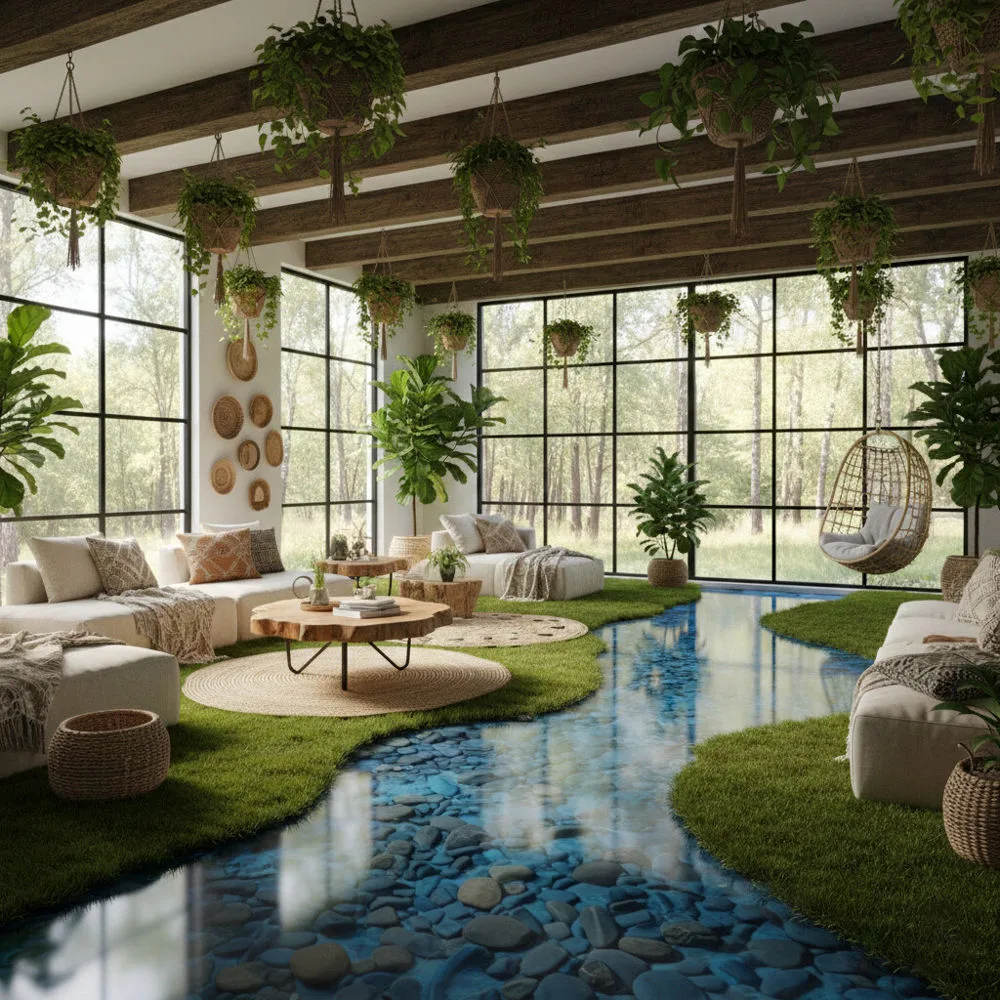
Creating floors that authentically represent grass and flowing water requires sophisticated materials and techniques. Luxury vinyl plank flooring has emerged as one of the most popular choices for achieving this look. The material offers photorealistic imagery that captures every blade of grass and ripple of water with stunning clarity.
Epoxy resin flooring provides another excellent option, particularly for those seeking a seamless, glossy finish that mimics water surfaces. Designers can incorporate actual dried grasses, colored pigments, and metallic flakes into clear epoxy to create depth and movement that changes with viewing angle and lighting conditions.
Porcelain and ceramic tiles with high definition printing technology deliver durability alongside beauty. These tiles can replicate grass textures and river stone patterns while offering the practical benefits of water resistance and easy maintenance. The grout lines, when thoughtfully planned, can even enhance the natural segmentation found in real landscapes.
Carpet tiles with grass like textures combined with smooth vinyl sections create tactile variety. This mixed material approach allows for creative zoning within larger spaces, using texture changes to define areas without physical barriers.
Design Variations That Inspire
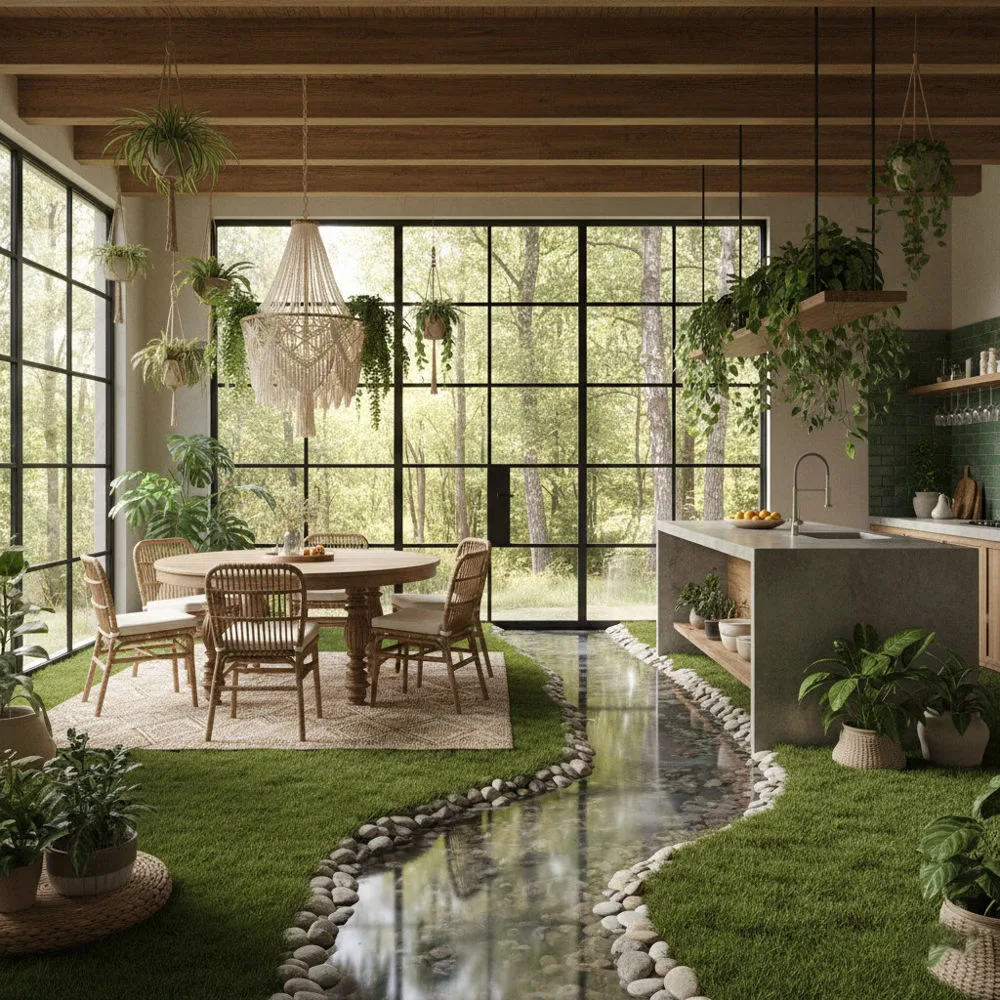
The beauty of this flooring concept lies in its versatility. A subtle approach might feature soft sage green tones with gentle blue grey accents, creating a calming backdrop that complements rather than dominates a space. This works beautifully in bedrooms, meditation rooms, or wellness centers where tranquility takes priority.
Bold installations make dramatic statements in commercial spaces, hotel lobbies, or modern homes with open floor plans. Picture vivid emerald grass patterns intersecting with deep turquoise river designs, creating visual pathways that guide movement through space while serving as conversation starting focal points.
Seasonal interpretations offer another dimension. Spring inspired versions showcase bright greens with clear blue water tones. Autumn variations incorporate golden grasses with deeper, reflective water surfaces. This seasonal approach allows spaces to evolve with changing decor themes throughout the year.
Abstract interpretations take creative license with the concept, using the colors and movement of grass and rivers as inspiration rather than literal representation. Flowing organic lines in green and blue hues create contemporary artistic floors that suggest nature without directly depicting it.
Installation Considerations for Perfect Results
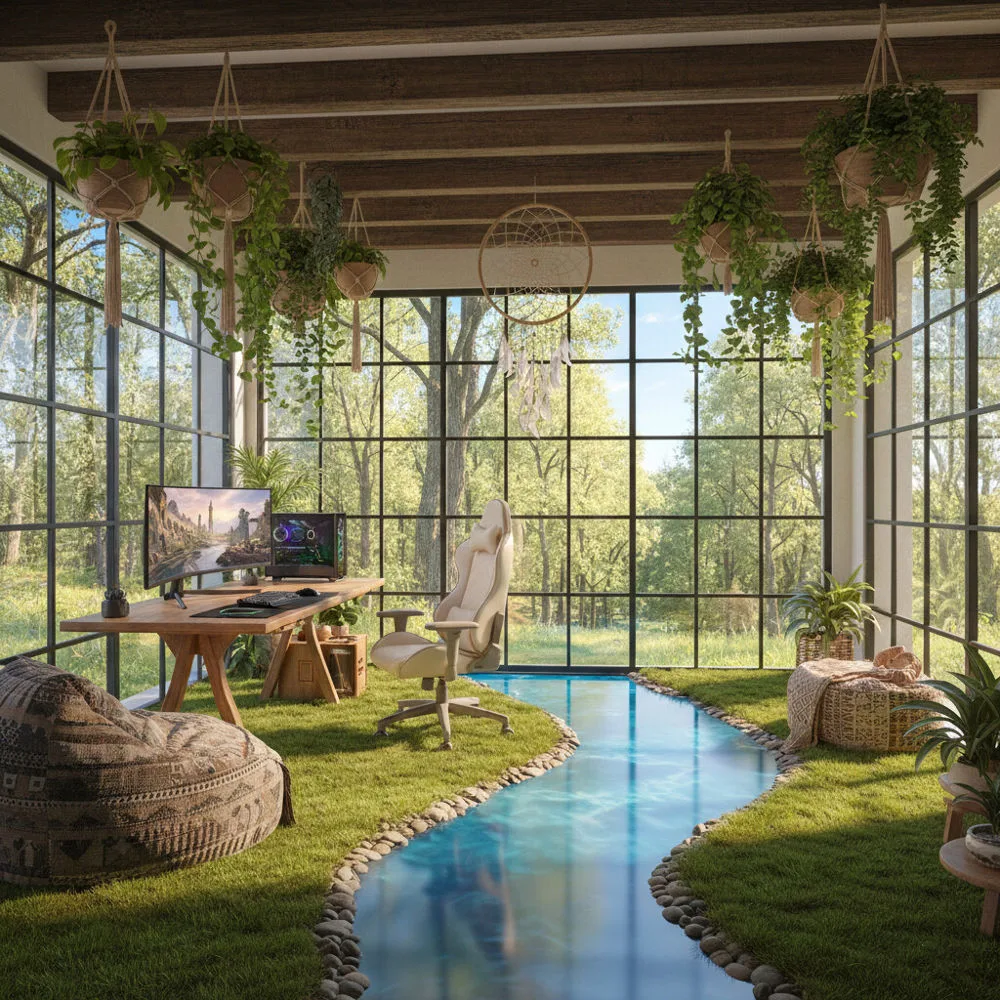
Proper subfloor preparation makes the difference between good results and exceptional ones. The surface must be completely level, clean, and dry before any installation begins. Even minor imperfections will telegraph through the finished floor, disrupting the seamless natural appearance these designs require.
Pattern planning requires careful consideration. With grass and river flooring, the flow and direction of the design elements should feel intentional. River patterns typically look most natural when they appear to flow toward natural light sources or follow the primary traffic patterns through a space.
Professional installation becomes particularly important for complex designs involving multiple materials or intricate patterns. Experienced installers understand how to match patterns across seams, blend transition areas, and ensure consistent coloring throughout the installation.
Acclimation periods matter, especially for vinyl and wood based products. Materials need time to adjust to the temperature and humidity levels of their new environment before installation. Rushing this process can lead to expansion, contraction, or warping that ruins the finished appearance.
Maintenance Practices That Preserve Beauty
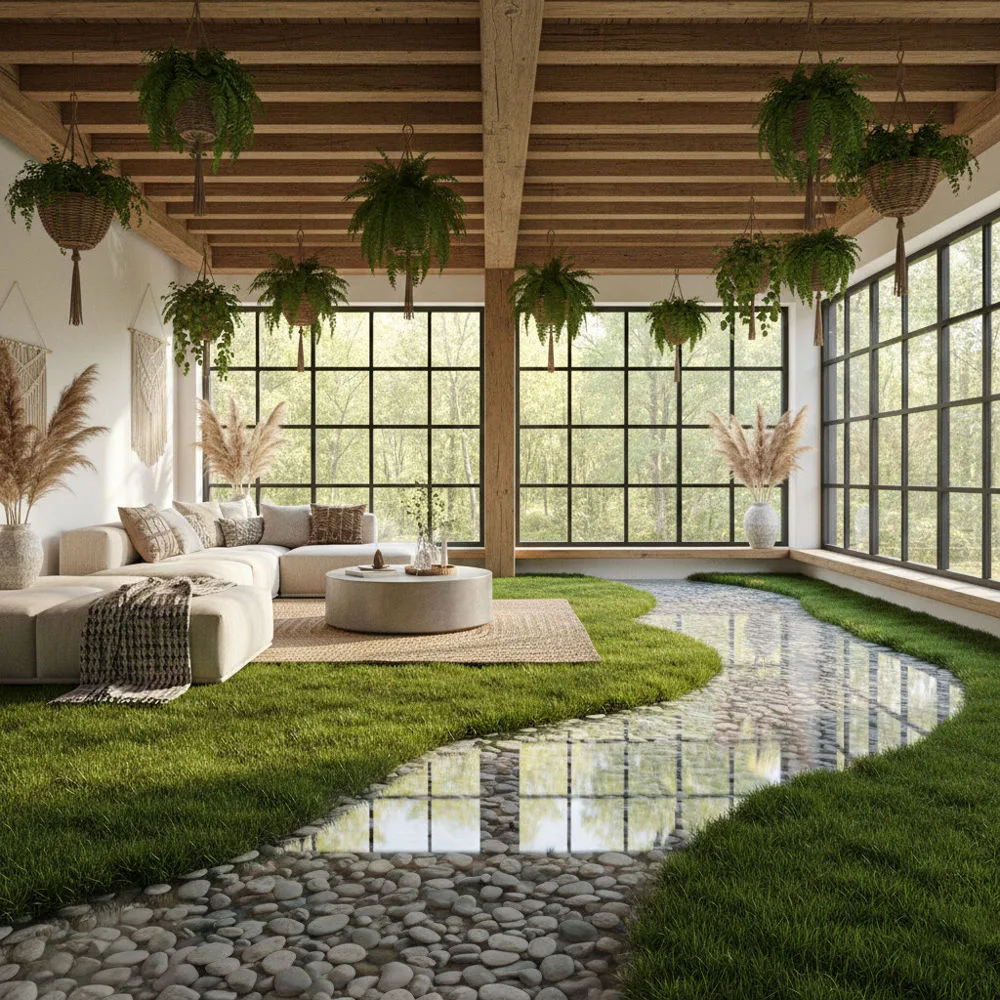
Daily care for these floors remains surprisingly simple despite their sophisticated appearance. Regular sweeping or vacuuming removes dirt and debris that could scratch protective surfaces. Microfiber mops work wonderfully for routine cleaning without leaving streaks or residue.
Appropriate cleaning solutions depend on the specific materials used. Vinyl floors respond well to pH neutral cleaners, while epoxy surfaces need non abrasive formulas that preserve their glossy finish. Always follow manufacturer recommendations to avoid damaging protective coatings or printed surfaces.
Preventive measures extend floor life significantly. Entry mats trap dirt and moisture before they reach decorative flooring. Furniture pads prevent scratches from chairs and tables. Window treatments reduce UV exposure that can fade colors over time, particularly important for maintaining the vibrant greens and blues that define these designs.
Periodic deep cleaning refreshes appearance and removes built up residue. For vinyl and tile, occasional stripping and resealing restores original luster. Epoxy floors benefit from professional buffing services that eliminate minor scratches and restore that liquid glass appearance.
The Environmental Perspective
Sustainability concerns influence many design choices today, and flooring proves no exception. Many products that create grass and river effects now incorporate recycled content, from reclaimed vinyl to recycled glass aggregates in terrazzo style installations. These options allow environmentally conscious consumers to enjoy beautiful floors while minimizing environmental impact.
Low VOC emissions matter for indoor air quality. Quality flooring products now feature formulations that release minimal volatile organic compounds, creating healthier indoor environments. Certifications like FloorScore and Greenguard provide third party verification of low emission products.
Longevity itself represents a form of sustainability. Durable floors that maintain their appearance for decades reduce the environmental cost of replacement. When grass and river flooring uses materials engineered for 20 to 30 year lifespans, it becomes a one time investment rather than a recurring environmental expense.
Local sourcing and manufacturing reduce transportation impacts. Many regions now have manufacturers producing nature inspired flooring locally, cutting the carbon footprint associated with long distance shipping while supporting local economies.
Cost Considerations and Value Analysis
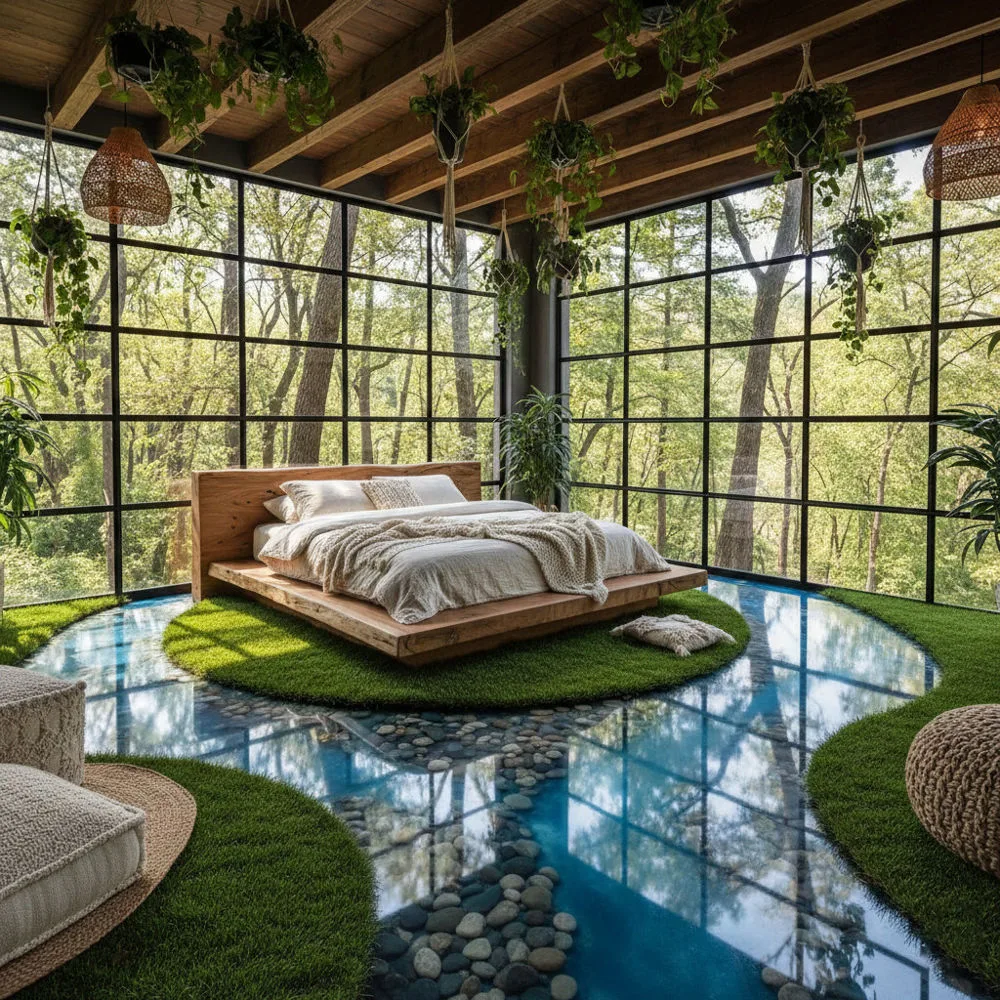
Budget planning for these floors requires understanding the range of available options. Basic vinyl plank installations with grass and river patterns start at moderate price points, making the look accessible for many homeowners. Mid range options incorporate better wear layers and more sophisticated printing for enhanced realism.
Premium installations using custom epoxy work, hand placed elements, or imported tiles command higher investments but deliver truly unique results. These luxury options often make sense in high end residential projects or commercial spaces where flooring serves as a primary design feature.
Return on investment extends beyond mere aesthetics. Distinctive flooring enhances property value, particularly in markets where unique design features differentiate listings. Commercial spaces benefit from the memorable impressions these floors create, potentially influencing customer experience and brand perception.
Long term cost analysis should factor in maintenance expenses and replacement timelines. Higher quality materials with longer lifespans often prove more economical over time despite greater upfront costs. The calculation becomes even more favorable when considering the avoided costs and disruption of premature replacement.
Complementary Design Elements That Complete the Vision
Wall treatments that echo floor themes create cohesive environments without overwhelming spaces. Subtle grass cloth wallpapers or water inspired paint techniques in complementary tones support the nature connection without competing with decorative floors.
Furniture selection benefits from natural materials and organic shapes. Wood pieces with visible grain patterns, wicker accents, and stone elements reinforce the connection to nature that grass and river flooring establishes. Upholstery in neutral earth tones or soft blues maintains thematic consistency.
Lighting design dramatically affects how these floors appear throughout the day. Natural light showcases true colors and brings depth to printed or embedded patterns. Artificial lighting requires careful planning, with warmer tones enhancing grass elements and cooler lights emphasizing water features.
Decorative accessories provide opportunities to strengthen the theme. River rocks in decorative bowls, grass like plants in natural containers, and artwork featuring landscapes all support the overall design narrative without feeling heavy handed or theme park like.
Real World Applications Across Different Spaces
Residential bathrooms transform into spa like retreats with grass and river flooring. The water resistant properties of appropriate materials combine with the visual connection to nature, creating spaces that promote relaxation and renewal. Paired with natural stone walls and wooden accents, these bathrooms become personal sanctuaries.
Commercial wellness centers and yoga studios benefit enormously from this flooring approach. The visual and psychological connection to nature supports the wellness mission these spaces serve. Clients consistently report feeling more grounded and peaceful in environments that incorporate authentic natural elements.
Hospitality venues use these floors to create memorable guest experiences. Hotel lobbies, restaurant dining rooms, and resort common areas all gain distinctive character from thoughtfully designed grass and river flooring. The uniqueness becomes part of the brand story and guest experience.
Healthcare environments increasingly recognize the healing potential of biophilic design. Waiting rooms, patient rooms, and therapy spaces that incorporate nature inspired flooring support patient wellbeing and potentially improve health outcomes according to emerging research in healthcare design.
Overcoming Common Challenges
Pattern matching across large areas requires planning and skill. Purchasing extra material ensures availability of matching lots with consistent coloring. Working with experienced installers who understand pattern flow prevents mismatched seams and awkward transitions.
Moisture concerns in appropriate spaces need addressing during material selection. Not all grass and river flooring options suit below grade installations or areas prone to flooding. Choosing materials rated for specific moisture exposure levels prevents future problems.
Color consistency across batches can vary, particularly with printed products. Ordering all materials simultaneously from the same production run minimizes variation. Keeping extra materials from the original installation allows for perfect matches if repairs become necessary years later.
Transition strips between different flooring types require thoughtful selection. The goal involves creating smooth visual and physical transitions that feel intentional rather than jarring. Metal, wood, or matching vinyl transitions each suit different aesthetic approaches and functional requirements.
Wrapping It All Together: The Transformative Power of Nature Underfoot
Grass and river flooring represents more than a design trend; it embodies our fundamental human need to connect with the natural world even within built environments. These floors succeed because they speak to something essential within us, that draw toward earth, water, and living things that sustained our ancestors and continues to nurture our wellbeing today.
The practical advantages of durability, relatively easy maintenance, and versatility across applications make these floors sensible choices beyond their obvious beauty. The emotional and psychological benefits of daily contact with nature inspired design elements add value that transcends typical return on investment calculations.
As materials technology continues advancing and designers push creative boundaries, the possibilities for grass and river flooring will only expand. What remains constant is the powerful human response to bringing elements of the natural world into the spaces where we live, work, and heal. Whether you choose subtle suggestions of nature or bold statements that command attention, floors that celebrate the meeting of grass and river offer transformation that you will feel with every step.