
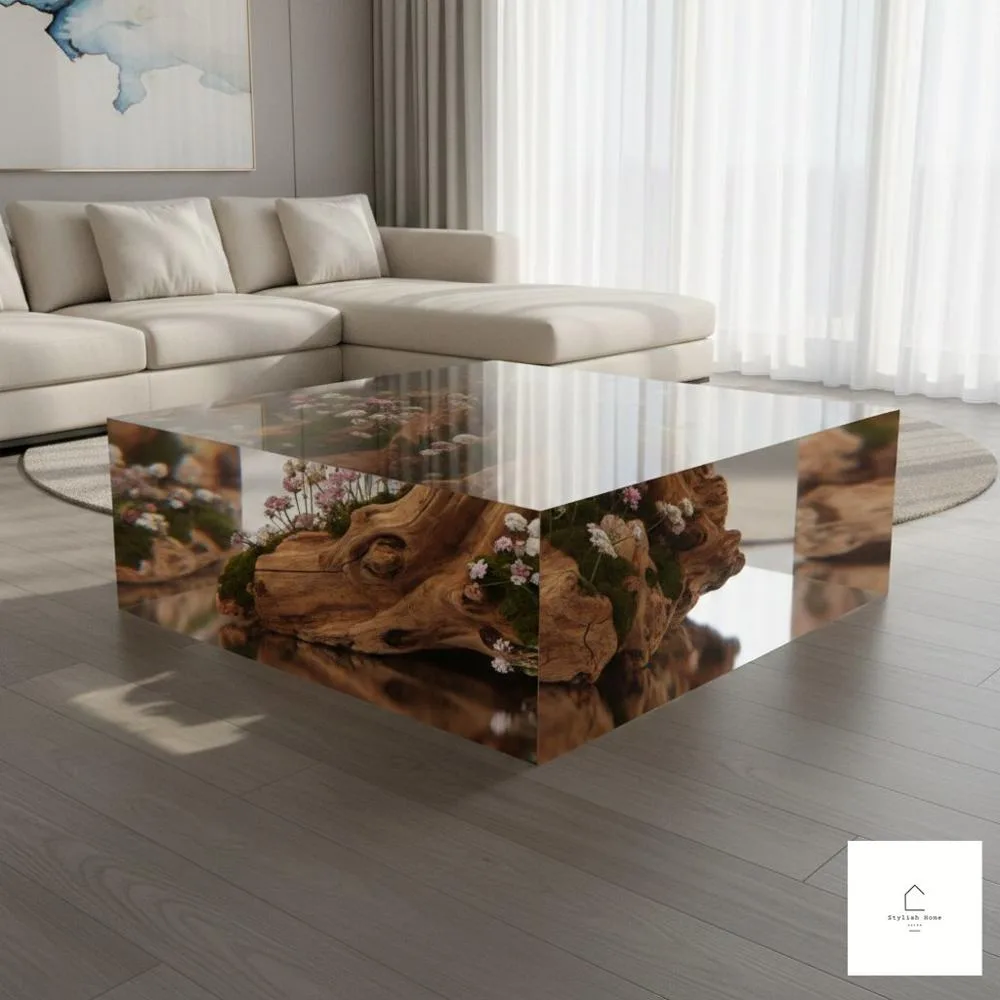
There’s something magical about bringing the outdoors inside, and few furniture pieces accomplish this as beautifully as a log and flower epoxy coffee table. These stunning creations combine the raw, organic beauty of natural wood with the delicate elegance of preserved flowers, all suspended in crystal clear epoxy resin. Whether you’re a woodworking enthusiast, an interior design lover, or someone seeking a unique centerpiece for your living space, understanding the artistry behind these tables opens up a world of creative possibilities.
The popularity of epoxy resin furniture has exploded in recent years, and for good reason. These pieces aren’t just furniture; they’re functional art that tells a story. Each log brings its own history, complete with growth rings, natural grain patterns, and unique character. When combined with carefully selected flowers and professional grade epoxy resin, the result is a one of a kind piece that serves as both a conversation starter and a practical addition to any home.
Understanding the Materials Behind Your Custom Coffee Table
Selecting the Perfect Wood Log
The foundation of any exceptional log and flower epoxy coffee table starts with choosing the right piece of wood. Live edge slabs are particularly popular because they maintain the natural contours of the tree, creating an organic edge that contrasts beautifully with the smooth, glass like finish of cured epoxy resin.
Hardwoods like walnut, oak, maple, and cherry are excellent choices for this type of project. Walnut offers rich, dark brown tones with beautiful grain patterns that create depth and visual interest. Oak provides durability and a classic appearance with prominent grain lines. Maple delivers a lighter, more contemporary look, while cherry develops a gorgeous patina over time that deepens in color and character.
The wood should be properly dried and stabilized before beginning your project. Moisture content is critical because any water trapped in the wood can cause problems during the epoxy curing process, leading to bubbles, cloudiness, or incomplete hardening. Most experts recommend wood with a moisture content below 12 percent for optimal results.
Choosing Flowers That Last Forever
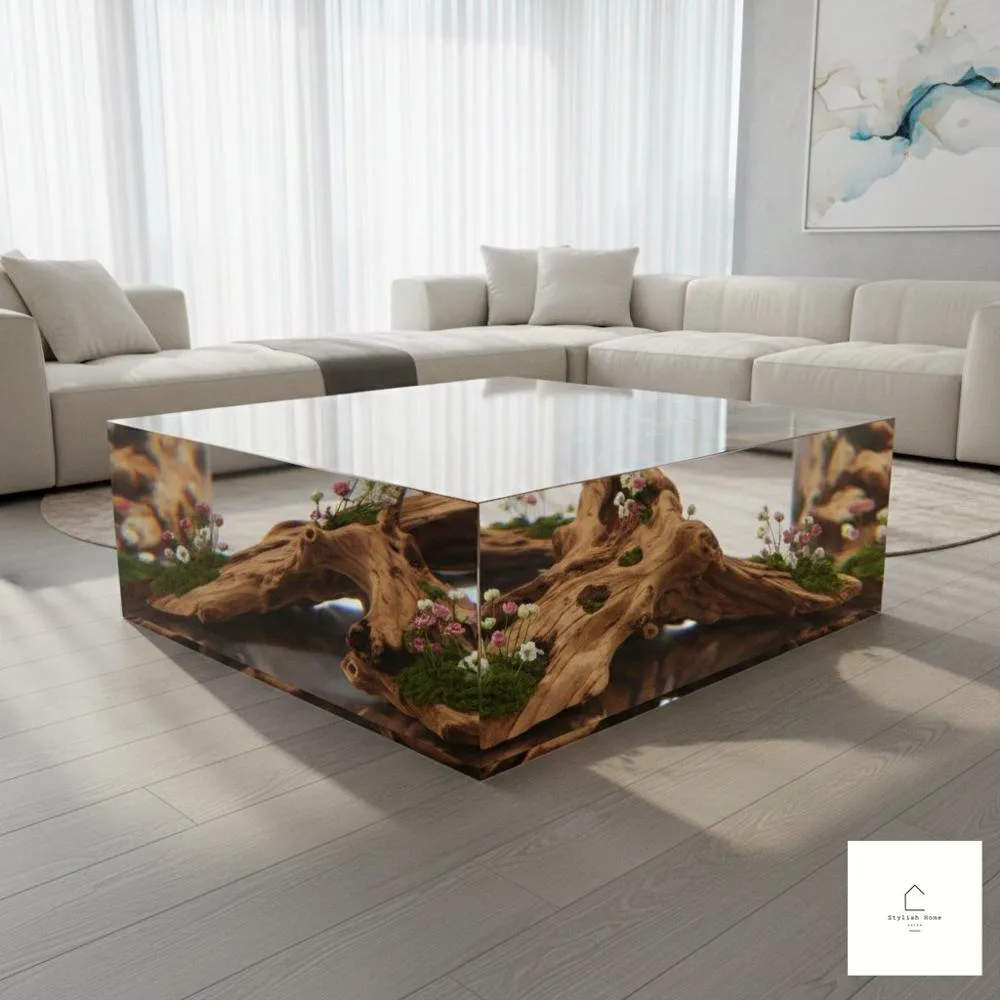
The flower selection process is where your personal creativity truly shines. Dried and preserved flowers work best for embedding in epoxy resin because fresh flowers contain moisture that can cause deterioration and discoloration over time. Popular choices include roses, lavender, baby’s breath, hydrangeas, daisies, and wildflowers.
Each flower type brings different visual qualities to your log and flower epoxy coffee table. Roses add romance and elegance, while wildflowers create a more casual, meadow like aesthetic. Lavender introduces calming purple hues, and baby’s breath provides delicate texture that fills spaces without overwhelming the design.
The preservation process matters significantly. Flowers can be air dried, pressed, or preserved using silica gel or glycerin. Each method produces different results in terms of color retention and three dimensional structure. Air dried flowers tend to have more natural volume but may lose some color vibrancy. Pressed flowers create flat, two dimensional designs perfect for layered compositions. Silica gel preserved flowers maintain their shape and color most effectively, though they require more preparation time.
Epoxy Resin Fundamentals
Not all epoxy resins are created equal, and selecting the right product makes the difference between a professional looking finished piece and a disappointing result. Table top epoxy resins are specifically formulated for deep pours and large surface areas. These products typically have longer working times, reduced bubble formation, and excellent clarity that remains stable over years of use.
Quality epoxy resin systems consist of two components: the resin and the hardener. When mixed in precise ratios, a chemical reaction occurs that transforms the liquid mixture into a solid, durable surface. The curing process generates heat, so understanding pour depths and timing prevents overheating that can cause yellowing or cracking.
UV resistance is another crucial factor when selecting epoxy for your log and flower epoxy coffee table. Inferior products yellow over time when exposed to sunlight, diminishing the beauty of your carefully arranged flowers and wood. Premium epoxy resins include UV inhibitors that maintain crystal clarity for decades, protecting your investment and preserving the visual appeal of your furniture.
Design Principles for Stunning Visual Impact
Planning Your Composition
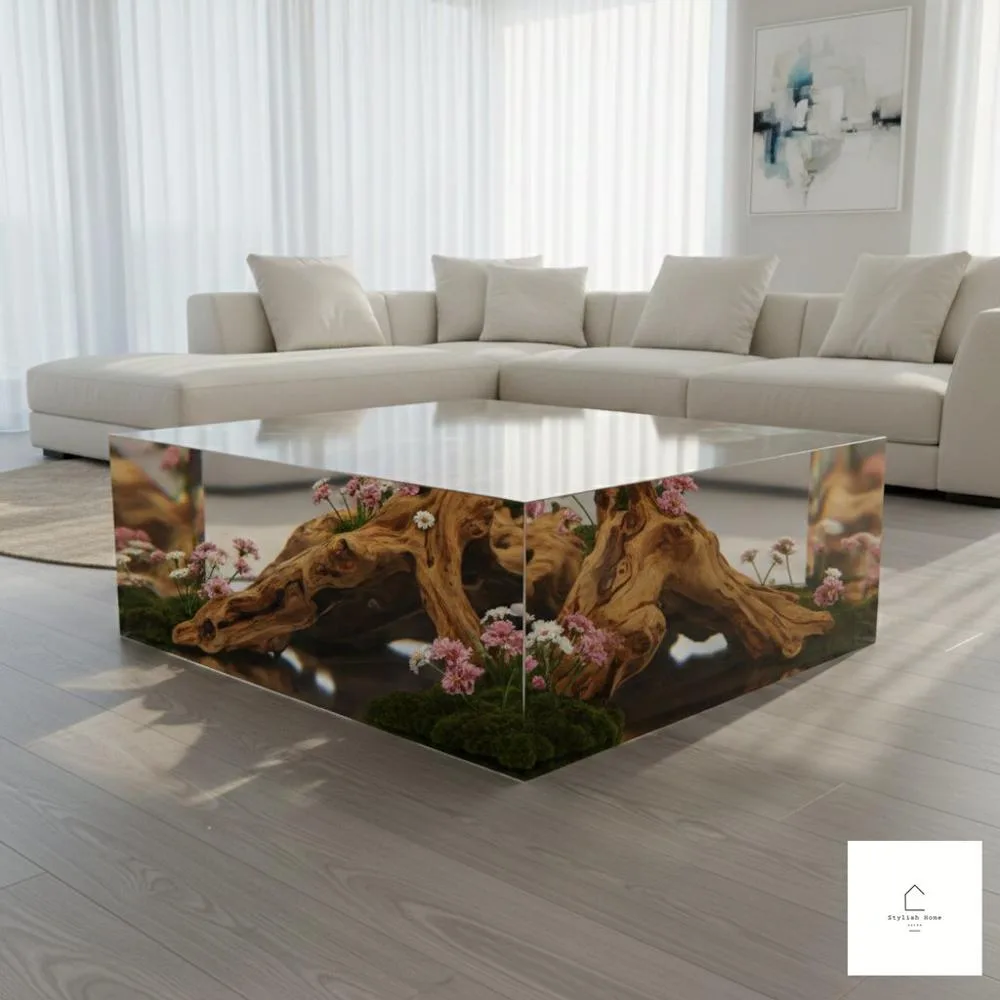
Before mixing a single drop of epoxy, successful creators spend considerable time planning their design. Think of your coffee table surface as a canvas where wood and botanicals interact to create visual harmony. Consider the natural shape of your log and how flowers can complement or contrast with the wood grain direction and color tones.
Some designs feature flowers clustered in specific areas, creating focal points that draw the eye. Others distribute botanical elements throughout the entire surface for a more uniform garden effect. River table designs, where epoxy flows through the center like a stream with flowers floating within it, offer another popular aesthetic approach.
Color theory plays an important role in these decisions. Complementary colors create vibrant, energetic designs, while analogous color schemes produce harmonious, calming effects. The natural brown tones of wood pair beautifully with nearly any flower color, but considering your existing interior design helps ensure your log and flower epoxy coffee table enhances rather than clashes with your space.
Depth and Layering Techniques
Professional looking epoxy tables often incorporate multiple layers that create depth and dimension. Rather than pouring all the epoxy at once and dropping flowers in randomly, experienced craftspeople build their designs in stages.
A initial seal coat protects the wood and provides a base layer. Subsequent pours add flowers at different heights, creating a three dimensional underwater garden effect. Some flowers rest on the wood surface, others float mid depth, and still more hover near the top surface. This layering technique mimics natural environments where plants grow at various elevations, resulting in more realistic and visually complex compositions.
Strategic use of clear epoxy spaces allows the wood grain to shine through while flower arrangements create interest without overwhelming the natural beauty of the log. Balance is essential; too many flowers can look cluttered and obscure the wood, while too few may seem sparse and underwhelming.
The Construction Process Step by Step
Preparing Your Workspace
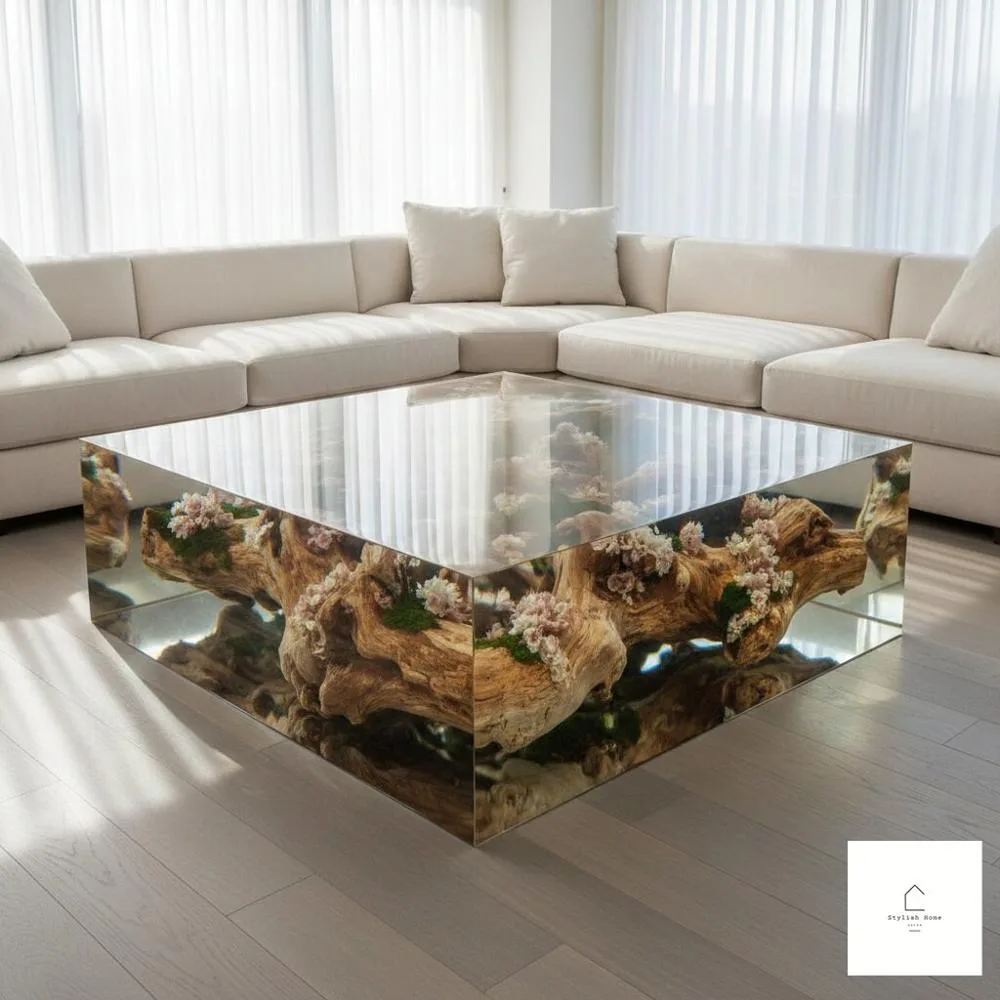
Creating a log and flower epoxy coffee table requires a dedicated workspace with proper ventilation, consistent temperature control, and a level surface. Epoxy resin cures best at temperatures between 70 and 80 degrees Fahrenheit. Temperature fluctuations during the curing process can cause problems with clarity, hardness, and adhesion.
Dust is the enemy of perfect epoxy finishes. Any particles that settle on wet epoxy become permanently embedded in the surface. Working in a clean, enclosed space away from high traffic areas minimizes contamination. Some creators construct temporary plastic enclosures around their projects during the curing phase to prevent dust settlement.
Safety equipment is non negotiable when working with epoxy resin. Gloves protect your skin from potential irritation, safety glasses shield your eyes from splashes, and respirators or proper ventilation prevent inhalation of fumes during mixing and application. While modern epoxy products are generally safe when used correctly, taking precautions ensures a healthy crafting experience.
Wood Preparation and Sealing
Raw wood is porous and will absorb epoxy if not properly sealed, creating dry spots, uneven surfaces, and wasted material. The preparation process begins with sanding the wood surface progressively through finer grits, typically starting around 80 grit and finishing at 220 grit. This creates a smooth surface that accepts the seal coat evenly.
Any cracks, voids, or bark inclusions should be cleaned thoroughly, removing loose material and debris. Some creators choose to fill large voids with colored epoxy first, creating interesting design elements before adding flowers and clear epoxy. Others embrace these natural features, allowing flowers to nestle into crevices and gaps.
The seal coat involves brushing or wiping a thin layer of epoxy across all wood surfaces that will contact the main epoxy pour. This soaks into the wood fibers, preventing air bubbles from escaping during subsequent pours. Allow the seal coat to cure until tacky but not fully hardened before proceeding with your main pour for optimal adhesion between layers.
Flower Arrangement and Epoxy Application
With your wood sealed and your design planned, the exciting phase of flower placement begins. Many creators do a dry run first, arranging flowers on the wood surface without epoxy to visualize the final composition. Taking photos from different angles helps finalize placement decisions before committing to the permanent arrangement.
Flowers can be secured temporarily with small dots of hot glue or clear drying craft glue, keeping them in position during the epoxy pour. Some lightweight flowers may float when epoxy is poured, so securing them prevents your carefully planned design from shifting.
Mixing epoxy requires precision and patience. Follow manufacturer ratios exactly, measuring by weight rather than volume for accuracy. Mix slowly but thoroughly, scraping the sides and bottom of your container to ensure complete blending of resin and hardener. Let the mixed epoxy rest for a few minutes, allowing bubbles to rise before pouring.
Pour epoxy slowly and deliberately, starting at one end and working across the surface. A heat gun or propane torch passed quickly over the surface pops bubbles that rise during and after pouring. Multiple passes may be necessary over the first few hours as additional bubbles escape from the wood and flowers.
Finishing Touches That Make the Difference
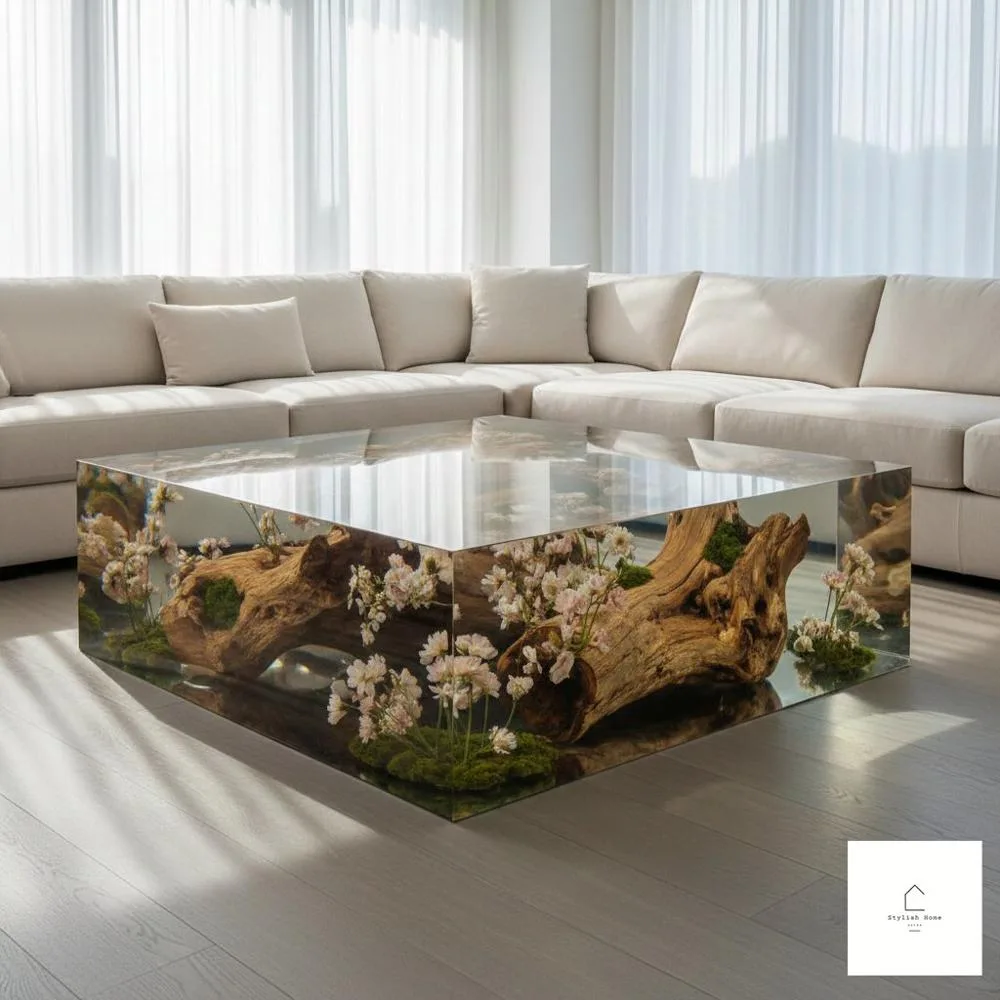
Sanding and Polishing for Glass Like Clarity
Once your epoxy has fully cured, which typically takes several days depending on the product and environmental conditions, the finishing process transforms the surface from matte to magnificently clear. This involves wet sanding through progressively finer grits, usually starting at 400 or 600 grit and working up to 3000 grit or higher.
Wet sanding keeps the surface cool and washes away debris that could scratch the epoxy. The process requires patience; rushing through grits or skipping steps results in visible scratches in the finished surface. Each grit removes the scratches from the previous grit while introducing finer scratches of its own, gradually approaching a scratch free surface.
After sanding through the finest grit, polishing compound applied with a buffing pad brings out the full clarity and depth of your log and flower epoxy coffee table. The transformation is remarkable as the cloudy sanded surface suddenly becomes crystal clear, revealing the full beauty of the flowers suspended within and the wood grain below.
Adding Legs and Structural Support
Your beautiful tabletop needs a solid foundation. Leg selection depends on your design aesthetic and the weight of your finished piece. Hairpin legs offer a mid century modern look that’s lightweight and affordable. Steel tube legs provide industrial styling with substantial strength. Wooden legs can match or complement the table top wood for a cohesive, natural appearance.
Attachment methods vary based on leg style and table weight. Threaded inserts installed in the wood portion provide strong, removable connections for bolt on legs. Epoxy bonded mounting plates work well when the leg attachment point falls entirely within the resin area. Proper weight distribution and secure attachment ensure your coffee table remains stable and safe for years of use.
Some creators add additional features like felt pads on the bottom of legs to protect flooring, or adjustable feet to accommodate uneven floors. These small details contribute to the overall quality and functionality of your finished log and flower epoxy coffee table.
Maintenance and Long Term Care
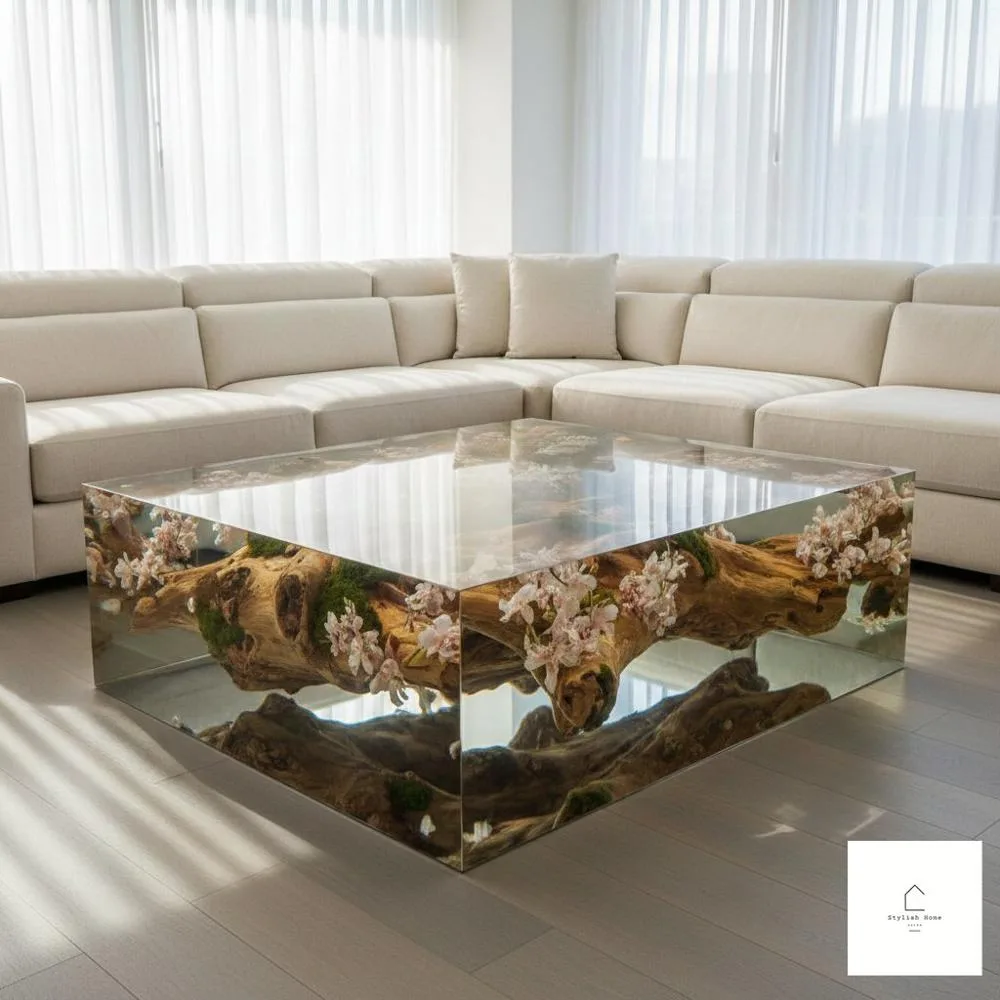
Protecting Your Investment
While epoxy resin creates an incredibly durable surface, proper care ensures your log and flower epoxy coffee table maintains its beauty for decades. Use coasters under glasses and avoid placing extremely hot items directly on the surface, as sustained heat can damage epoxy over time. Trivets or hot pads protect against heat damage from coffee pots, serving dishes, or laptops running warm.
Regular cleaning requires only mild soap and water with a soft cloth. Avoid abrasive cleaners, scouring pads, or harsh chemicals that can dull or damage the epoxy surface. For stubborn spots, slightly dampened magic erasers work effectively without scratching.
Direct sunlight exposure over extended periods can cause any epoxy to yellow eventually, even UV resistant formulations. Positioning your table away from windows with intense sun exposure or using window treatments to filter UV rays helps maintain the crystal clarity that showcases your flower arrangement and wood grain.
When Repairs Are Needed
Despite careful construction and maintenance, accidents happen. Minor scratches can often be buffed out using the same polishing process used during initial finishing. Deeper scratches may require wet sanding and repolishing of the affected area.
More significant damage like chips or cracks at edges typically requires professional repair or careful DIY work with fresh epoxy. The damaged area is cleaned, roughened slightly with sandpaper for adhesion, and filled with new epoxy that’s allowed to cure before sanding and polishing to blend with the surrounding surface.
Understanding these repair possibilities before problems occur means you can address issues promptly, preventing small damage from becoming larger problems that compromise the structural integrity or appearance of your log and flower epoxy coffee table.
Bringing Natural Beauty Into Your Home
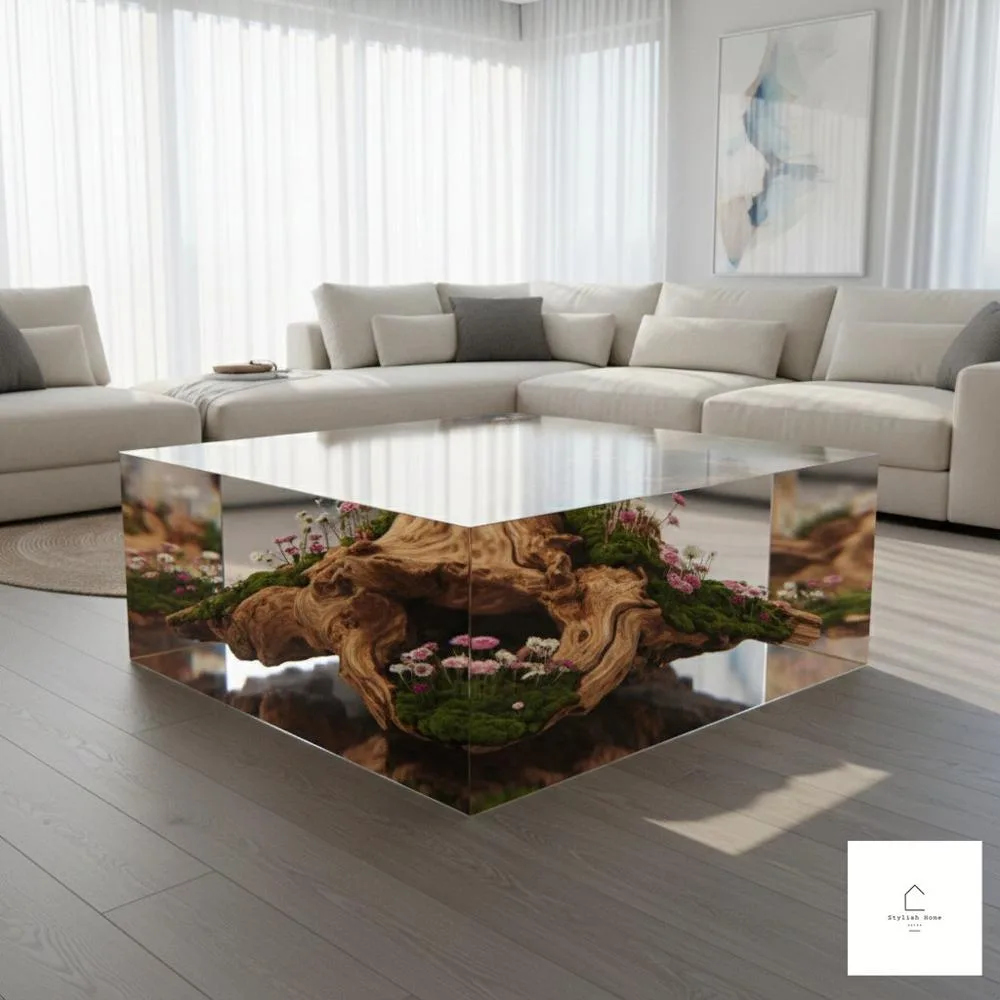
Creating a log and flower epoxy coffee table represents more than just building furniture. It’s about capturing a moment in nature, preserving delicate beauty within durable resin, and crafting something truly unique that reflects your personal style and appreciation for natural materials. Whether you commission a custom piece from a skilled artisan or embark on creating your own, the result is functional art that brings warmth, character, and conversation to your living space.
The intersection of woodworking craftsmanship, floral design sensibility, and epoxy resin technology produces furniture that’s simultaneously rustic and refined, natural and modern. Each piece tells a story through the wood’s growth rings, the carefully selected flowers frozen in time, and the crystal clear resin that binds it all together.
As you consider adding a log and flower epoxy coffee table to your home, think about the colors, flowers, and wood types that resonate with your aesthetic preferences and existing decor. Whether you prefer the deep, rich tones of walnut with romantic red roses, or the light, airy feel of maple with delicate wildflowers, the possibilities are limited only by imagination and creativity.
This unique furniture style continues evolving as creators experiment with new techniques, materials, and design approaches. From incorporating LED lighting beneath transparent resin to mixing in metallic pigments, stones, or other natural elements alongside flowers, innovation keeps this art form fresh and exciting.
Wrapping Up Your Journey Into Epoxy Artistry

The world of log and flower epoxy coffee tables offers endless opportunities for creativity, craftsmanship, and personal expression. Whether you’re drawn to these pieces for their natural beauty, their uniqueness, or their ability to preserve delicate flowers in functional furniture form, understanding the materials, techniques, and care requirements helps you make informed decisions about purchasing or creating your own.
From selecting the perfect slab of wood and preserving flowers at their peak beauty, to mastering epoxy mixing and pouring techniques, each step in the creation process contributes to the final result. The time, patience, and attention to detail invested in these tables shows in every crystal clear inch, every preserved petal, and every swirl of natural wood grain visible beneath the glossy surface.
As this furniture style continues gaining popularity among homeowners, interior designers, and furniture enthusiasts, the artisans perfecting these techniques push boundaries and develop new approaches that make each piece more stunning than the last. Your log and flower epoxy coffee table isn’t just furniture; it’s a centerpiece, a conversation starter, and a daily reminder of nature’s beauty preserved forever in resin and wood.