
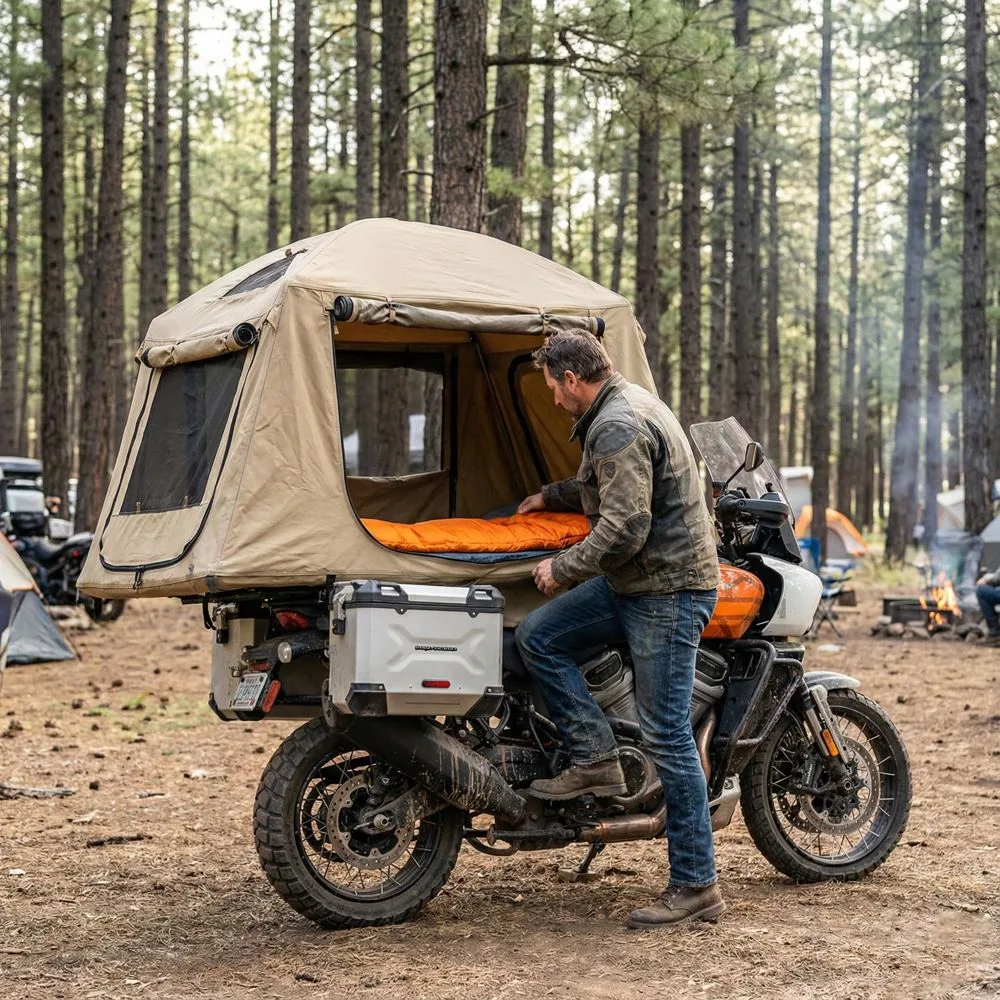
There’s something magical about combining the freedom of motorcycling with the raw authenticity of tent camping. As the sun sets behind distant mountains and you pull into a campsite after hours on the road, the promise of a night under stars makes every mile worthwhile. Motorcycle tent camping represents the purest form of adventure travel, where minimalism meets exploration and every decision about what to pack matters.
The rise of adventure motorcycling has brought tent camping back into focus for riders worldwide. Unlike traditional camping where you can throw everything into a car trunk, motorcycle camping demands thoughtful planning and specialized gear. This comprehensive guide explores everything you need to know about hitting the road with your bike and a tent, from selecting the right equipment to mastering your camping setup for maximum comfort and efficiency.
Understanding the Basics of Motorcycle Camping
Motorcycle tent camping differs fundamentally from car camping or backpacking. You’re constrained by limited space but have more carrying capacity than a hiker. You need gear that’s compact, lightweight, and durable enough to withstand being strapped to a motorcycle through various weather conditions and road surfaces.
The beauty of camping from a motorcycle lies in accessibility. You can reach remote locations that larger vehicles cannot access, camp in backcountry areas, and change your plans spontaneously. Unlike RV camping, you’re not confined to developed campgrounds with hookups. Your motorcycle becomes your ticket to genuine wilderness experiences while maintaining the comfort of having proper shelter and cooking equipment.
Weather protection becomes crucial when you’re on two wheels. A sudden rainstorm that might be uncomfortable in a car can be dangerous on a motorcycle. Your tent becomes not just sleeping quarters but a critical sanctuary where you can dry out, warm up, and regroup. This makes choosing quality gear essential rather than optional.
Choosing Your Shelter: Motorcycle Tent Options
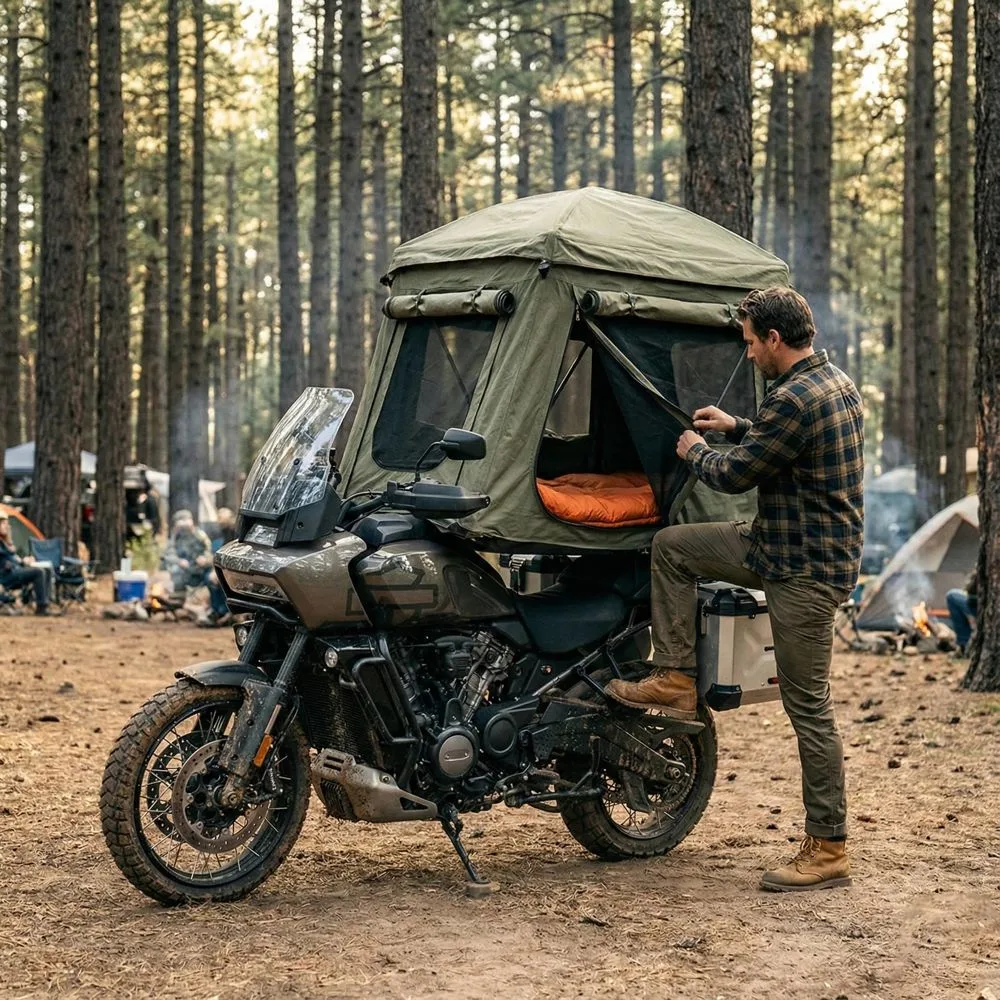
Selecting the right tent forms the foundation of successful motorcycle camping. Standard camping tents work, but tents designed specifically for motorcycle camping offer advantages worth considering. These specialized shelters typically feature smaller pack sizes, lighter weights, and designs that accommodate the unique needs of bike travelers.
A motorcycle tent with floor provides essential protection from ground moisture, insects, and cold. Floored tents create a sealed environment that keeps you comfortable in diverse conditions. Look for bathtub-style floors that extend several inches up the walls, preventing water intrusion during heavy rain. The floor material should be thick enough to withstand abuse from boots, gear, and rough terrain without tearing.
Single-person tents work well for solo riders prioritizing minimal weight and pack size. These compact shelters typically weigh between two and four pounds and pack down to the size of a sleeping bag. However, consider whether you’ll ever ride with a passenger or friend. A two-person tent provides extra room for gear storage and doesn’t add excessive weight, usually coming in under five pounds for quality models.
Freestanding tents offer significant advantages for motorcycle camping. These designs use pole structures that allow the tent to stand without staking, which proves invaluable when camping on hard ground, sand, or platforms where driving stakes becomes difficult or impossible. You can also pick up and move a freestanding tent easily if you need to adjust your campsite location.
Quick setup matters after a long day of riding. Look for designs with color-coded poles, simple clip systems, and intuitive assembly. Some riders prefer tunnel tents that use fewer poles and set up quickly, while others favor dome designs for superior wind resistance. The motorcycle tent lone rider especially appreciates fast setup when arriving at camp exhausted after covering serious miles.
Protecting Your Investment: Motorcycle Tent Cover and Storage Solutions
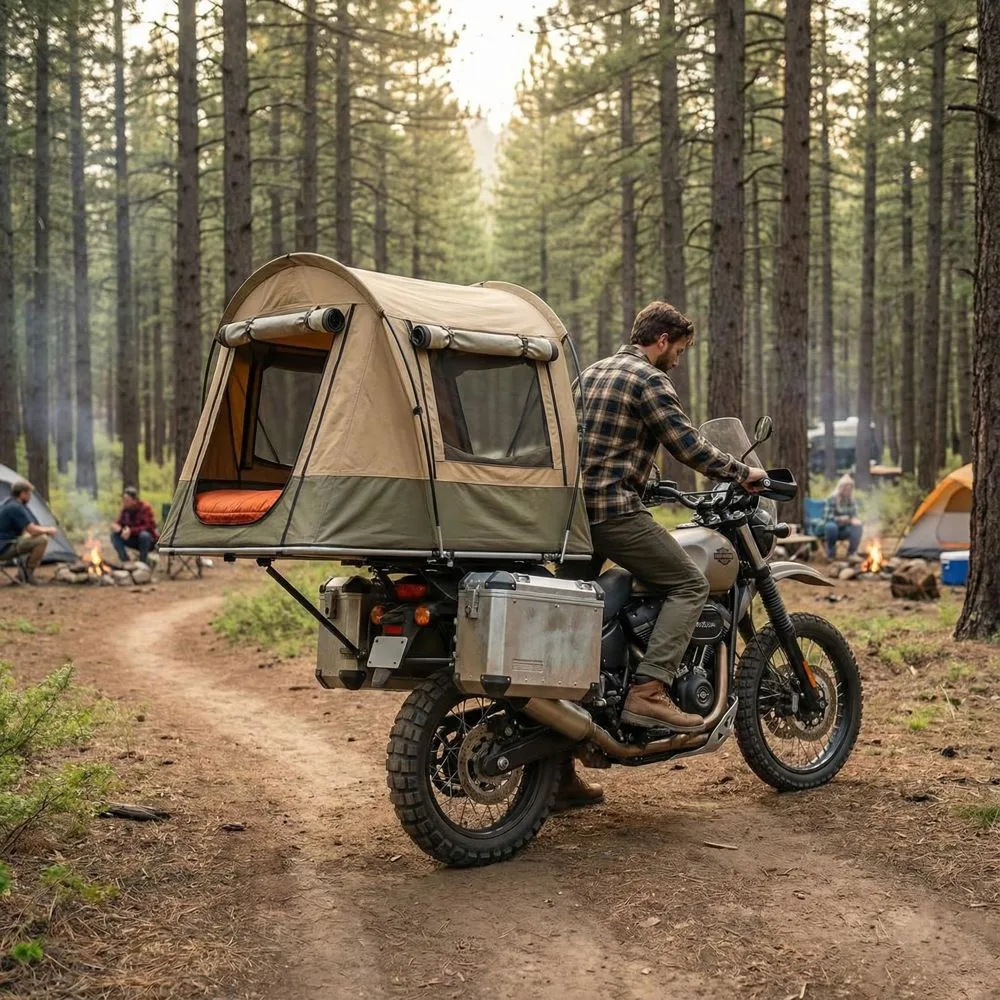
Your motorcycle represents a significant investment that needs protection at camp. A motorcycle tent cover shields your bike from rain, morning dew, and harmful UV exposure. Quality covers use waterproof, breathable materials that prevent moisture buildup underneath while blocking rain. Look for covers with ventilation panels and soft inner linings that won’t scratch your paint or chrome.
When selecting a cover, ensure proper fit for your specific bike model. Oversized covers flap in wind and can actually cause damage, while undersized covers won’t provide complete protection. Many covers include lockable grommets that allow you to secure the cover to your bike, preventing theft and keeping it in place during windy conditions.
A motorcycle tent garage takes protection further, providing a structured shelter for your bike. These portable garages typically use a frame of poles supporting a waterproof cover, creating a complete enclosure. While larger and heavier than simple covers, tent garages offer superior protection for extended stays and protect your bike from all weather conditions, not just rain.
For riders planning longer trips or base camping in one location, a motorcycle tent garage makes excellent sense. They provide space to work on your bike, organize gear, and keep everything dry and secure. Some designs include zippered doors and windows, essentially creating a small workshop at your campsite.
Motorcycle tent storage between trips matters as much as protection on the road. Store your tent completely dry in a cool, dry location away from direct sunlight. Avoid compression stuff sacks for long-term storage, as constant compression can damage waterproof coatings and insulation. Instead, store tents loosely in a large mesh bag or hang them in a closet, allowing materials to breathe and maintain their properties.
Expanding Your Options: Motorcycle Tent Trailer and Camper Solutions
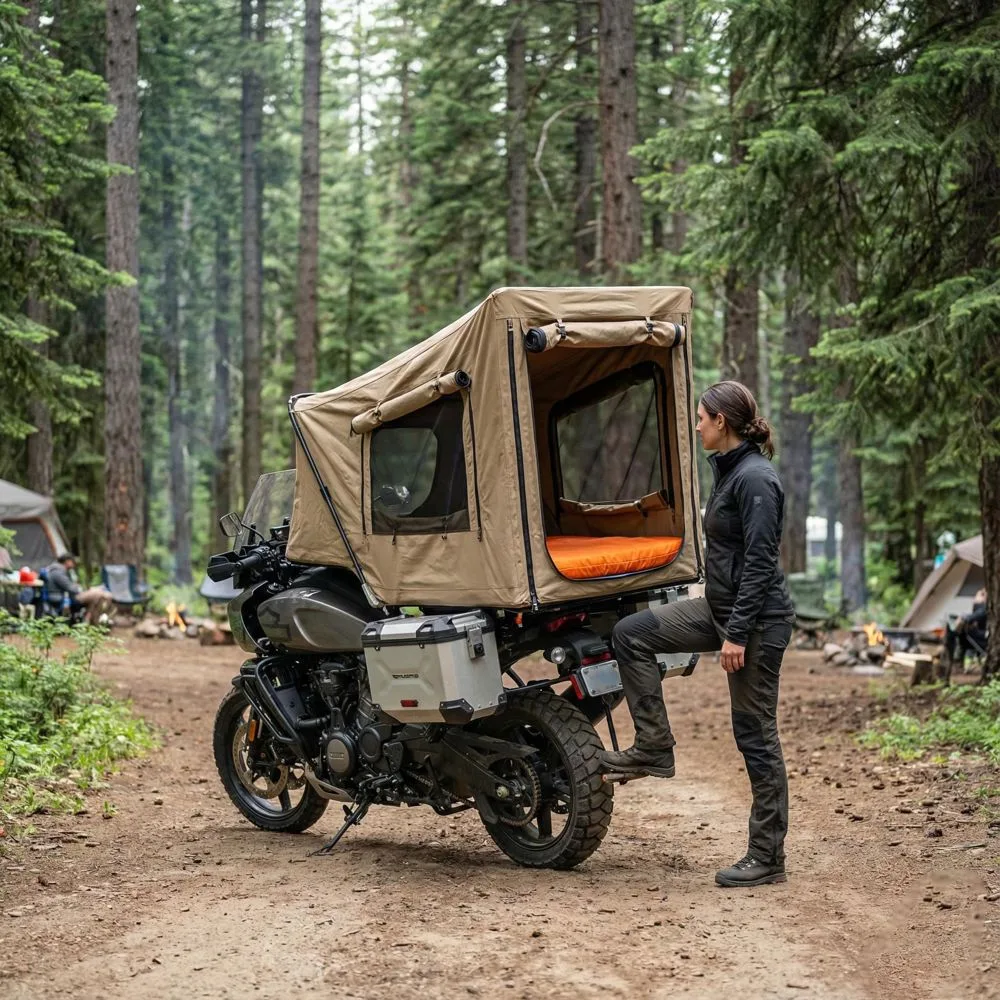
Not every rider wants to carry everything on their bike. A motorcycle tent trailer offers an elegant solution for those wanting more gear capacity without the weight and bulk on the motorcycle itself. These small trailers attach to your bike’s hitch and provide substantial storage while maintaining the maneuverability that makes motorcycle camping appealing.
Quality trailers designed for motorcycles feature low centers of gravity, proper weight distribution, and suspension systems that absorb road irregularities without transferring them to your bike. Single-wheel trailers track naturally behind your motorcycle and handle better than two-wheel designs, though they require slightly more attention when backing up or parking.
A motorcycle tent camper takes the trailer concept further, combining cargo space with an integrated tent system. These innovative designs typically feature a hard-sided trailer that opens to reveal a tent sleeping area. Some models include cooking facilities, storage compartments, and even basic electrical systems. While heavier and more expensive than traditional tent camping, motorcycle tent campers provide remarkable comfort and convenience for extended tours.
The main consideration with any trailer setup involves towing capacity and handling. Ensure your motorcycle can safely tow the loaded trailer weight. Most adventure touring bikes handle trailers well, but smaller bikes or sport bikes may struggle. Practice maneuvering with a trailer before embarking on your trip, paying special attention to turns, lane changes, and slow-speed handling.
Essential Gear: Building Your Motorcycle Tent Camping Kit
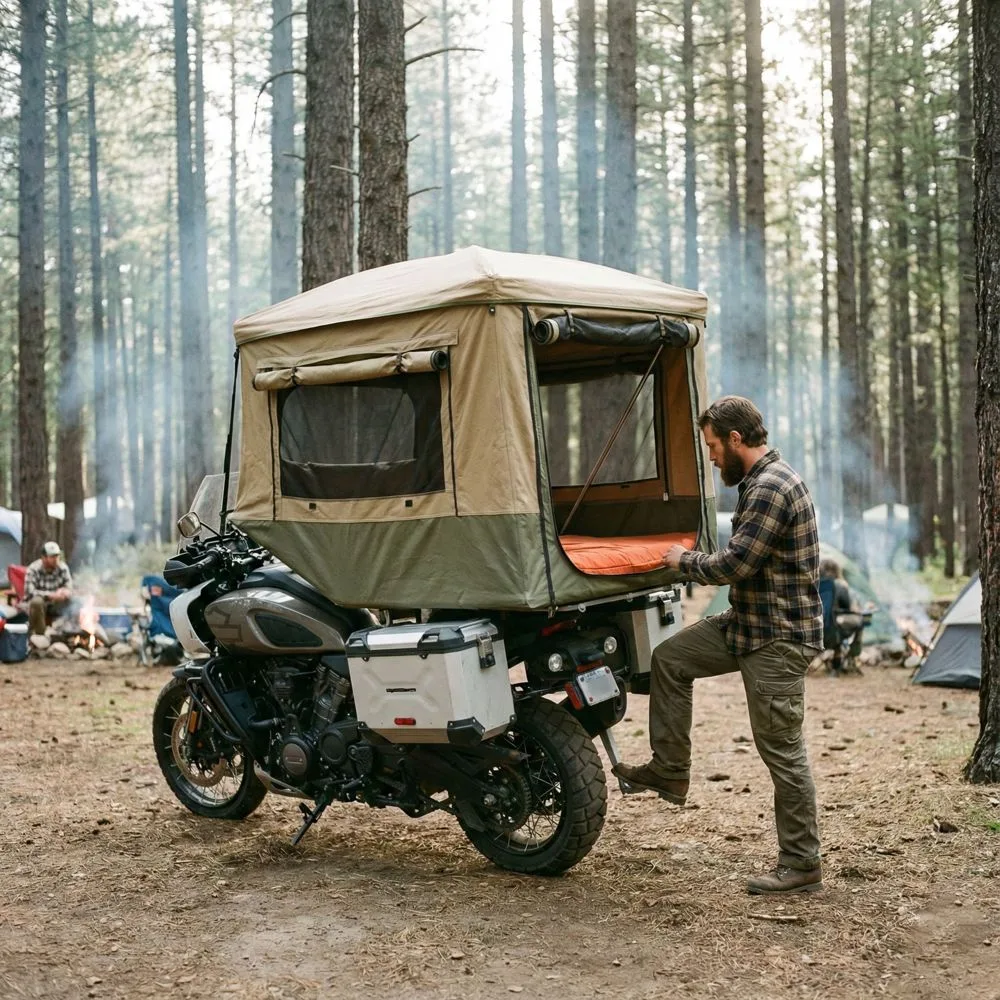
Creating an effective motorcycle tent camping kit requires balancing needs against available space. Start with the critical items and add nice-to-haves as space permits. Your tent forms the foundation, but numerous other items transform a basic shelter into a comfortable home base.
A quality motorcycle tent sleeping bag designed for the temperature ranges you’ll encounter is essential. Synthetic bags work well for motorcycle camping because they maintain insulation when wet and dry relatively quickly. Down bags offer better warmth-to-weight ratios but become useless when soaked. Consider a bag rated 10 to 15 degrees below the coldest temperatures you expect to encounter, providing a safety margin for unexpected weather.
Sleeping pads serve dual purposes: insulation from cold ground and cushioning for comfort. Closed-cell foam pads are indestructible and inexpensive but bulky and less comfortable. Self-inflating pads offer good compromise between packability and comfort. Ultralight inflatable pads provide excellent comfort in minimal space but puncture more easily and cost significantly more.
Your motorcycle tent camping gear should include a compact camping stove, fuel, cookware, and utensils. Backpacking stoves work perfectly for motorcycle camping, being lightweight and efficient. Consider fuel availability along your route when choosing between canister, liquid fuel, and multi-fuel stoves. A basic pot, cup, spork, and perhaps a small frying pan cover most cooking needs without excessive weight.
Water storage and purification equipment matters in remote areas. Collapsible water containers save space when empty. Include water purification tablets or a compact filter as backup even if you plan to camp near potable water sources. Dehydration causes serious problems on long riding days, making reliable water access critical.
Mastering Your Motorcycle Tent Camping Setup
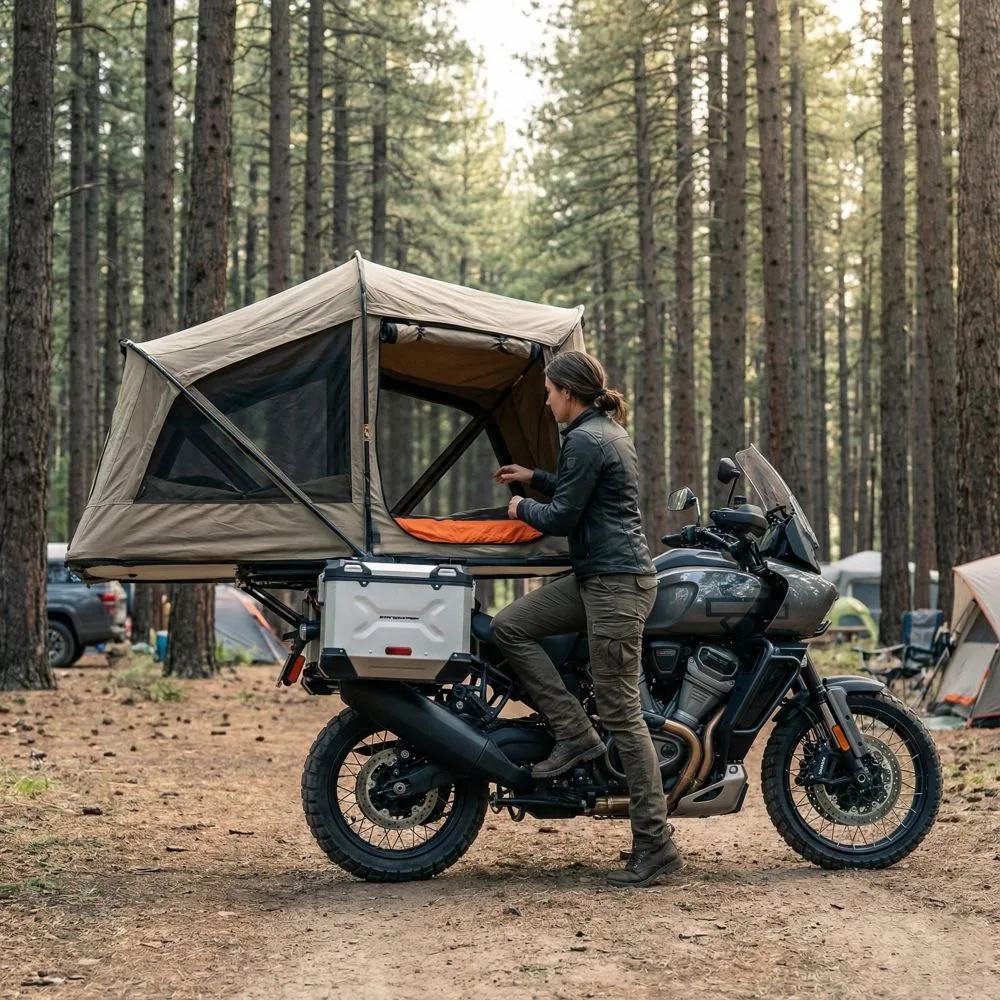
An efficient motorcycle tent camping setup makes the difference between enjoying your evening and struggling with frustration after a tiring ride. Develop a systematic approach to setting up and breaking camp that becomes second nature through repetition.
Upon arriving at your campsite, survey the area before unloading. Look for level ground, natural wind protection, and drainage patterns that would matter during rain. Avoid low spots where water collects and areas directly under dead tree branches. Check for anthills, poison ivy, and other hazards before committing to a spot.
Unload your motorcycle systematically, establishing designated areas for different gear categories. Many experienced riders use a tarp or ground cloth as a staging area, keeping everything organized and off the ground. Set up your tent first, securing it properly even if weather looks perfect. Conditions change rapidly in many camping areas, and having your shelter ready provides peace of mind.
Organize gear inside your tent thoughtfully. Keep items you’ll need during the night, like a headlamp and warm layers, within easy reach. Store electronics in waterproof bags even inside your tent. Designate specific pockets or corners for small items like glasses, phones, and keys so you always know where to find them.
Create a cooking area away from your tent, particularly in bear country. Keep food, toiletries, and scented items in bear-proof containers or hanging properly when required. Even in areas without bears, cooking away from your tent prevents food odors from attracting insects and other animals to your sleeping area.
Breaking camp efficiently matters when you want early starts. Develop a routine: eat breakfast, pack sleeping gear, disassemble tent, organize bags, and load motorcycle. Check your campsite thoroughly before leaving, ensuring you’ve collected all belongings and left no trace of your presence.
Gear Organization and Packing Strategies
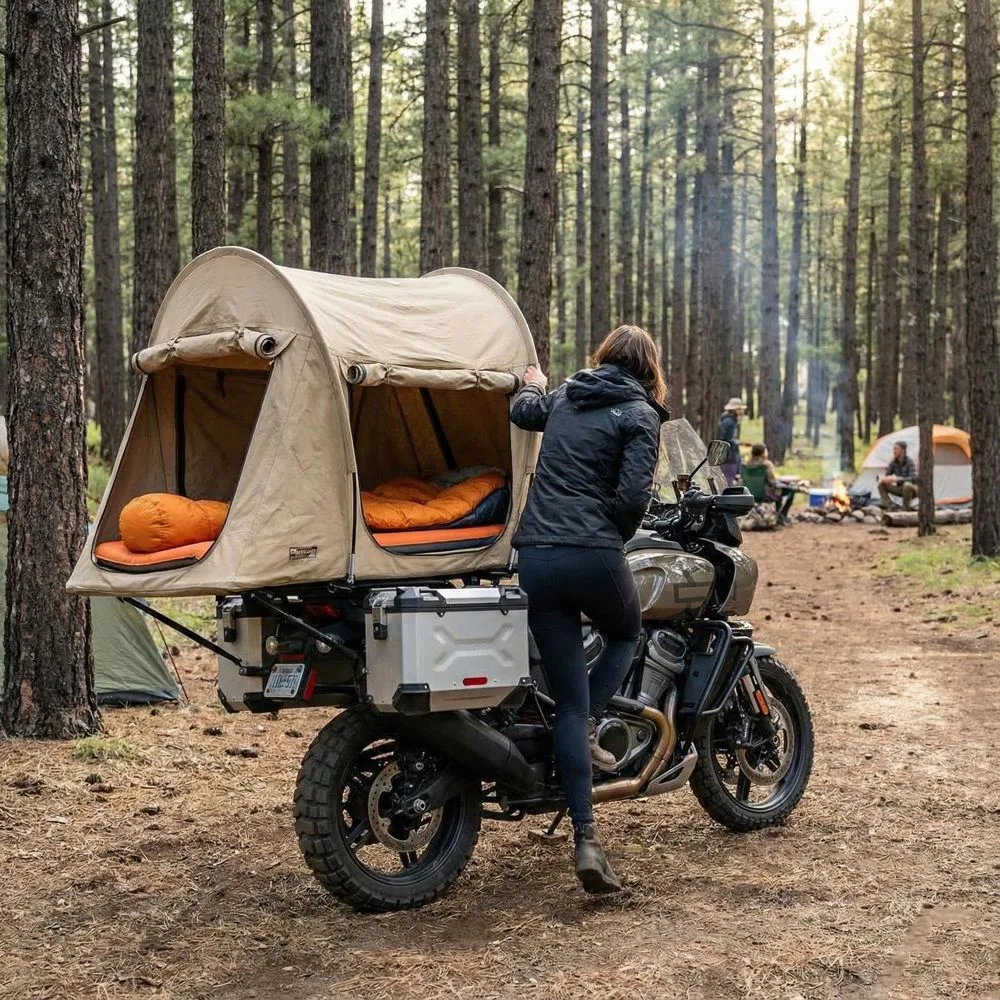
How you pack matters as much as what you pack. Poor weight distribution affects motorcycle handling and causes fatigue during long riding days. Heavy items should mount low and close to the bike’s center of gravity. Place lighter, bulkier items like your tent and sleeping bag higher and toward the rear.
Hard luggage systems offer superior protection and security compared to soft bags but add weight and cost. Soft luggage provides flexibility and costs less while offering adequate protection when packed properly. Many riders use a combination: hard cases for valuable electronics and items needing maximum protection, soft bags for clothing and camping gear.
Waterproofing deserves serious attention. Even “waterproof” bags leak during sustained heavy rain or river crossings. Double-bag critical items like sleeping bags, electronics, and spare clothing in dry bags or heavy garbage bags. This redundancy ensures you have dry essentials even if outer luggage gets soaked.
Pack your motorcycle tent camping setup items accessibly. Things you need at camp should be easy to reach without unpacking everything. Many riders pack their tent, sleeping pad, and evening clothes in the top bag or last loaded item. Cooking gear and food can go in side cases where they’re accessible without removing top bags.
Camping for Bikers: Community and Culture
The motorcycle camping tent for bikers represents more than just equipment; it’s entry into a welcoming community. Motorcycle campers share a bond formed by similar experiences, challenges, and appreciation for adventure. This community offers support, information, and camaraderie on the road.
Campgrounds frequented by motorcycle campers often have designated areas or specific amenities for riders. These might include covered areas for gear maintenance, communal tools, and spaces designed for motorcycles rather than cars. Fellow riders often share site recommendations, route suggestions, and even spare parts when needed.
Online communities dedicated to motorcycle camping provide valuable resources before and during trips. Forums, social media groups, and dedicated websites offer route planning assistance, gear reviews, and troubleshooting help. Many riders document their journeys through blogs and videos, creating resources that help others plan adventures.
Organized motorcycle camping rallies and events bring the community together. These gatherings range from small regional meetups to major international rallies attracting thousands of riders. They offer opportunities to see different gear setups, learn new skills, and make connections with riders from diverse backgrounds who share your passion.
Safety Considerations and Best Practices
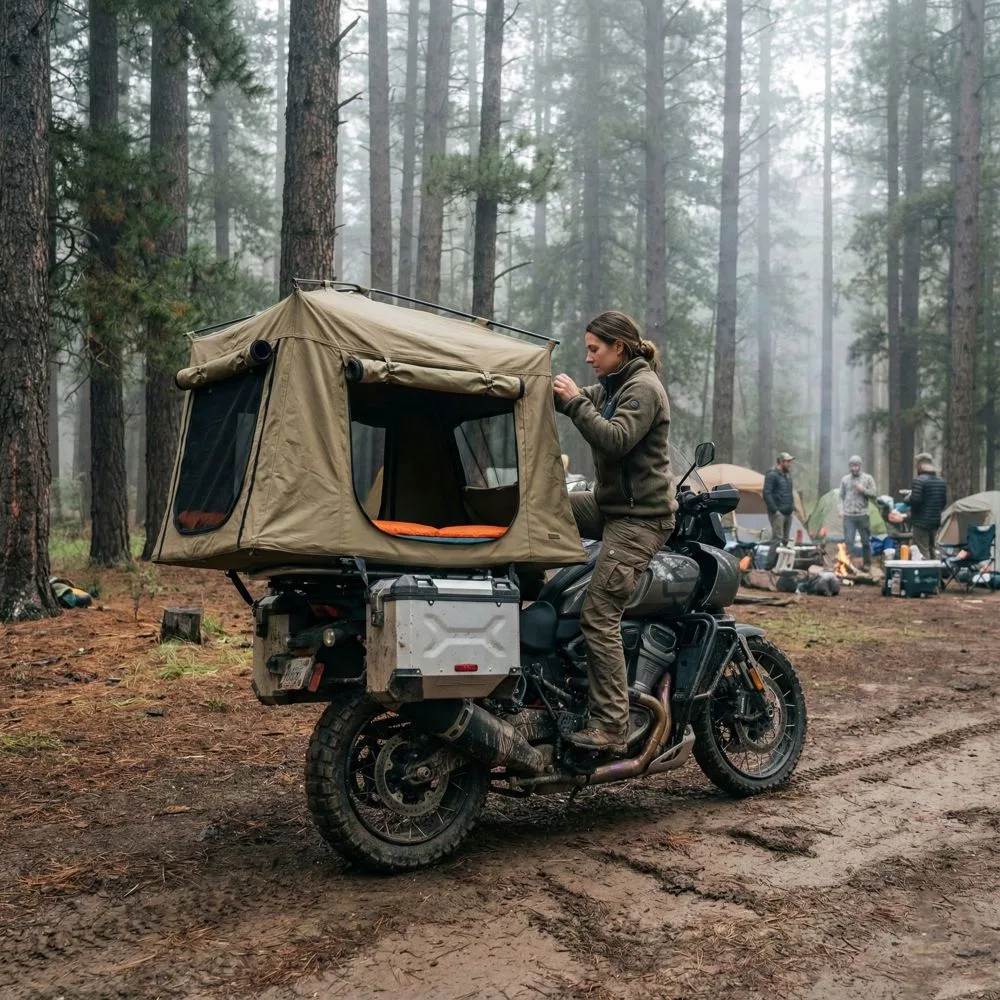
Safety extends beyond riding to include campsite security and wilderness awareness. Lock your motorcycle even at campgrounds, using a quality disc lock or chain. Many riders use additional security measures like GPS trackers or motion-sensing alarms. Keep valuables inside your tent or locked in hard luggage rather than leaving them visible on your bike.
Wildlife awareness varies by location. In bear country, proper food storage is non-negotiable. Use provided bear boxes, hang food correctly, or carry a bear-resistant container. In other areas, smaller animals like raccoons, mice, and birds can damage gear or contaminate food. Store everything properly and never leave food unattended.
Weather monitoring helps you avoid dangerous situations. Check forecasts before departing and remain aware of changing conditions. Lightning poses serious risks when camping in open areas or near isolated trees. Have a plan for severe weather, knowing where you could retreat for safety if necessary.
Leave No Trace principles protect camping areas for future visitors. Pack out all trash, minimize campfire impacts, respect wildlife, and leave sites cleaner than you found them. These practices ensure continued access to camping areas and preserve natural environments.
Wrapping It All Together: Your Road to Adventure Awaits
Motorcycle tent camping opens doors to adventures that combine the visceral thrill of riding with the profound connection to nature that camping provides. Whether you’re a lone rider seeking solitude on empty roads or part of a group exploring new territories together, the right gear and knowledge transform good trips into unforgettable journeys.
The investment in quality equipment pays dividends through countless nights of comfortable sleep, reliable protection from weather, and the confidence that comes from being properly prepared. From selecting the perfect tent with floor for your needs to organizing your complete camping kit efficiently on your bike, each decision shapes your experience on the road.
Remember that perfection comes through experience. Your first motorcycle camping trip teaches lessons no article can convey. Start with shorter trips close to home, refining your setup and discovering your preferences. Build skills and confidence before tackling more ambitious routes. Join the community of riders who have discovered that the best memories come not from destinations alone but from the complete experience of traveling by motorcycle and sleeping under stars.
The open road calls, campsites await, and your motorcycle stands ready to carry you toward your next adventure. With proper preparation, quality gear, and an adventurous spirit, motorcycle tent camping offers rewards that transcend ordinary travel. Pack your bags, check your gear, and discover why so many riders consider camping from a motorcycle the ultimate form of freedom on two wheels.