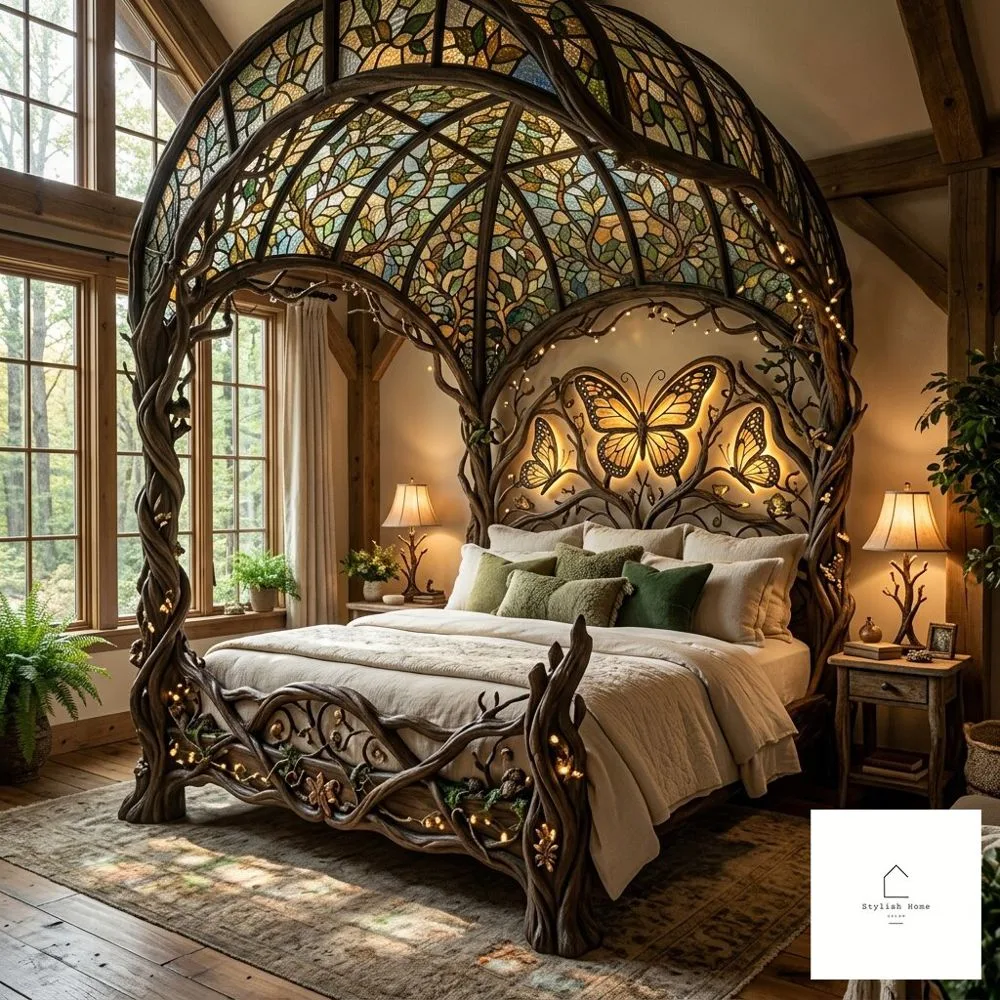
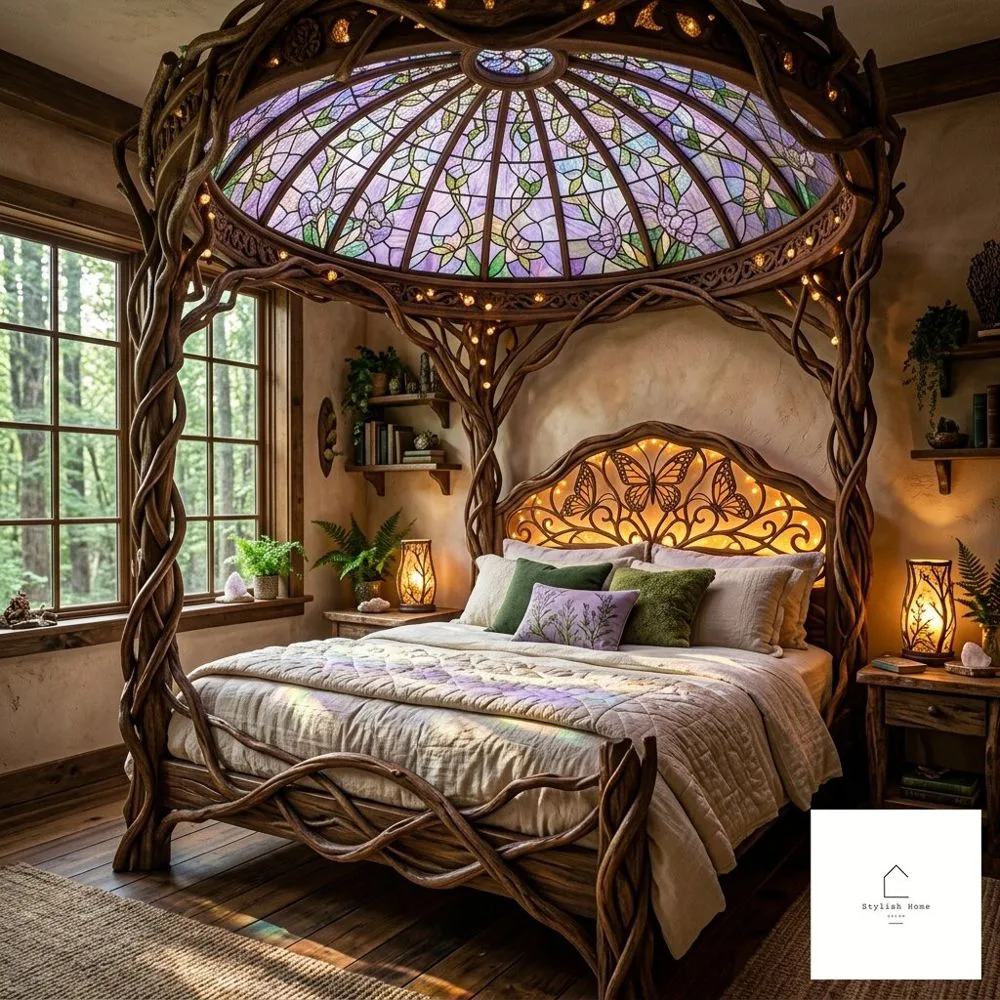
I still remember the morning I woke up bathed in violet and amber light, the sun cutting through stained glass panels above me like something out of a cathedral dream. I hadn’t slept in a church — I had simply reimagined my bedroom around one of the most breathtaking pieces of furniture a home can hold: the stained glass canopy bed.
That morning changed everything about how I think about rest. Sleep, I realized, is not just a biological necessity. It is a ritual. And the space you create around it determines the quality of that ritual more than any sleep supplement or white noise machine ever could.
If you have ever stood beneath a stained glass window and felt inexplicably moved — that quiet, sacred stillness as light becomes color and color becomes emotion — then you already understand the soul of this design choice. The stained glass canopy bed brings that feeling home. Into your most private space. Into your dreams.
What Is a Stained Glass Canopy Bed?
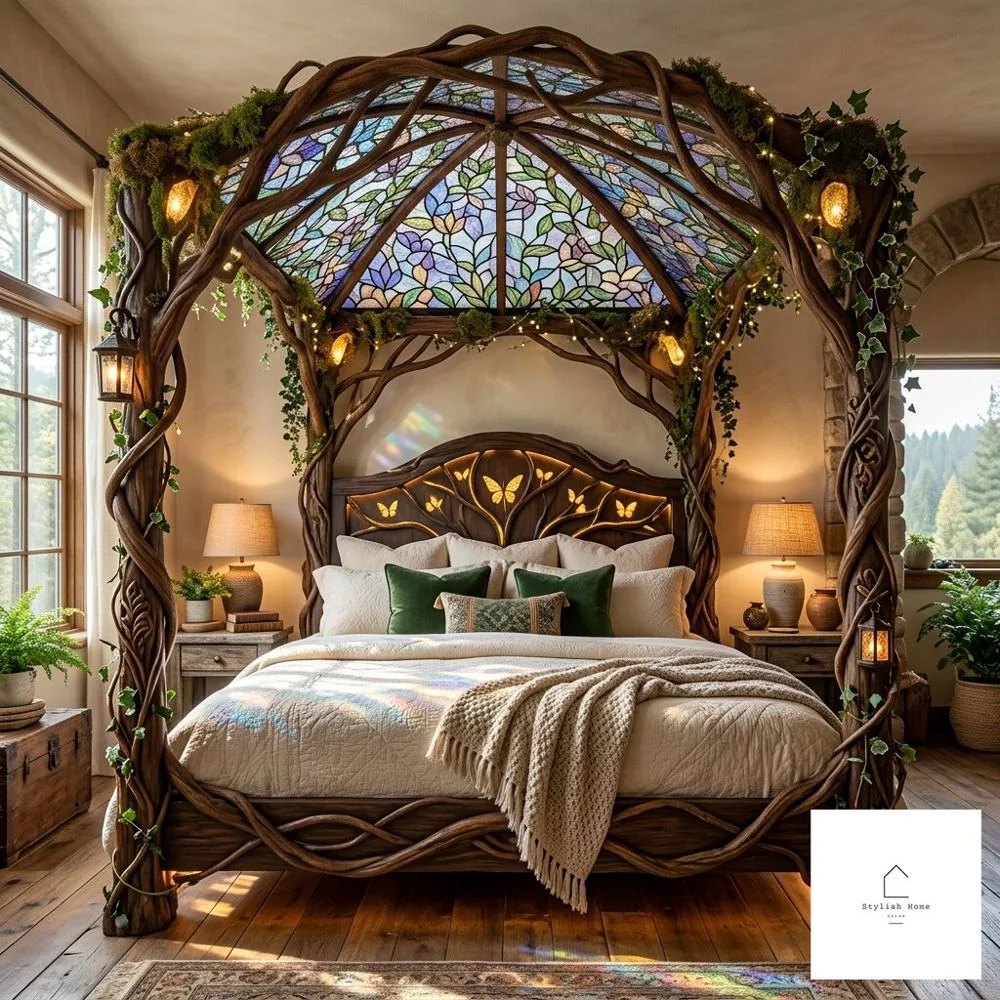
At its most essential, a glass canopy bed is a bed frame — typically a 4 post bed canopy structure — topped with a canopy that incorporates panels or elements of stained glass rather than (or in addition to) traditional fabric. The result is a sleeping environment where natural light, or even artificial light, filters through jeweled tones and casts prismatic color across your sheets, your walls, your skin.
This is not merely a bed. It is an architectural experience.
The concept draws heavily from Gothic and Victorian design sensibilities, where stained glass was used to elevate ordinary spaces into places of meaning. Translated into bedroom design, that same principle applies: the bed becomes more than furniture. It becomes the emotional center of the room.
Why the Canopy Bed Frame Matters More Than You Think
Before you fall in love with a design, you have to fall in love with the structure that holds it. The canopy bed frame is the skeleton of the entire experience, and not all frames are created equal — especially when you’re adding the weight and visual gravity of glass elements.
Choosing the Right Canopy Bed Frame for Glass Panels
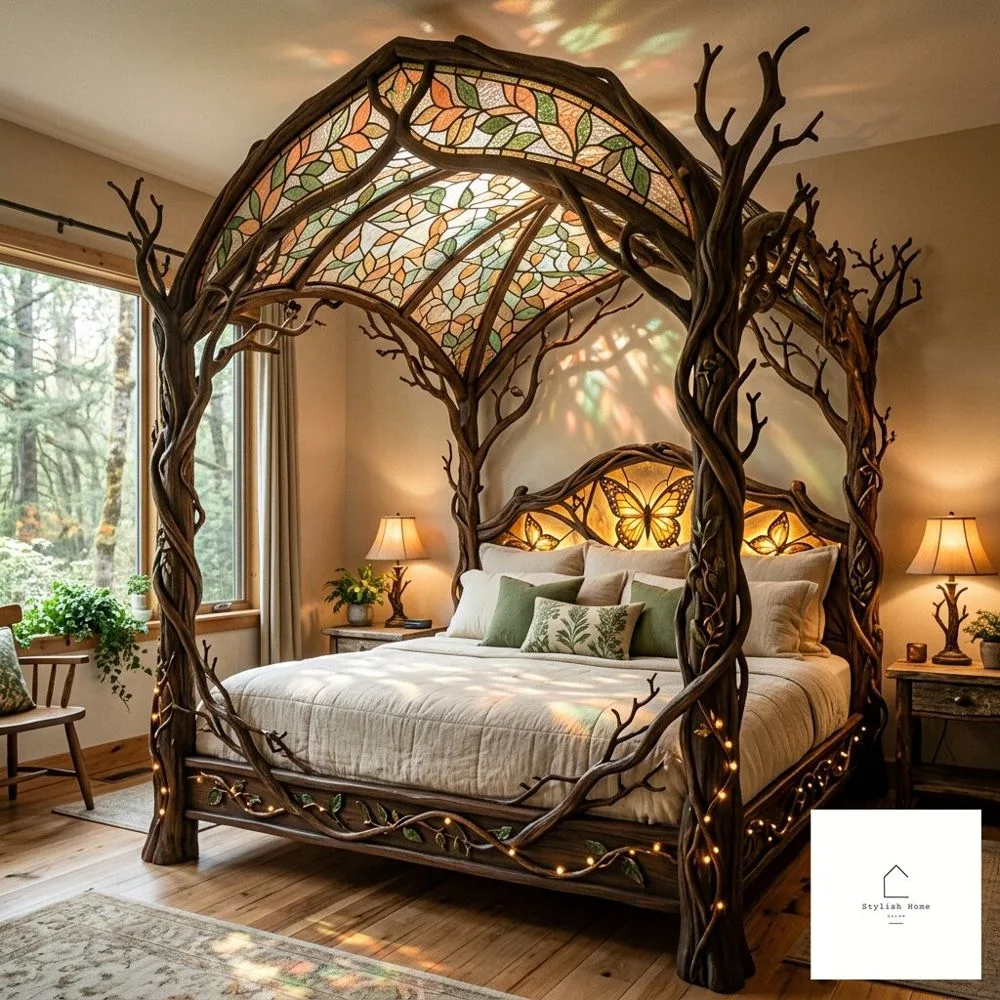
When incorporating stained glass into a canopy design, structural integrity is non-negotiable. Solid hardwood frames — particularly those crafted from oak, walnut, or mahogany — are the most popular choices for supporting the additional weight of glass. Metal frames, particularly wrought iron or blackened steel, create a stunning gothic aesthetic that pairs beautifully with deep jeweled glass tones like ruby, sapphire, and emerald.
What you want to look for in a bed frame canopy designed for glass integration:
- Reinforced corner posts capable of bearing lateral load
- Horizontal top rails wide enough to seat glass panels securely
- Adjustable brackets or channels that allow for safe glass mounting
- A frame height of at least 7 feet so the canopy sits above you rather than over you
The 4 post bed canopy is by far the most natural structure for stained glass integration. The four posts create a defined architectural boundary — almost like a room within a room — and the overhead grid provides a natural framework into which individual glass panels can be set, much like leaded panes in a traditional window.
The 4 Post Bed Canopy: A Legacy of Grandeur
The four-poster bed has a history that stretches back to medieval Europe, where heavy curtains served a practical purpose: warmth and privacy in cold, open castle halls. Over centuries, as the form evolved, the posts grew taller, the canopies more ornate, and the purpose shifted from purely functional to deeply ceremonial.
A 4 post bed canopy today carries that legacy. It signals that sleep here is something to be honored. When you add stained glass to that canopy, you’re not just decorating — you’re continuing a centuries-long conversation about the sacredness of rest.
Canopy Bed Ideas: Bringing Stained Glass Into Your Vision
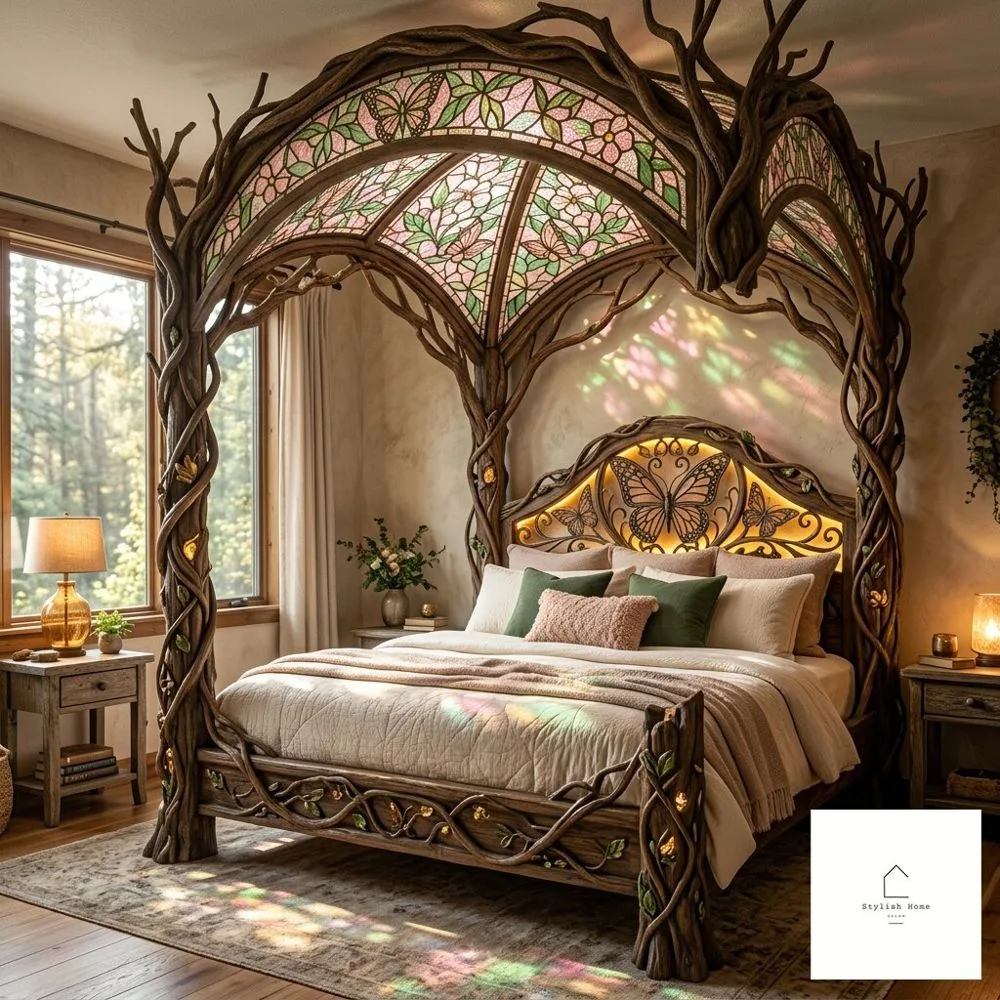
The beauty of the stained glass canopy bed is that it resists being pinned to a single aesthetic. Depending on your choices in glass design, frame material, and canopy drapes for bed, the same basic concept can feel wildly different from one bedroom to the next.
Romantic Victorian Revival
For a deeply romantic, antique-influenced space, combine a dark mahogany canopy bed frame with stained glass panels featuring floral motifs — roses, wisteria, or lily of the valley rendered in soft rose, dusty lavender, and warm gold. Layer in canopy drapes for bed in ivory silk or aged velvet, allowing the fabric to frame the glass overhead without obscuring it entirely.
Morning light through these panels will fill your room with the gentle blush of a garden in bloom. Evening light will turn everything amber and warm. This is a bedroom designed for love letters and slow Sundays.
Gothic Drama and Dark Romance
If your aesthetic runs darker, a glass canopy bed with deep jeweled tones — cobalt, burgundy, forest green, and black leading — set into a wrought iron or blackened steel frame creates something truly theatrical. Skip the soft canopy drapes for bed in favor of sheer black voile or heavy brocade in midnight tones that echo the glass palette.
This is one of the boldest canopy bed ideas available to the contemporary designer. It demands a room that can hold it — high ceilings, stone or dark hardwood floors, walls in charcoal or deep plum. But in the right space, it is unforgettable.
Bohemian Light Dream
Not every stained glass application has to be heavy or formal. A lighter, more eclectic take on the stained glass canopy bed uses irregular geometric panes in turquoise, amber, coral, and gold — a mosaic rather than a pictorial design — set into a lighter natural wood frame. Pair with flowing, unstructured canopy drapes for bed in natural linen or cotton gauze, and surround with plants, layered textiles, and warm Edison lighting.
This boho interpretation of classic canopy bed ideas feels earthy and alive. The glass catches light all day long, throwing dancing color across a room that already buzzes with texture and intention.
Minimalist Luxury
For those who believe that restraint is its own kind of opulence, consider a minimalist bed frame canopy in brushed brass or pale ash wood, with a single large stained glass panel overhead featuring a simple abstract design — perhaps a sunburst or a slow color gradient from ice blue to warm white. No drapes. Clean lines. The glass does all the work.
This is the canopy bed idea for people who know exactly what they want and are not interested in excess. It is quiet luxury at its most refined.
Canopy Drapes for Bed: The Art of Soft and Glass Together
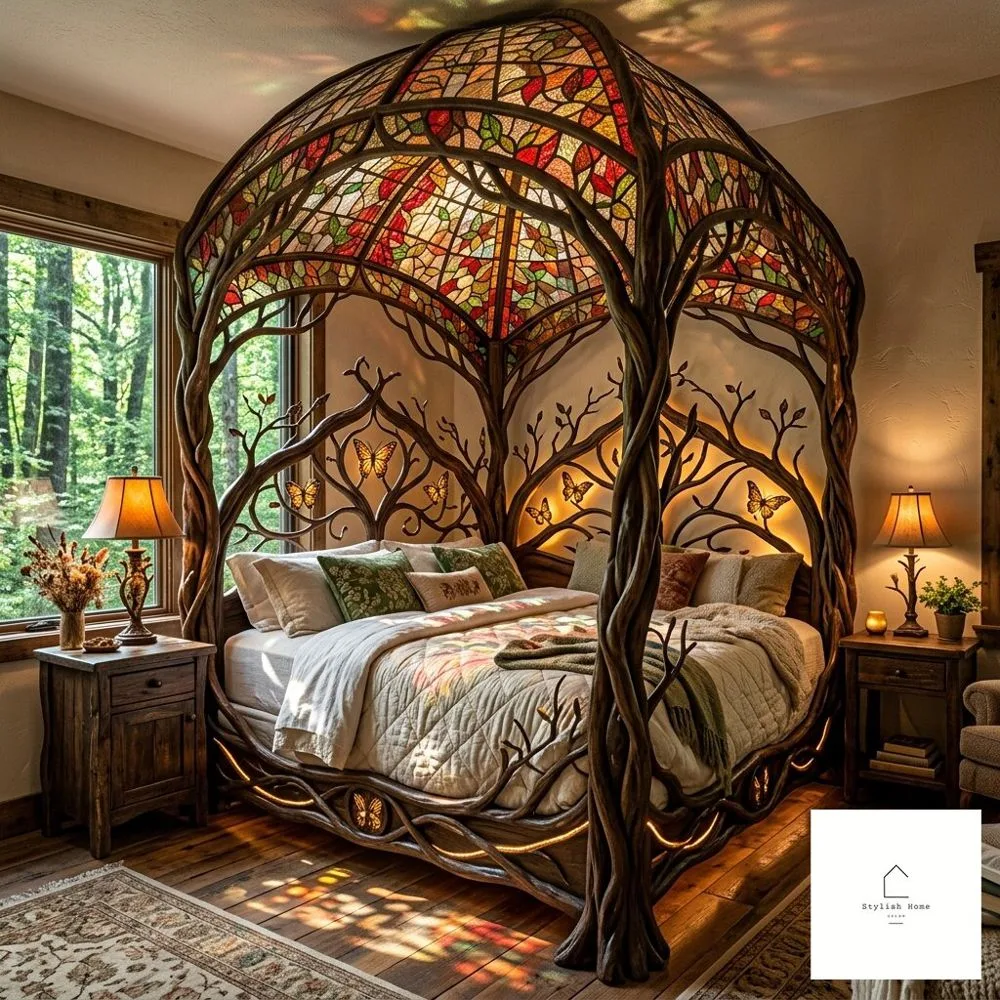
One of the most asked questions in stained glass canopy bed design is whether glass and fabric can coexist gracefully — or whether you must choose one over the other.
The answer is that they were made for each other.
Canopy drapes for bed play several roles in a glass canopy bed setup. Practically, they provide the option of privacy and light control that glass alone cannot offer. Aesthetically, they create softness that balances the rigidity of the glass and the heaviness of the frame. Emotionally, they transform the bed into a true enclosure — a cocoon — which deepens the feeling of sanctuary that the stained glass creates above.
Best Fabric Pairings for Stained Glass Canopies
- Silk and satin — for high-glamour, Victorian, or romantic setups. The sheen of the fabric echoes the luminosity of the glass.
- Velvet — for dramatic, gothic, or deeply luxurious aesthetics. Heavy velvet drapes make the glass panels feel even more precious by contrast.
- Linen and cotton gauze — for bohemian or organic-modern designs. Light, breathable, and beautifully backlit.
- Sheer voile — a universally flattering choice that softens the overall look while allowing glass light to filter through even when the drapes are closed.
The Emotional Language of Color in a Stained Glass Canopy Bed
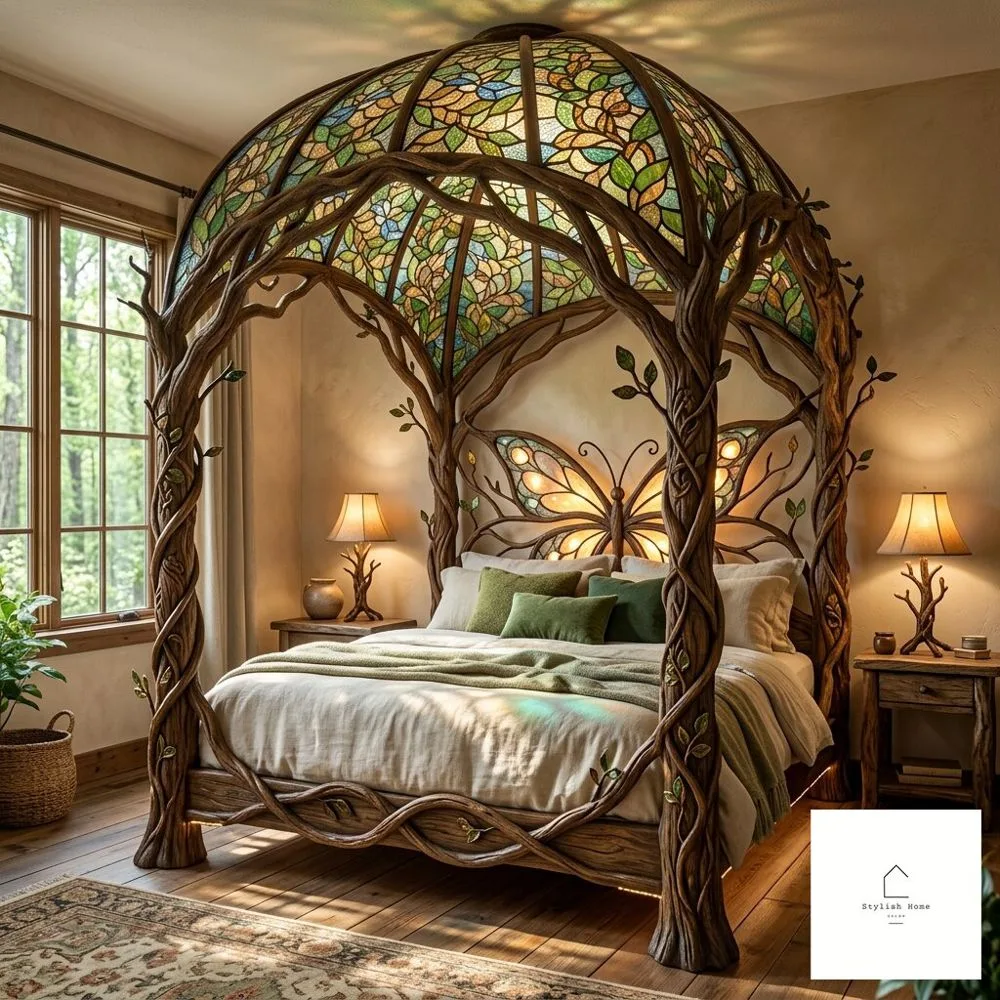
Interior designers often speak about the psychology of color, but in a stained glass canopy bed, color psychology operates in a uniquely intimate register. These are the hues that greet you in the first moments of waking and hold you in the last moments before sleep. Their influence on your nervous system, your mood, and your emotional state is real.
- Blues and greens promote calm, rest, and emotional equilibrium — ideal for those who carry stress into the bedroom.
- Ambers and golds evoke warmth, safety, and gentle joy — perfect for rooms that need to feel more nurturing.
- Reds and rubies are energizing and deeply romantic — best used as accents rather than dominant tones in a sleep environment.
- Lavenders and soft purples are associated with spirituality, creativity, and dream-rich sleep — a natural choice for a canopy meant to feel otherworldly.
Choosing your glass palette is, in many ways, choosing your emotional atmosphere. Take it seriously. This is the light that will shape your mornings.
Practical Considerations Before You Invest
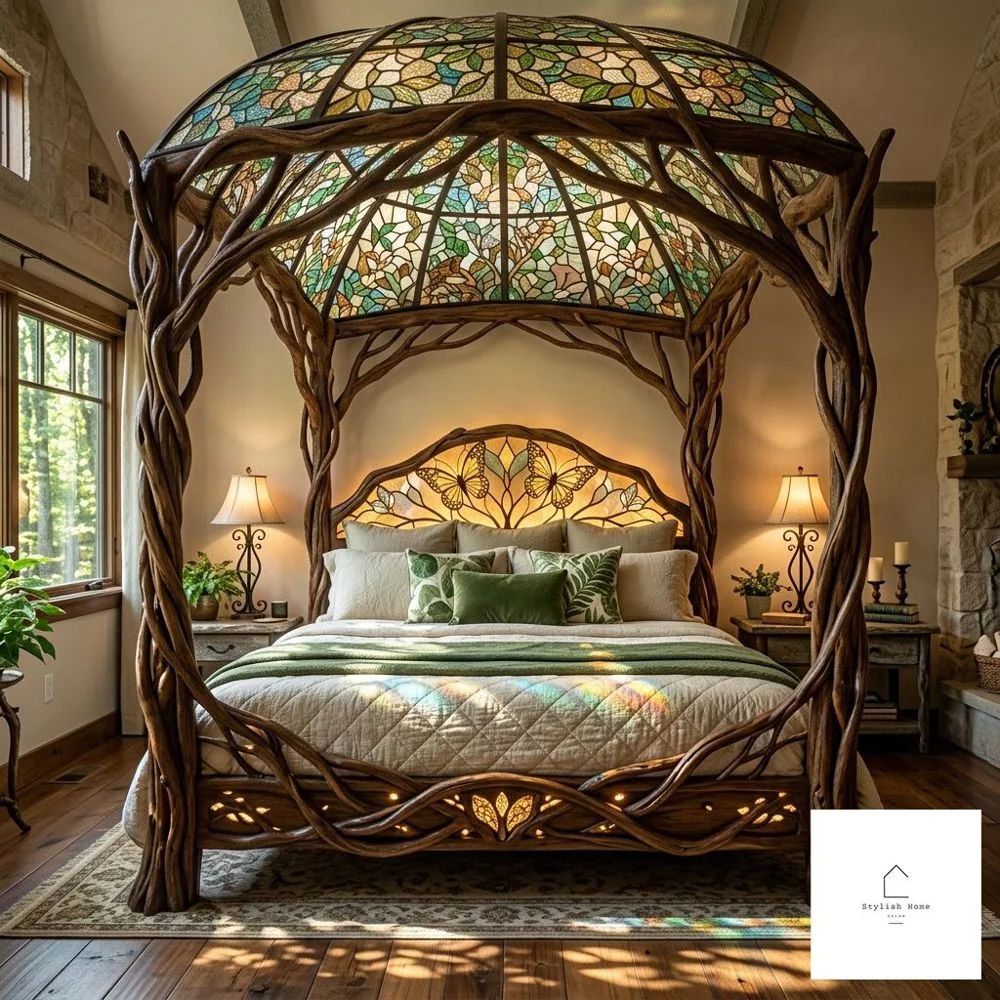
A stained glass canopy bed is a significant investment, both financially and spatially. Here is what thoughtful buyers consider before committing:
Room Size and Ceiling Height
A full 4 post bed canopy with glass overhead needs room to breathe. Ideally, ceilings should be at least 9 feet high. The bed itself will dominate the room — plan your layout around it, not the other way around.
Commissioning vs. Buying Ready-Made
Very few mass-market furniture retailers sell true stained glass canopy beds. Most are commissioned from artisan furniture makers and stained glass artists working collaboratively. This process typically takes 8–16 weeks and allows for full customization of glass design, frame material, dimensions, and finish.
Ready-made options do exist at the higher end of the luxury furniture market, but they offer less flexibility. If the design matters deeply to you — and it should — the commission route is almost always worth the wait.
Maintenance and Longevity
Stained glass panels, when properly leaded and sealed, are extraordinarily durable. The canopy bed frame will require periodic checking of its joinery to ensure stability, particularly at the points where glass is mounted. With proper care, a well-made stained glass canopy bed is not a piece of furniture — it is an heirloom.
Where Artistry Meets Rest: The Final Word on the Stained Glass Canopy Bed
There is a particular kind of exhaustion that modern life produces — not just physical tiredness, but a kind of sensory and spiritual depletion that ordinary sleep doesn’t always fix. We wake from perfectly adequate rest still feeling, in some unnameable way, unrestored.
Beautiful spaces heal something that efficiency cannot touch.
The stained glass canopy bed is not a practical solution to a practical problem. It is an act of intention — a declaration that rest matters, that beauty belongs in the bedroom, that the hours you spend sleeping deserve the same care and artistry you might bring to any other part of your life.
Whether you are drawn to the romance of a Victorian 4 post bed canopy draped in silk, the drama of a gothic glass canopy bed in wrought iron and cobalt, or the quiet poetry of a minimalist canopy bed frame casting a single soft gradient of color across your ceiling — the stained glass canopy bed invites you into a relationship with your own rest that is, simply put, more beautiful.
Choose your colors. Choose your frame. Let the light in.
Sleep Beneath Something Beautiful — The Stained Glass Canopy Bed Is More Than a Dream
The journey through stained glass canopy bed design is ultimately a journey inward. It asks you what you want your mornings to feel like, what emotional textures you want woven into your rest, and how much beauty you believe you deserve to be surrounded by in your most vulnerable hours.
From selecting the right canopy bed frame and bed frame canopy structure to pairing the perfect canopy drapes for bed with your glass palette, every decision is an act of self-expression. The canopy bed ideas explored in this guide are only the beginning — the real design is the one you make your own.
Sleep is sacred. Make the space sacred too.