
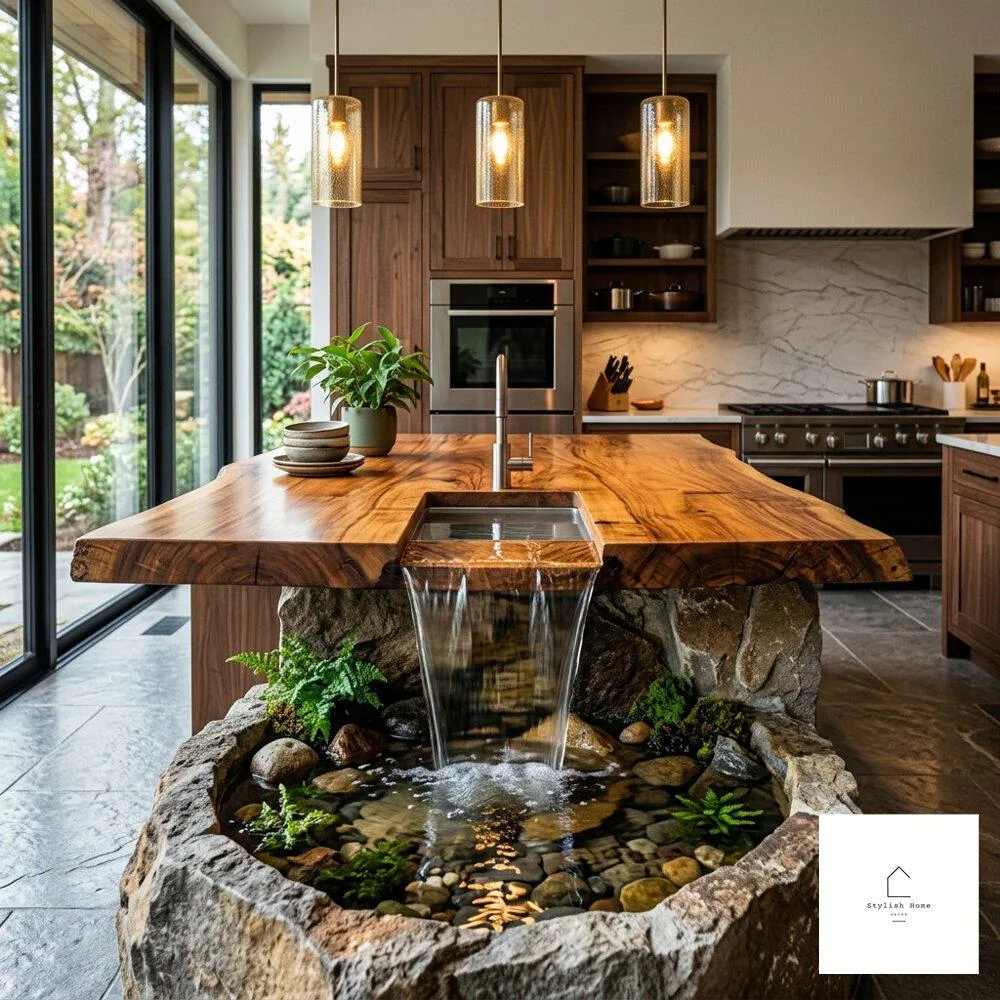
I’ll never forget the moment I walked into my friend Sarah’s newly renovated kitchen. The afternoon sunlight streamed through her windows, hitting the edge of her kitchen island in a way that made me stop mid-sentence. The countertop didn’t just end at the edge—it cascaded down the sides in one continuous, seamless flow of marble, creating a visual waterfall effect that took my breath away.
“That’s a waterfall kitchen island,” she said, noticing my stunned expression. “Changed the entire feel of this room.”
She wasn’t exaggerating. That single design element had transformed her kitchen from ordinary to extraordinary, and I knew in that instant that I needed to learn everything about this stunning architectural feature.
What Exactly Is a Waterfall Kitchen Island?
A waterfall kitchen island is a contemporary design where the countertop material extends vertically down one or both sides of the island, creating a continuous surface from the top to the floor. Unlike traditional islands where the countertop simply sits atop cabinets with exposed sides, a waterfall edge creates a sleek, uninterrupted flow that mimics the cascading movement of an actual waterfall.
This design choice isn’t just about aesthetics—though it certainly delivers in that department. The waterfall edge conceals the side panel construction, creating clean lines that appeal to minimalist sensibilities while adding a touch of luxury that elevates the entire kitchen space.
When I first started researching this design three years ago for my own kitchen renovation, I discovered that waterfall islands have been gaining momentum in interior design circles since the early 2010s. What began as a high-end luxury feature has become increasingly accessible to homeowners seeking that designer look without necessarily breaking the bank.
The Emotional Impact of Design: Why Waterfalls Matter
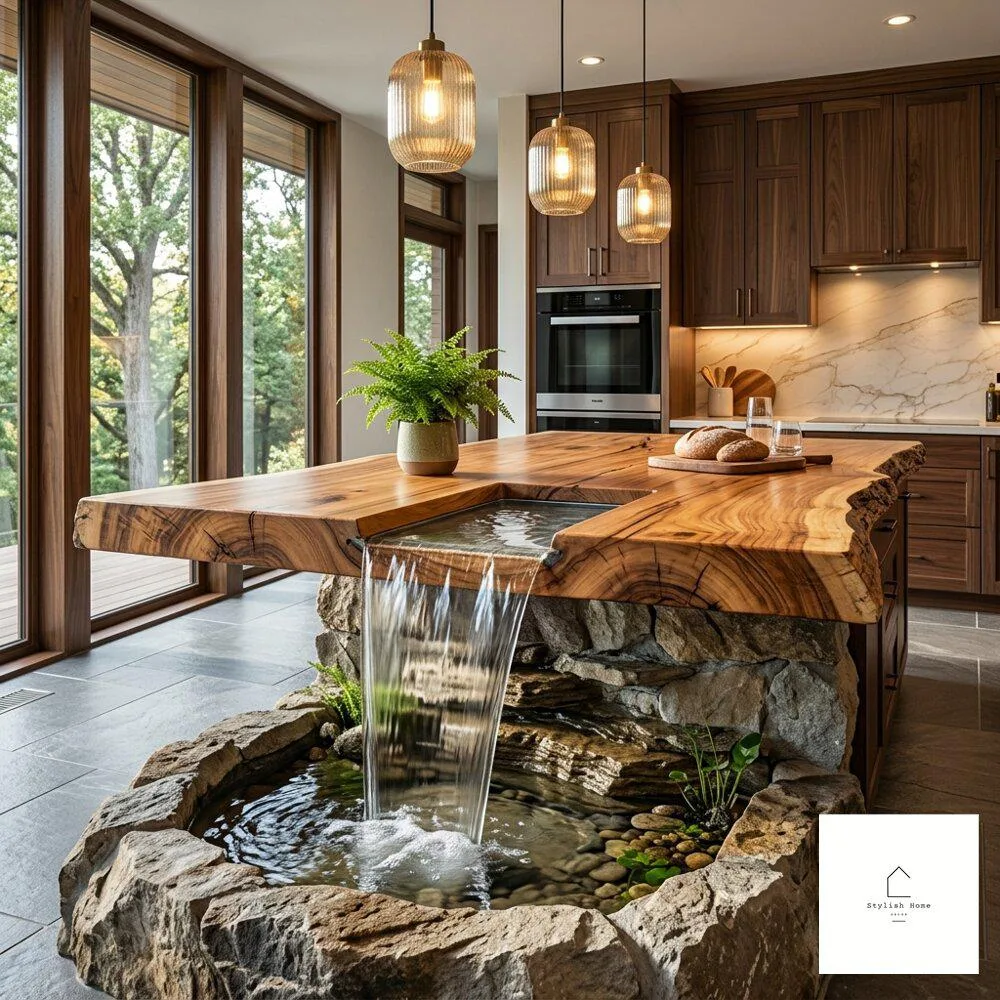
Let me be honest with you: kitchens are more than functional spaces. They’re where we gather with family on Sunday mornings, where we celebrate milestones with friends, where we find solace in the simple act of preparing a meal after a difficult day. The design of these spaces affects us emotionally in ways we don’t always recognize.
When I installed my own waterfall kitchen island countertop, something shifted in how I experienced my kitchen. The clean, flowing lines created a sense of calm. The visual weight of the continuous surface grounded the room. Guests invariably gravitated toward the island, running their hands along that smooth edge, commenting on how sophisticated it felt.
This isn’t just my experience. Interior designers consistently note that waterfall islands create what they call “visual anchors”—focal points that draw the eye and create emotional resonance within a space. In our increasingly chaotic world, there’s something deeply satisfying about the simplicity and elegance of an unbroken line.
Waterfall Kitchen Island Ideas That Inspire
The beauty of waterfall islands lies in their versatility. During my research phase, I compiled dozens of design approaches, each offering a unique personality.
Bold Statement Pieces
Some homeowners choose dramatic materials that demand attention. I’ve seen stunning waterfall kitchen island ideas featuring book-matched marble, where the stone’s natural veining creates a mirror image on both sides of the island. One particularly memorable design used a deep green quartzite that looked like layers of moss and forest captured in stone—the waterfall edge made those natural patterns flow like an actual stream.
Black granite with gold veining. Pure white Calacatta marble. Concrete with embedded brass inlays. The waterfall design amplifies whatever material you choose, turning it into living art.
Subtle Sophistication
Not every waterfall island needs to scream for attention. Some of the most beautiful implementations I’ve encountered use understated materials that whisper rather than shout. Light grey quartz with minimal veining. Warm butcher block that brings organic texture. Solid surface materials in soft neutrals that create seamless, almost meditative expanses.
My own choice fell into this category—a creamy quartzite with subtle gold undertones that catches the morning light without overwhelming the senses. Three years later, I still pause sometimes just to appreciate how it anchors the room.
Two-Tone Magic
Here’s where things get interesting: who says your waterfall edge must match your countertop? Progressive designers are experimenting with contrasting materials—imagine a white marble countertop with a walnut waterfall edge, or a concrete top with brass-clad sides. These bold choices create visual interest while maintaining that signature waterfall flow.
Waterfall Kitchen Island with Seating: Function Meets Form
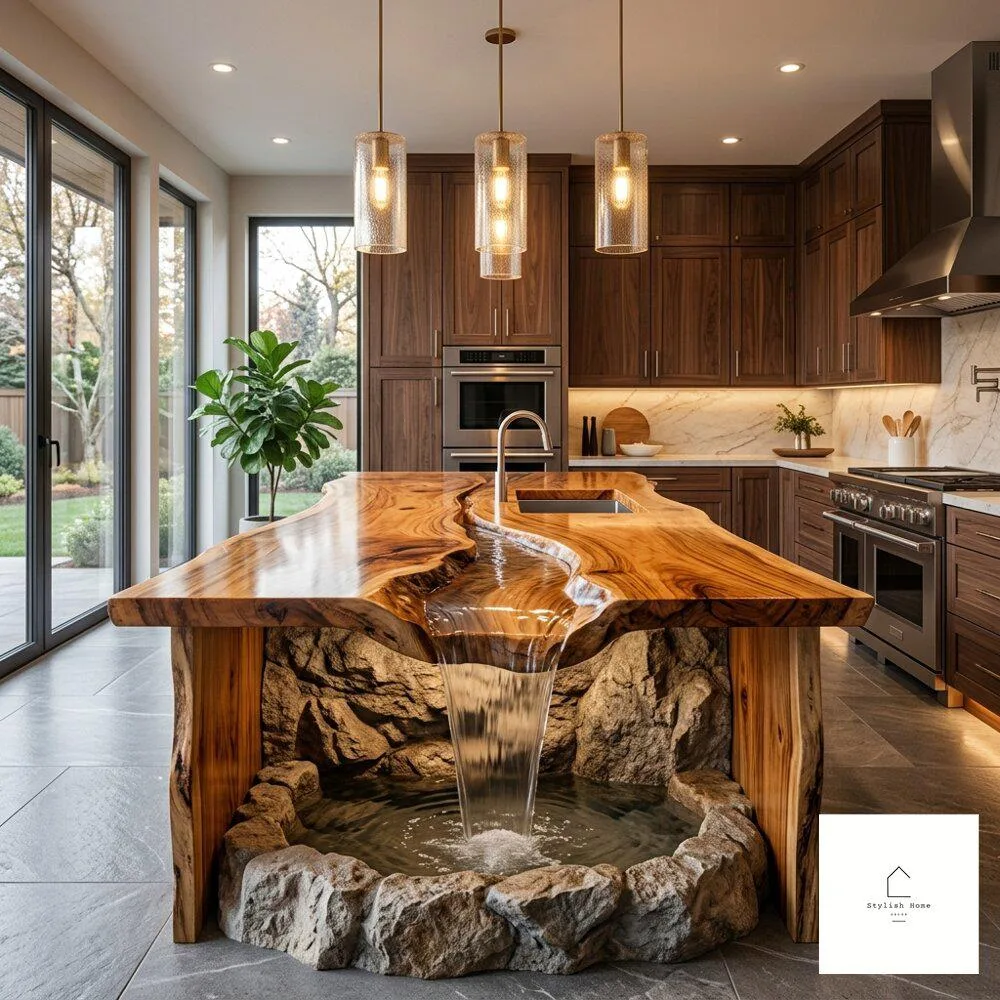
One question I grappled with during my own renovation: how do you incorporate seating into a waterfall design? The vertical edge seems to present a challenge for tucking in bar stools.
The solution proved simpler than I expected. A waterfall kitchen island with seating typically features the waterfall edge on one or both ends of the island, while the long sides remain traditional to accommodate seating. This creates the best of both worlds—the dramatic visual impact of the waterfall combined with the practical functionality of a gathering space.
In my kitchen, I chose a single waterfall edge on the side facing my living room, creating a stunning visual statement when you enter the space, while the opposite side features a 12-inch overhang where my family perches on counter stools for casual meals and homework sessions.
Some designers get creative with waterfall kitchen island extension designs, where the waterfall edge actually wraps around to create an L-shaped or curved seating area. I visited a home last year where the homeowner had created a gentle curve in their waterfall edge, allowing bar stools to nestle into the arc—absolutely brilliant.
The key consideration: ensure at least 12-15 inches of overhang on the seating side for comfortable leg room, and maintain 24-30 inches between the island and surrounding counters for adequate walkway space.
Waterfall Kitchen Island with Sink: Practical Considerations
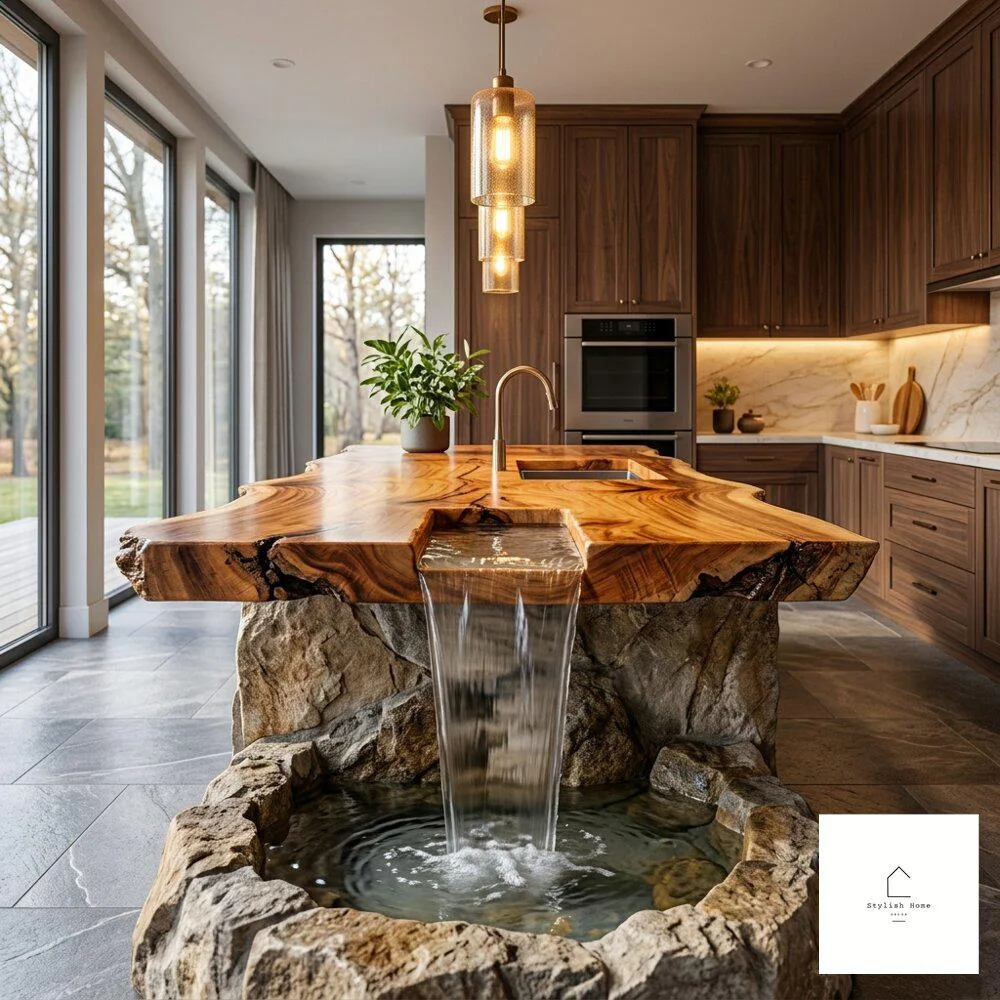
Integrating a sink into your waterfall island adds another layer of complexity—and opportunity. A waterfall kitchen island with sink serves as a stunning prep station while maintaining those clean visual lines.
During my renovation, I debated endlessly about sink placement. Ultimately, I positioned an undermount sink on the main surface, keeping it away from the waterfall edge to maintain that uninterrupted flow. The plumbing runs through the interior of the island, concealed by cabinetry, so nothing disrupts the sleek exterior.
I’ve seen two approaches that work beautifully:
The Clean Top Approach: Mount the sink away from the waterfall edge, preserving the visual impact. This was my choice, and I’ve never regretted it. The waterfall remains the star, while the sink adds functionality without compromise.
The Integrated Drama: Some brave souls position the sink right at the waterfall edge, allowing the countertop material to wrap around and beneath it. This requires expert fabrication and installation but creates an undeniably impressive result. My neighbor did this with a black granite island, and the effect is striking—the sink appears to be carved from a single block of stone.
Whichever route you choose, ensure your fabricator has experience with waterfall installations. The precision required for proper sink integration is considerable, and this isn’t the place for amateur work.
Waterfall Kitchen Island with Cabinets: Storage Solutions
Here’s where some homeowners hesitate: doesn’t that vertical edge eliminate storage space? The truth about a waterfall kitchen island with cabinets is more nuanced than it first appears.
Yes, the waterfall edge replaces what would traditionally be a cabinet end panel. But here’s what I learned: most kitchen islands have storage accessible from only two sides anyway. The waterfall edge simply becomes a beautiful finish rather than wasted space.
In my own island, I designed the interior with storage in mind. The side opposite the waterfall features deep drawers perfect for pots and pans. The seating side includes shallow drawers for utensils and linens. The waterfall end, rather than being dead space, became an opportunity—I had my cabinet maker install a wine rack in the interior of that end, accessible from the opposite side. The bottles rest horizontally behind that gorgeous stone facade.
Other clever waterfall kitchen island ideas I’ve encountered include:
- Installing floating shelves on the non-waterfall ends for cookbook display
- Creating hidden storage compartments accessed from the seating side
- Designing the island with open shelving on one end and a waterfall edge on the other
- Using the waterfall side as a decorative bookend while concentrating storage on remaining sides
The key insight: treat the waterfall as an architectural feature on one or two sides while maintaining full functionality on the others. You sacrifice far less storage than you might fear.
Waterfall Kitchen Island Pros and Cons: The Honest Truth
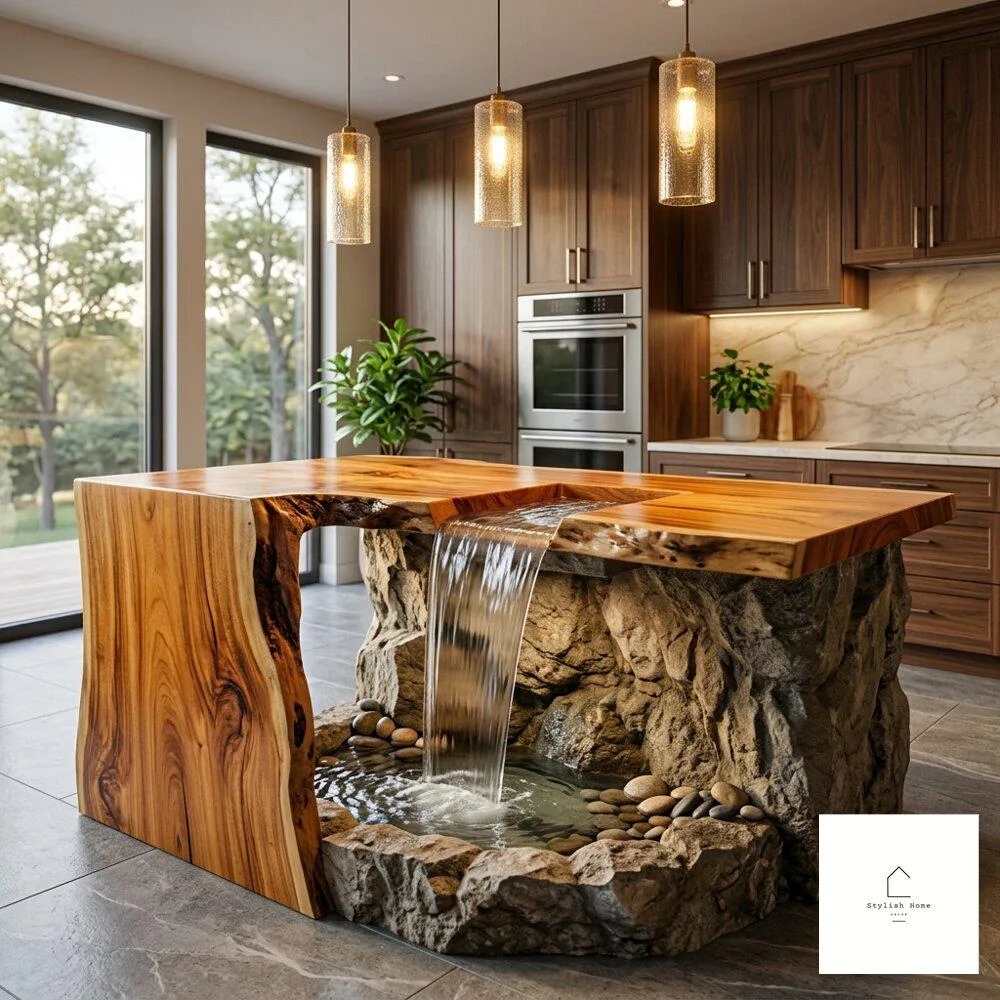
After living with my waterfall island for three years and speaking with dozens of homeowners who’ve made similar choices, I can offer a realistic assessment of the waterfall kitchen island pros and cons.
The Advantages That Won Me Over
Visual Impact: This is the obvious one, but I can’t overstate it. The waterfall edge creates a focal point that elevates the entire kitchen. Visitors consistently comment on it. Real estate agents tell me it adds significant value to my home.
Protection: The vertical edge protects the island’s side panels from kicks, scuffs, and spills. With two young children who are notoriously hard on furniture, this practical benefit has proven invaluable. That durable stone surface withstands impacts that would have damaged traditional cabinet panels.
Easy Maintenance: Cleaning is remarkably simple—one continuous surface with no seams or joints where grime accumulates. I wipe down the entire island, edge and all, with a single pass.
Timeless Appeal: While trends come and go, the clean lines of a waterfall edge have a classic quality that transcends passing fads. I believe my island will look current decades from now.
Concealed Construction: The waterfall edge hides the island’s structural elements—no visible fasteners, seams, or cabinet hardware on the sides. Everything looks intentional and finished.
The Challenges to Consider Honestly
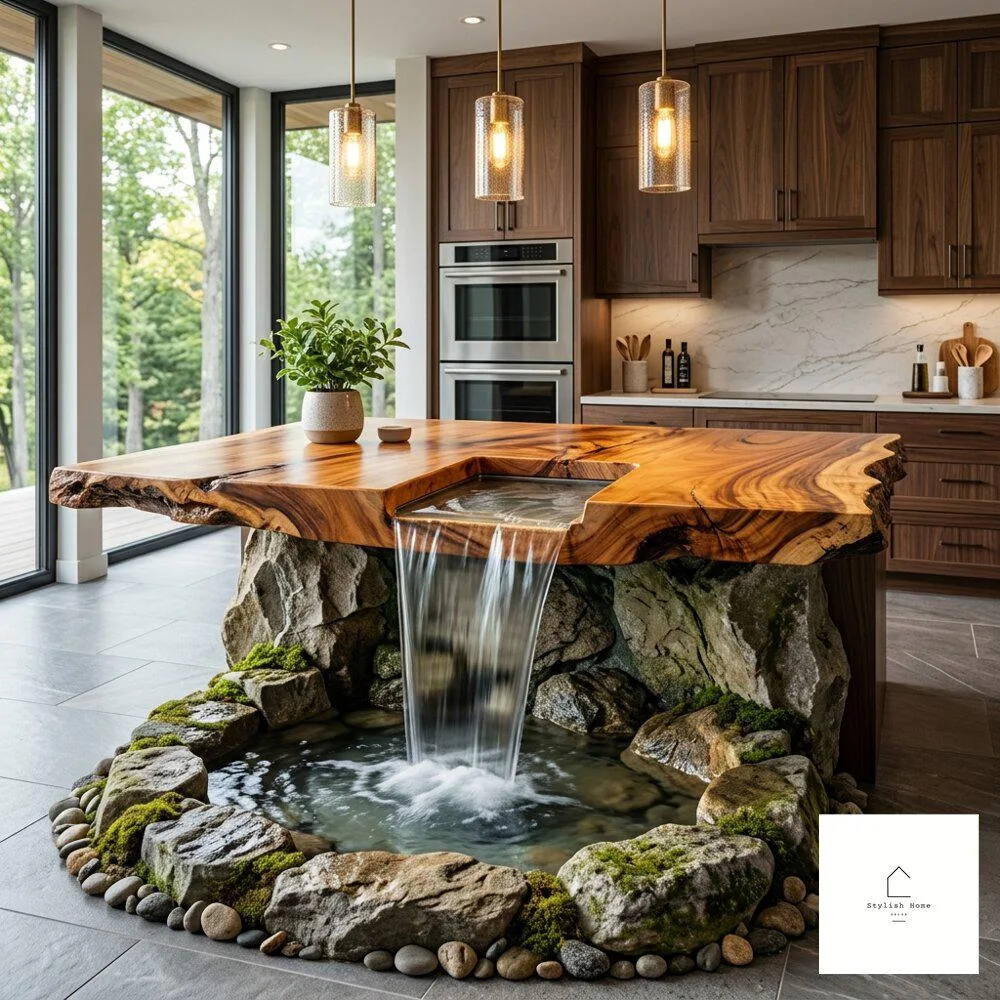
Cost: I won’t sugarcoat this. The waterfall kitchen island pros and cons discussion must acknowledge that waterfall edges are expensive. You’re using significantly more material—that vertical edge requires additional square footage of your chosen stone or surface. My fabricator estimated I used roughly 30% more material than a traditional edge would require.
Beyond material costs, the fabrication and installation demand specialized skills. The mitered edge where the horizontal top meets the vertical side must be precisely cut and seamlessly joined. This level of craftsmanship commands higher labor rates. My total island cost ran about 40% more than a traditional design would have.
Installation Complexity: This isn’t a DIY project unless you’re a master craftsman. The weight of the material, the precision required for those mitered joints, and the structural support needed make professional installation essential. I watched my installers work for two full days on my island, carefully reinforcing the internal frame to support the cantilevered waterfall edge.
Seam Visibility: Despite best efforts, the seam where the countertop meets the waterfall edge will be visible upon close inspection. With heavily veined or patterned materials, achieving a perfect grain match can be difficult. My fabricator did book-match my quartzite beautifully, but if you look closely, you can see where the two pieces meet. This doesn’t bother me, but it’s something to accept going in.
Limited Outlet Access: Traditional islands often feature electrical outlets on the side panels. A waterfall edge eliminates this option on at least one side. I had to plan outlet placement carefully, installing them on the non-waterfall ends and on the seating overhang edge—not ideal visually, but functionally necessary.
Reduced Flexibility: Once installed, a waterfall island is essentially permanent. The custom fabrication and installation make it impractical to change or relocate. If you’re someone who likes to regularly refresh your space, this commitment might feel restrictive.
Choosing the Right Material for Your Waterfall Kitchen Island Countertop
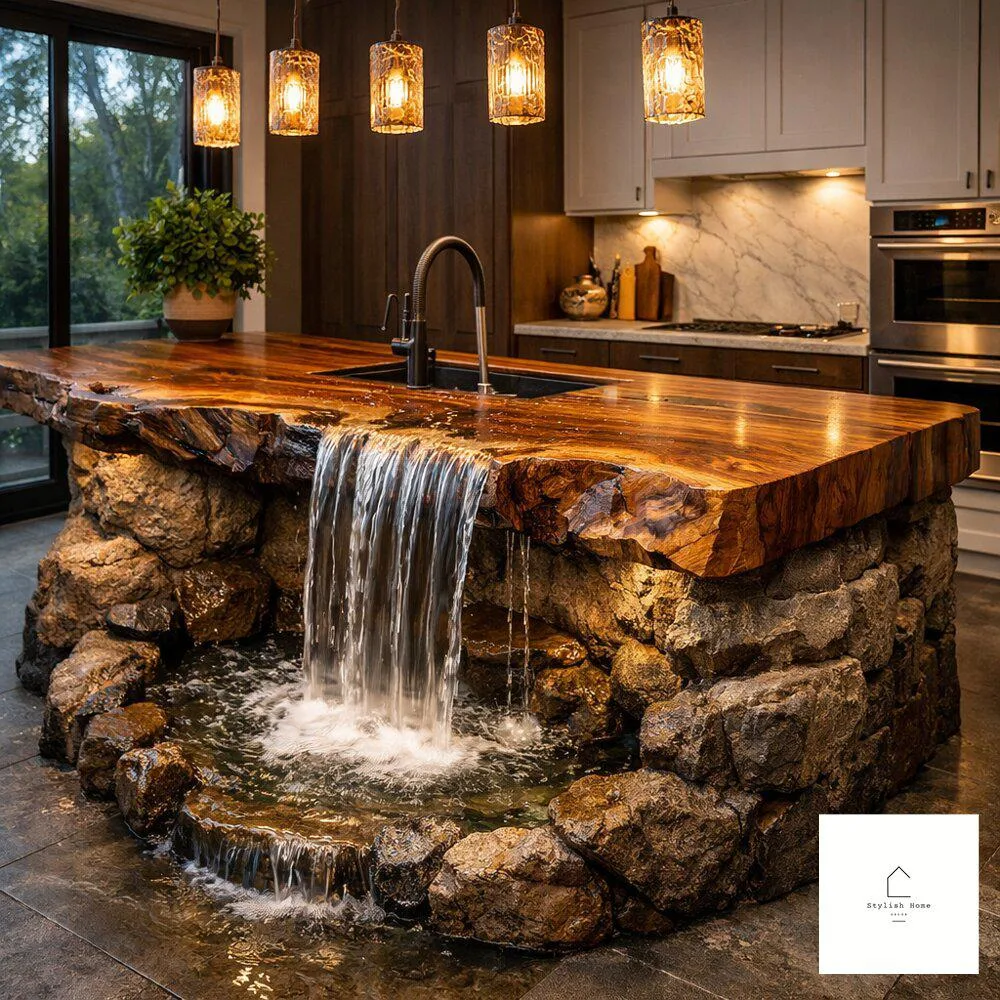
The material you select for your waterfall kitchen island countertop will define its character and determine its performance over time. After extensive research and now years of lived experience, here’s my guide to the most popular options.
Natural Stone: The Luxury Choice
Marble, granite, and quartzite offer unparalleled beauty. Each slab is unique, with veining and coloration that make your island truly one-of-a-kind. The waterfall edge showcases these natural patterns spectacularly.
I chose quartzite for its durability and the way its subtle patterning creates movement down the waterfall edge. Three years in, I’ve had zero regrets—it’s withstood hot pans, spills, and the daily chaos of family life beautifully.
The downside: natural stone requires regular sealing and can be susceptible to staining or etching, particularly marble. It’s also the most expensive option, both for materials and fabrication.
Quartz: The Practical Alternative
Engineered quartz offers consistency, durability, and lower maintenance than natural stone. Modern quartz can convincingly mimic marble or granite while providing superior stain and scratch resistance.
My sister chose quartz for her waterfall island, and it’s performed flawlessly for her young family. No sealing required, no worry about wine or lemon juice damaging the surface. The trade-off is that quartz lacks the depth and character of natural stone—it’s beautiful, but in a more controlled way.
Wood: Warmth and Character
Butcher block waterfall islands create stunning organic warmth. I’ve seen walnut installations that take my breath away—that rich, chocolate grain flowing over the edge creates incomparable coziness.
Wood requires more maintenance—regular oiling, potential refinishing—and isn’t as resistant to water damage. But for the right kitchen, particularly in farmhouse or transitional styles, nothing else compares for emotional warmth.
Concrete and Solid Surface: Modern Minimalism
For ultra-contemporary spaces, concrete or solid surface materials create seamless, industrial-chic waterfalls. These materials can be custom-tinted to any color and shaped to virtually any form.
A designer friend created a pure white solid surface waterfall island that appears to be carved from a single block—no visible seams anywhere. The effect is almost sculptural. These materials offer excellent durability and repairability but can feel cold in more traditional settings.
Making the Decision: Is a Waterfall Island Right for You?
Three years ago, standing in Sarah’s kitchen, running my hand along that marble waterfall edge, I knew I wanted this feature in my own home. But desire and reality don’t always align perfectly.
As I worked through my own decision-making process, I developed a framework that might help you:
Consider your budget realistically. If a waterfall edge will strain your finances to the breaking point, other design elements might deliver more value. But if you can comfortably afford it, the emotional and resale value may justify the investment.
Evaluate your kitchen’s style. Waterfall islands shine in contemporary, modern, and transitional kitchens. They can work in traditional spaces with the right materials, but require careful integration. My kitchen leans transitional, and the waterfall edge bridges old and new beautifully.
Think long-term. Are you planning to stay in this home for years? The investment makes more sense if you’ll enjoy it for a decade than if you’re planning to move in two years (though it does add resale value).
Assess your practical needs. If you desperately need storage on all sides of your island, a waterfall might not be ideal. But if you can design around it, the aesthetic benefits may outweigh the minor storage sacrifice.
Consider maintenance willingness. Different materials require different levels of care. Be honest about whether you’ll actually seal that marble or oil that walnut.
Installation Insights: What I Wish I’d Known
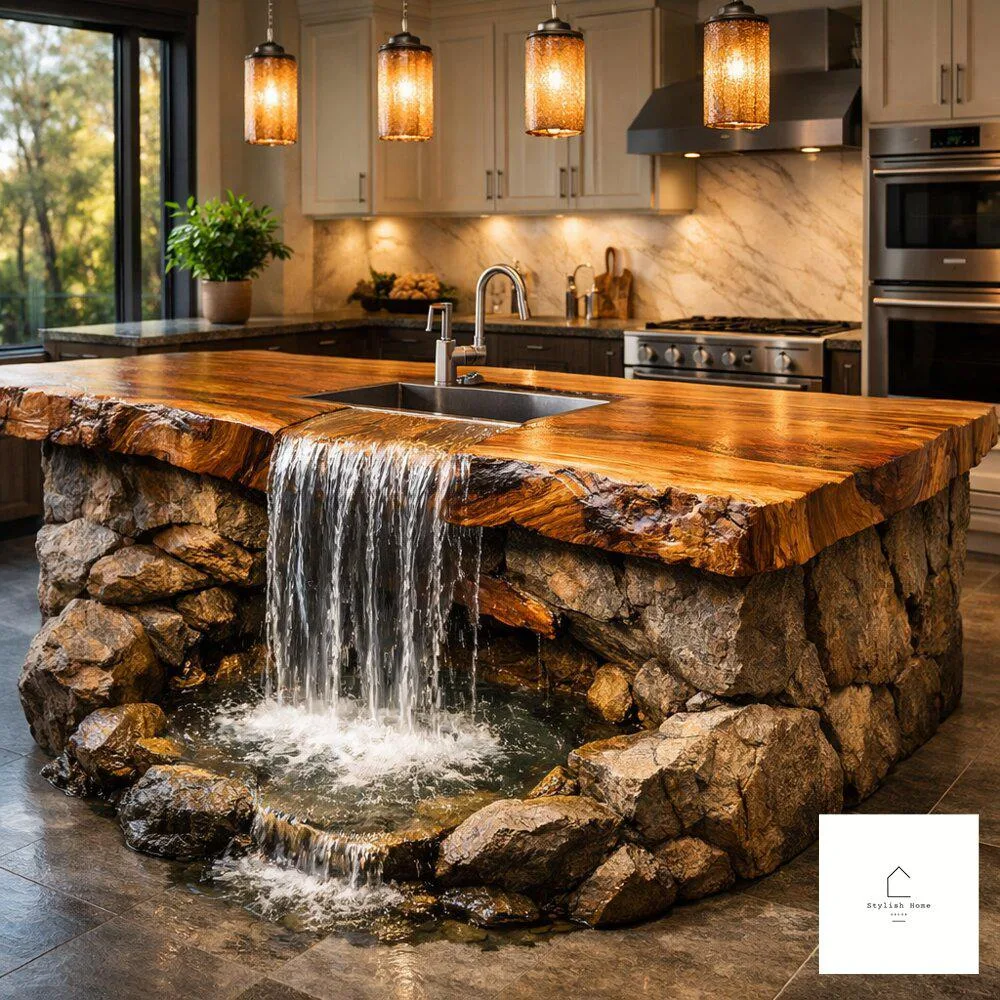
When I committed to my waterfall island, I thought I understood the process. I was wrong. Here’s what I learned:
Timeline matters. My fabricator needed six weeks from template to installation. During that time, my kitchen was partially functional but far from complete. Plan accordingly.
Support structure is critical. The waterfall edge doesn’t just sit there—it needs substantial internal support. My contractor reinforced the island’s internal frame specifically to handle the cantilevered weight.
Professional installation is non-negotiable. I considered saving money by having a less experienced installer handle it. Thank goodness I didn’t. The precision required for those mitered edges demands expertise.
Protect your investment. During the remainder of my renovation, I kept the island covered and protected. One errant tool could have damaged that pristine surface.
Living with a Waterfall Island: The Reality
Every morning, I make coffee and lean against my island, feeling that cool stone against my palms. It’s become a ritual I didn’t anticipate—a moment of connection with my space.
The island has held Thanksgiving turkeys and homework projects. It’s witnessed tears over middle school drama and celebrations of job promotions. Its surface bears invisible marks of a thousand family moments.
That waterfall edge has absorbed juice spills and flour dust. It’s been cleaned countless times, and it still looks stunning. The investment has proven worthwhile in ways both practical and emotional.
Where Design Meets Heart: Final Reflections
The best design choices resonate beyond mere aesthetics. They create spaces that support our lives, reflect our values, and provide daily moments of beauty that nourish us in small but meaningful ways.
A waterfall kitchen island accomplishes this. It’s a luxury, yes, but one that pays dividends in joy, pride, and functionality. It transforms a kitchen from a room where you cook into a space where you truly live.
Is it right for everyone? Absolutely not. The cost, commitment, and specific aesthetic may not align with every home or homeowner. But for those drawn to clean lines, contemporary elegance, and that ineffable quality that makes a house feel like a thoughtfully designed home, a waterfall island might be exactly what your kitchen needs.
Three years after installation, I’ve never once regretted the choice. Every single day, that flowing edge catches my eye and reminds me that we live in a space we intentionally created, with care and consideration. In a world that often feels chaotic and temporary, there’s profound comfort in that permanence and beauty.