
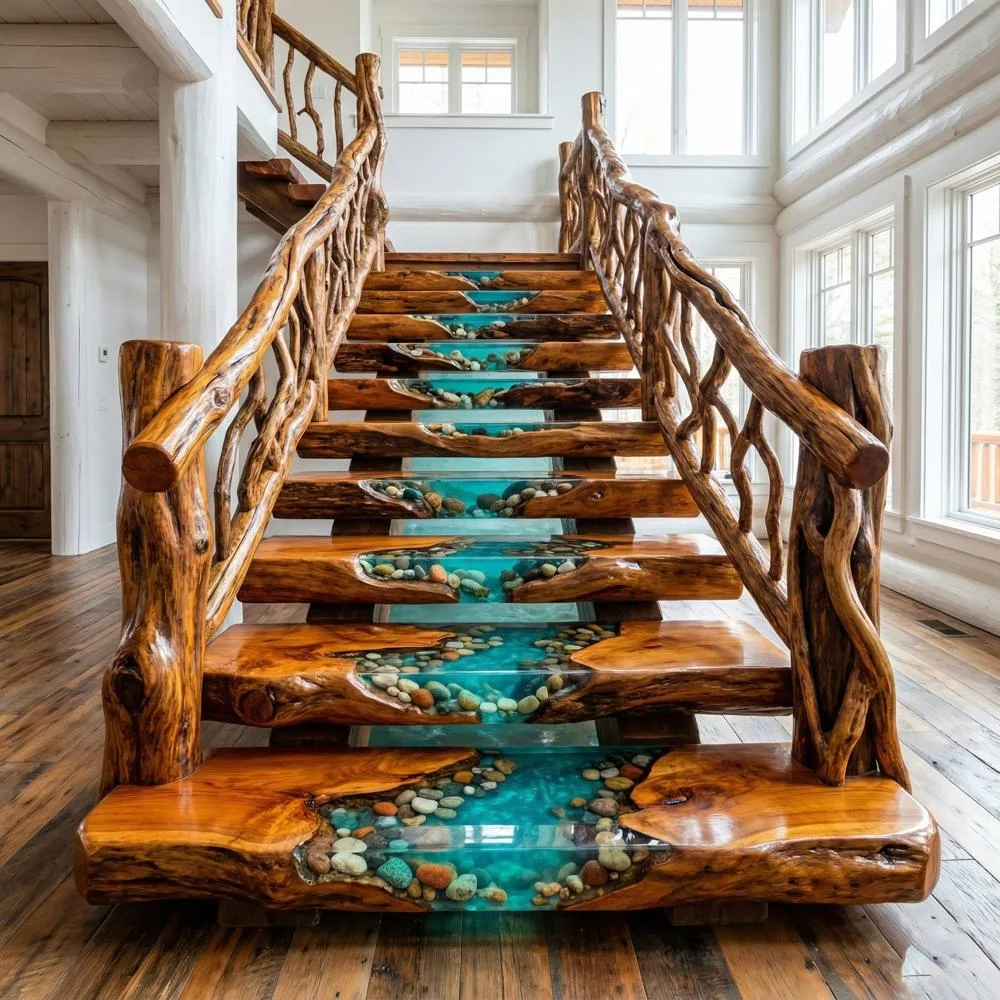
When it comes to transforming your home with an eye catching focal point, few features can match the stunning visual impact of a wood and epoxy pebble staircase. This innovative design approach combines the warmth of natural wood, the organic beauty of river stones, and the glossy clarity of epoxy resin to create a truly unique architectural element that serves as both functional necessity and artistic masterpiece.
The growing popularity of epoxy resin projects in home design has opened up countless creative possibilities, and incorporating pebbles into staircase construction represents one of the most impressive applications of this versatile material. Whether you’re planning a complete home renovation or simply looking to upgrade your existing staircase, understanding the intricacies of this design trend will help you make informed decisions about bringing this natural wonder into your living space.
Understanding the Beauty of Epoxy Pebble Staircases
The concept behind a wood and epoxy pebble staircase is elegantly simple yet visually complex. Natural pebbles or river stones are carefully arranged on wooden stair treads and then encased in crystal clear epoxy resin, creating a smooth, durable walking surface that showcases the natural beauty of the stones beneath. The result is a three dimensional artwork that you can actually walk on, bringing the tranquility of a riverbed or beach directly into your home.
What makes this design particularly captivating is the interplay between the organic irregularity of the pebbles and the precise geometry of the staircase structure. Each stone brings its unique color, shape, and texture to the composition, ensuring that no two staircases are ever exactly alike. The epoxy resin acts as both adhesive and protective coating, sealing the pebbles in place while creating a glass like finish that amplifies the natural colors and patterns of the stones.
The wood framework provides essential structural support while adding warmth and traditional craftsmanship to the modern aesthetic. Many designers choose to contrast light colored pebbles against dark wood, or vice versa, to create maximum visual impact. Others prefer a more harmonious approach, selecting wood tones and stone colors that complement each other naturally.
Design Variations and Creative Possibilities
Full Coverage Pebble Treads
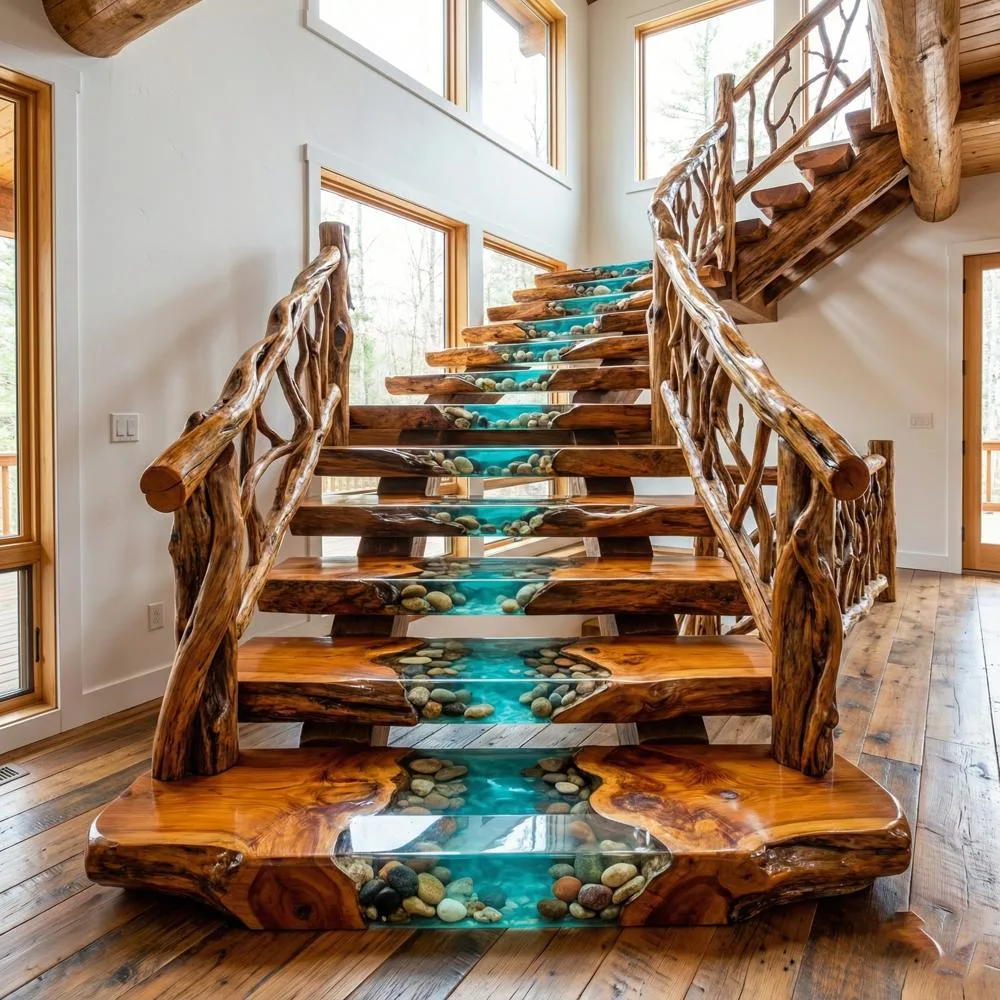
The most dramatic approach involves covering the entire surface of each stair tread with pebbles before applying the epoxy coating. This creates a complete river rock surface that transforms the staircase into a naturalistic feature. Homeowners can choose uniform pebble sizes for a more consistent look, or mix various sizes to create visual texture and depth. The choice of pebble colors also significantly impacts the overall aesthetic, ranging from pure white for a contemporary feel to mixed earth tones for a more organic appearance.
Partial Pebble Inlays
For those who prefer a subtler approach, partial pebble inlays offer an elegant compromise. In this design variation, pebbles are incorporated into specific sections of the stair treads, perhaps creating border patterns or central runner designs while leaving portions of the natural wood visible. This technique allows the beauty of both wood and stone to shine while reducing material costs and installation complexity.
Stair Riser Treatments
While most attention focuses on the horizontal treads where feet actually land, the vertical risers between steps present additional opportunities for creative expression. Some designers extend the pebble treatment to the risers, creating a cohesive flow from top to bottom. Others use the risers as contrast elements, perhaps painting them in complementary colors or leaving them as natural wood to frame the pebbled treads.
Lighting Integration
One of the most sophisticated enhancements for a wood and epoxy pebble staircase involves integrating LED lighting beneath the epoxy layer or along the edges of each step. When lights shine through the translucent resin, they create a magical glow that highlights the pebbles from within, transforming the staircase into an illuminated feature that’s particularly stunning at night. This approach requires careful planning during the construction phase but delivers truly spectacular results.
Material Selection and Sourcing
Choosing the Right Pebbles
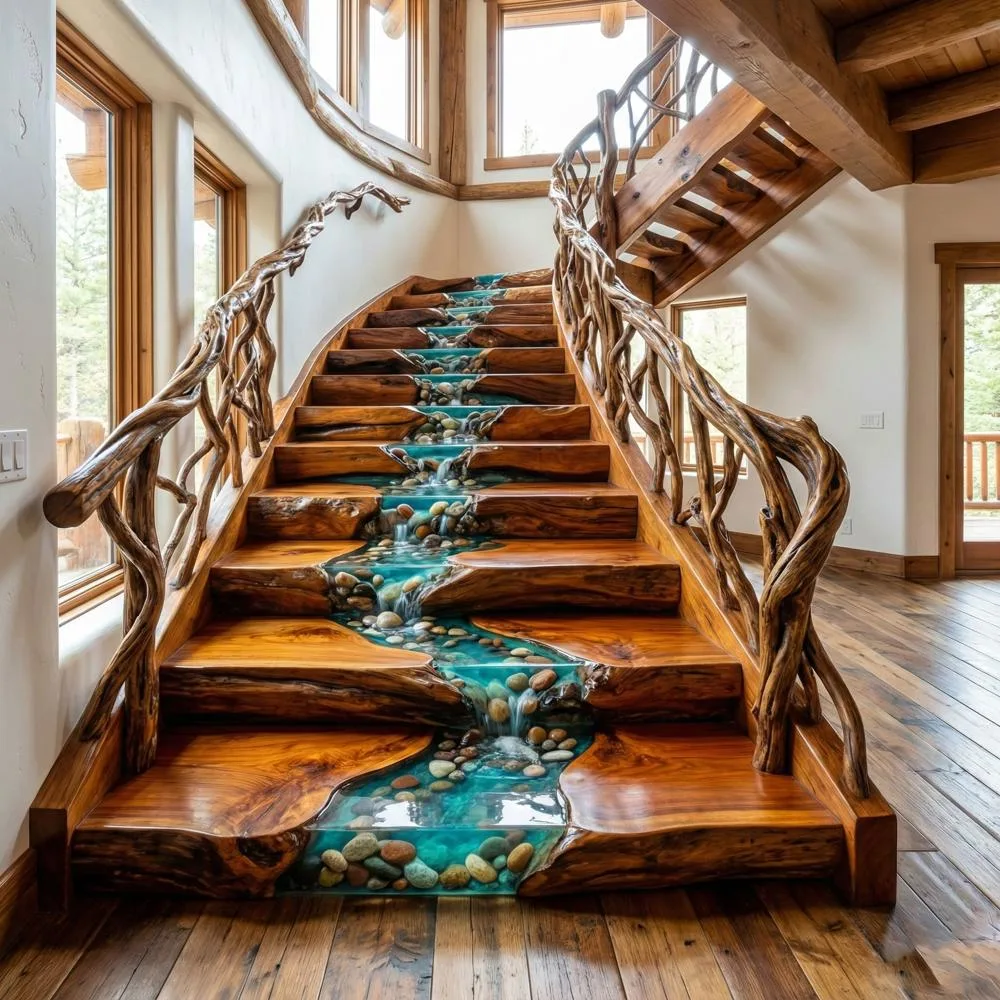
The success of your wood and epoxy pebble staircase depends heavily on selecting appropriate stones. River pebbles are the most popular choice due to their smooth, rounded shapes and varied colors. These stones have been naturally tumbled by water over thousands of years, creating surfaces that are pleasant to look at and comfortable underfoot even through the epoxy layer.
Size matters considerably when selecting pebbles. Stones ranging from half an inch to two inches in diameter work best for most applications. Smaller pebbles create a finer, more intricate look but require more installation time. Larger stones make bold statements but may create more noticeable surface variations in the finished product.
Color selection offers endless possibilities. White and cream colored pebbles create bright, airy staircases that work beautifully in contemporary homes. Black pebbles deliver dramatic impact and hide dirt exceptionally well. Multi colored mixes of grays, browns, and tans produce natural, earthy aesthetics. Some homeowners even incorporate specialty stones like polished agates or quartz crystals for added visual interest.
Wood Selection for Framework
The wooden components of your staircase require careful consideration for both structural integrity and aesthetic compatibility. Hardwoods like oak, maple, and walnut offer excellent durability and beautiful grain patterns that complement the natural stone elements. Engineered lumber products provide dimensional stability that’s particularly important in environments with fluctuating humidity levels.
The wood finish significantly impacts the overall appearance. Some designers prefer natural oil finishes that showcase the wood’s authentic character, while others opt for stains that coordinate with existing flooring or trim. The key is ensuring that your wood treatment can withstand regular foot traffic while maintaining its beauty over time.
Epoxy Resin Quality
Not all epoxy resins perform equally when it comes to staircase applications. You need a product specifically designed for deep pour applications that can handle the thickness required to fully encapsulate the pebbles. The resin must be crystal clear to showcase the stones beneath, and it should resist yellowing from UV exposure over time.
High quality marine grade epoxy resins typically deliver the best results, though they come at premium prices. These formulations offer superior clarity, excellent hardness ratings for durability, and good resistance to scratches and scuffs from regular use. Budget epoxy products may seem tempting initially but often yellow over time or fail to achieve the glass like clarity that makes this design so impressive.
Installation Process and Technical Considerations
Surface Preparation
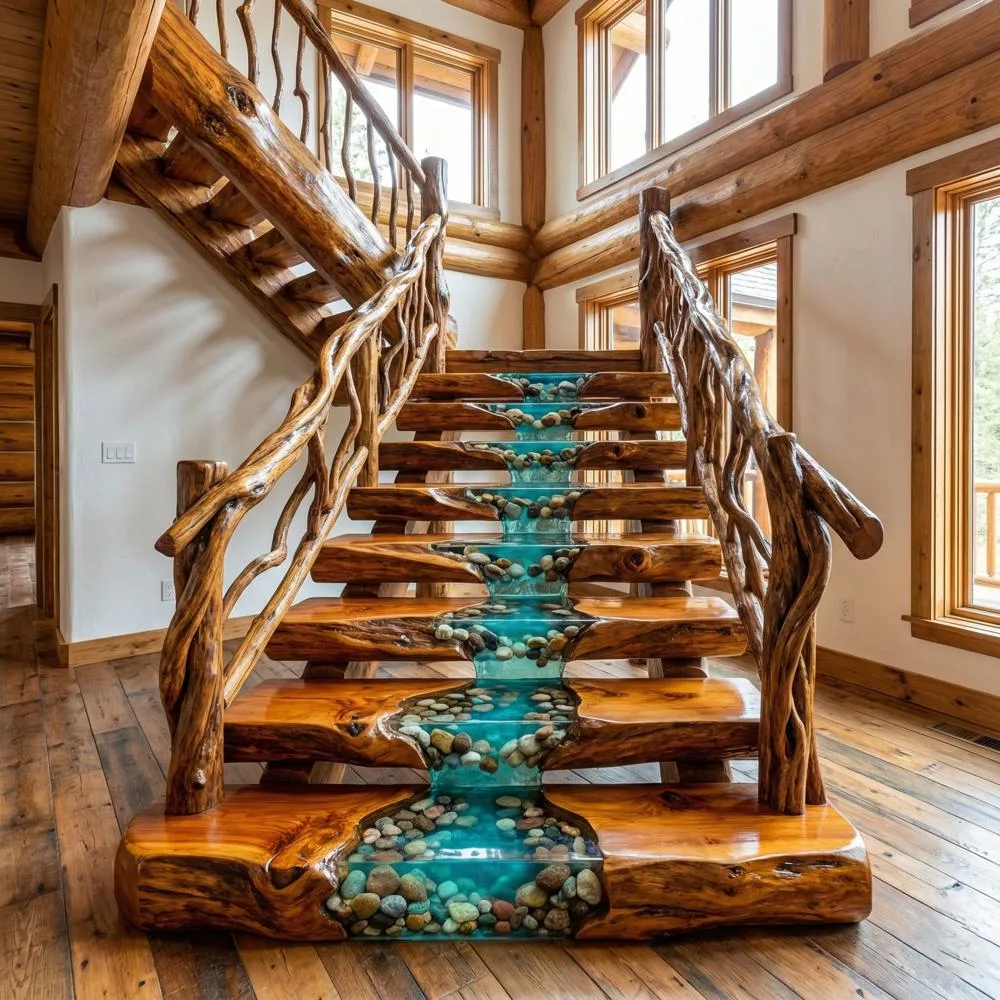
Creating a wood and epoxy pebble staircase begins with meticulous surface preparation. The wooden treads must be completely clean, dry, and level before any pebbles are placed. Any imperfections in the base surface will telegraph through to the finished product, so sanding and sealing the wood properly is essential.
Many professionals apply a seal coat of thin epoxy to the bare wood before adding pebbles. This prevents air bubbles from escaping through the wood grain into the main epoxy pour, which could create unsightly voids in the finished surface. This preparatory step requires patience but dramatically improves final results.
Pebble Arrangement
Arranging the pebbles is where artistry meets craftsmanship. Some installers prefer to plan their layouts carefully, almost like creating a mosaic, ensuring optimal color distribution and visual balance. Others embrace a more random approach that mimics how stones naturally appear in riverbeds.
The pebbles can be temporarily adhered to the wood base using small amounts of silicone or epoxy to hold them in position during the main pour. Proper spacing between stones allows the epoxy to flow completely around each pebble, ensuring full encapsulation and maximum clarity.
Epoxy Application
Pouring the epoxy requires careful technique and favorable environmental conditions. The workspace should maintain temperatures between 70 and 80 degrees Fahrenheit with low humidity for optimal curing. Most installations require multiple pours to achieve the necessary depth, with each layer allowed to partially cure before adding the next.
Air bubbles are the enemy of a perfect finish. Professional installers use various techniques to eliminate bubbles, including using torch heat to bring bubbles to the surface where they pop, or using pressure pots to force bubbles out of the resin during curing.
Finishing and Sealing
Once the epoxy has fully cured, which typically takes several days depending on the product and environmental conditions, the surface requires finishing work. This usually involves sanding with progressively finer grits to remove any surface imperfections, followed by polishing to restore the high gloss finish that makes epoxy so attractive.
Some installers apply a final clear coat or urethane sealer over the cured epoxy to provide additional protection against wear and UV damage. This topcoat can be periodically renewed to maintain the staircase’s pristine appearance without requiring complete refinishing.
Cost Considerations and Budgeting

The investment required for a wood and epoxy pebble staircase varies considerably based on project scope, material quality, and whether you hire professionals or tackle the work yourself. For a standard residential staircase with approximately thirteen steps, material costs alone typically range from fifteen hundred to four thousand dollars.
Professional installation adds significantly to the total investment, with experienced epoxy craftspeople charging anywhere from three thousand to ten thousand dollars or more for labor, depending on project complexity and regional pricing variations. However, this specialized work requires substantial skill and experience, making professional installation a worthwhile investment for many homeowners.
The long term value proposition extends beyond initial costs. A well executed wood and epoxy pebble staircase becomes a permanent artistic feature that enhances your home’s uniqueness and can positively impact resale value. Unlike carpet or traditional stair runners that require periodic replacement, a properly installed epoxy staircase can last decades with minimal maintenance.
Maintenance and Long Term Care
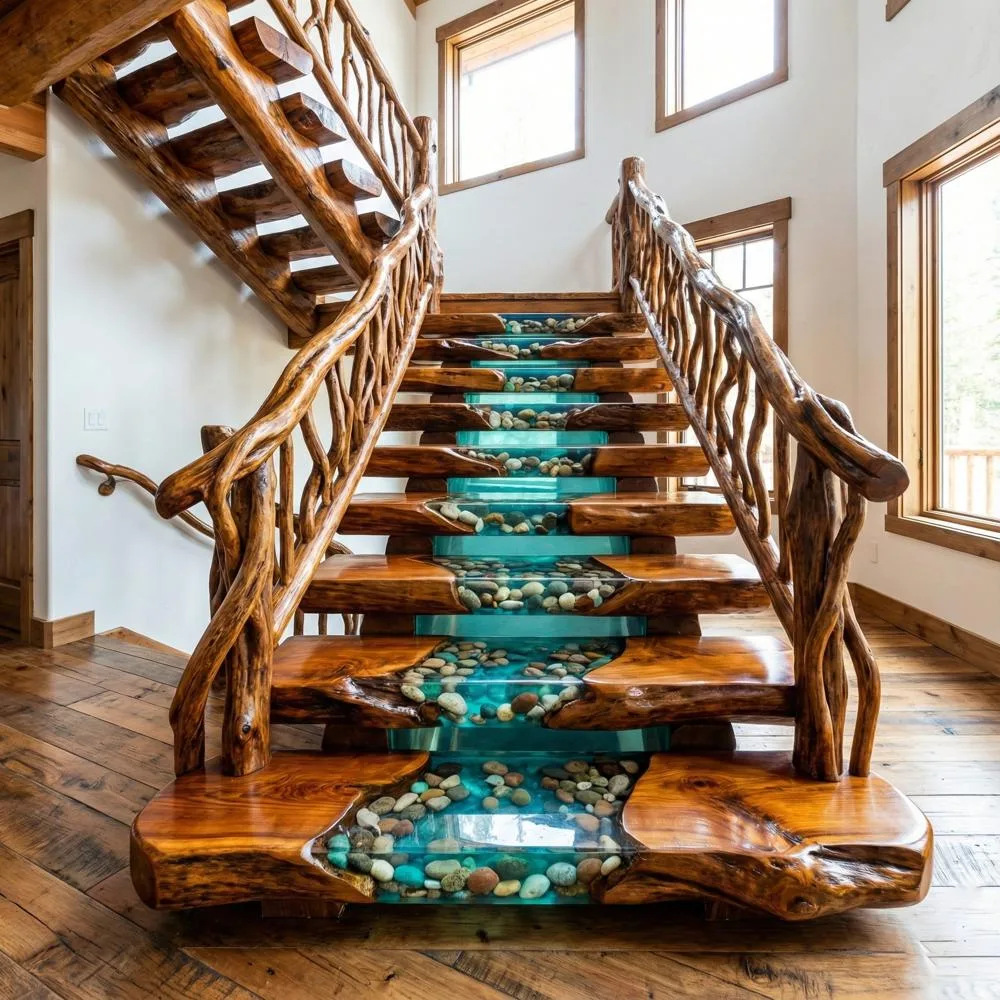
One of the most appealing aspects of epoxy pebble staircases is their relatively low maintenance requirements. The sealed surface resists staining and water damage, making cleanup as simple as sweeping or damp mopping. Unlike wood stairs that require periodic refinishing or carpeted stairs that need shampooing, epoxy surfaces maintain their appearance with basic care.
Preventing scratches and scuffs should be a priority. Placing protective pads under furniture legs, avoiding dragging heavy objects across the stairs, and keeping pet nails trimmed all help preserve the glossy finish. Small scratches can often be buffed out with polishing compounds, though deep gouges may require professional repair.
Over many years, high traffic areas may develop a worn appearance where the surface gloss dulls slightly. When this occurs, the staircase can be lightly sanded and recoated with fresh epoxy or a compatible clear sealer to restore its original luster. This maintenance is far less invasive than refinishing traditional wooden stairs.
Environmental and Health Considerations
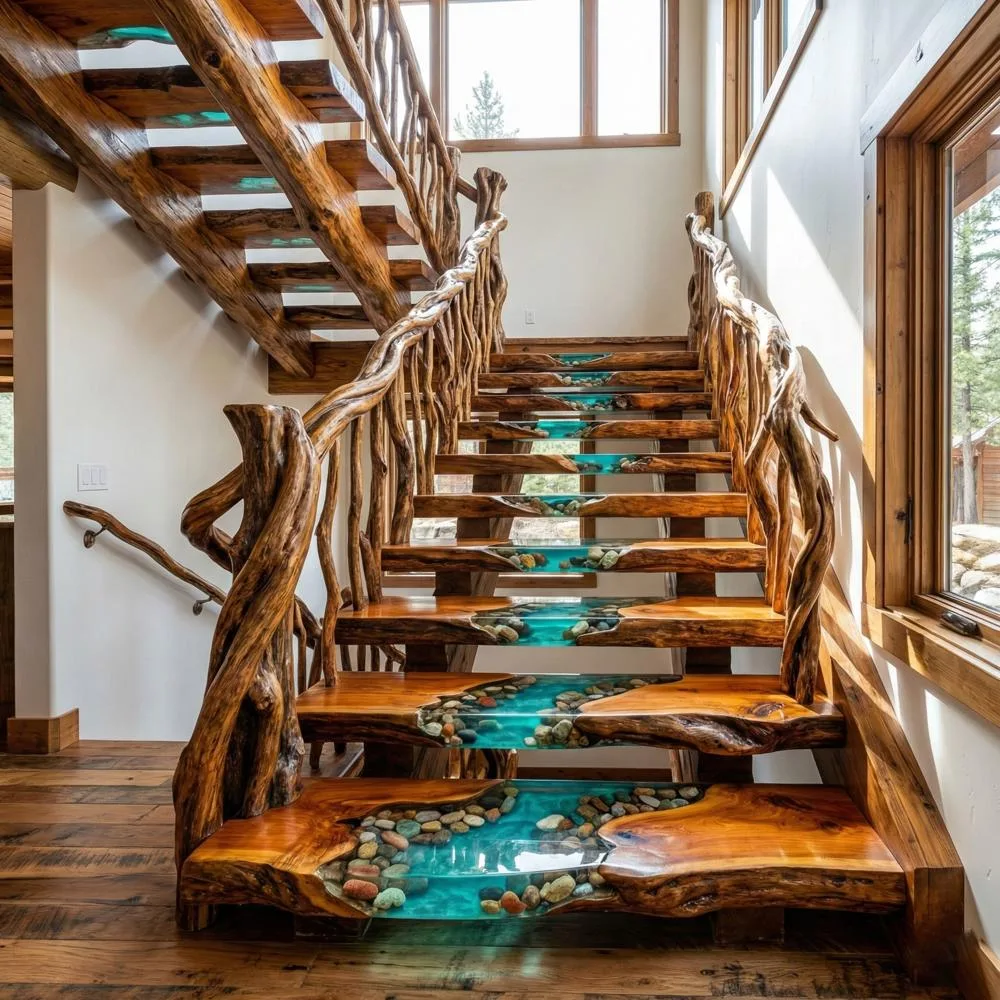
When planning your wood and epoxy pebble staircase, it’s important to consider environmental and health factors. Epoxy resin installation produces strong fumes during application and curing, requiring excellent ventilation and potentially temporary relocation of household members, especially those with respiratory sensitivities.
Choosing low VOC epoxy formulations minimizes harmful emissions and reduces environmental impact. Once fully cured, epoxy creates an inert, non toxic surface that’s safe for daily use, but the installation phase requires appropriate precautions.
Sourcing pebbles responsibly ensures your beautiful staircase doesn’t come at environmental cost. River pebbles should be obtained from sustainable sources rather than harvested in ways that damage natural waterways. Many suppliers now offer ethically sourced stones that meet environmental standards.
Bringing Natural Beauty into Your Home
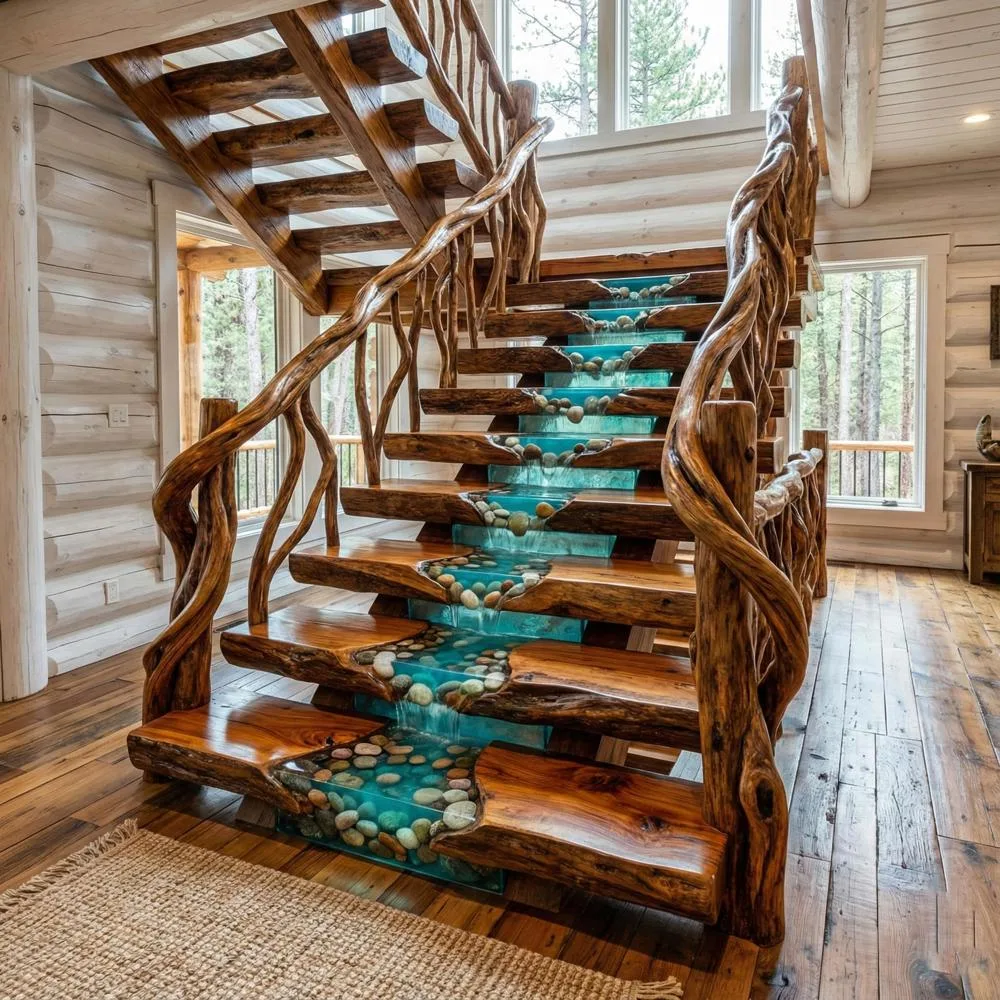
A wood and epoxy pebble staircase represents more than just a functional way to move between floors. It’s a daily reminder of natural beauty, a conversation starter that guests will remember, and a testament to the creative possibilities that emerge when traditional craftsmanship meets modern materials. The tactile and visual experience of walking on a surface that captures the essence of a riverbed brings an element of nature’s tranquility into the everyday domestic environment.
This design approach works beautifully in various architectural styles, from rustic cabins where it enhances the natural theme to contemporary homes where it provides organic contrast to sleek modern lines. The versatility of customization options means you can create a staircase that perfectly reflects your personal aesthetic while maintaining the practical durability needed for daily use.
Creating Your Dream Staircase: Final Thoughts and Inspiration
The journey to creating a stunning wood and epoxy pebble staircase combines careful planning, quality materials, skilled execution, and artistic vision. Whether you choose to hire experienced professionals or develop the skills to complete this project yourself, the result will be a unique architectural feature that transforms your home’s interior.
As you move forward with your project, remember that patience and attention to detail make the difference between a good result and an exceptional one. Take time to select materials that truly resonate with your vision, ensure proper surface preparation, and don’t rush the curing process. The investment of time and resources will reward you with a beautiful, durable staircase that brings joy and natural elegance to your home for decades to come.
The wood and epoxy pebble staircase trend shows no signs of fading because it addresses our fundamental desire to connect with nature even within our built environments. By bringing the timeless beauty of water worn stones into your home in such an innovative way, you create a space that feels both grounded in nature and excitingly contemporary, proving that the best designs honor both where we’ve been and where we’re going.