
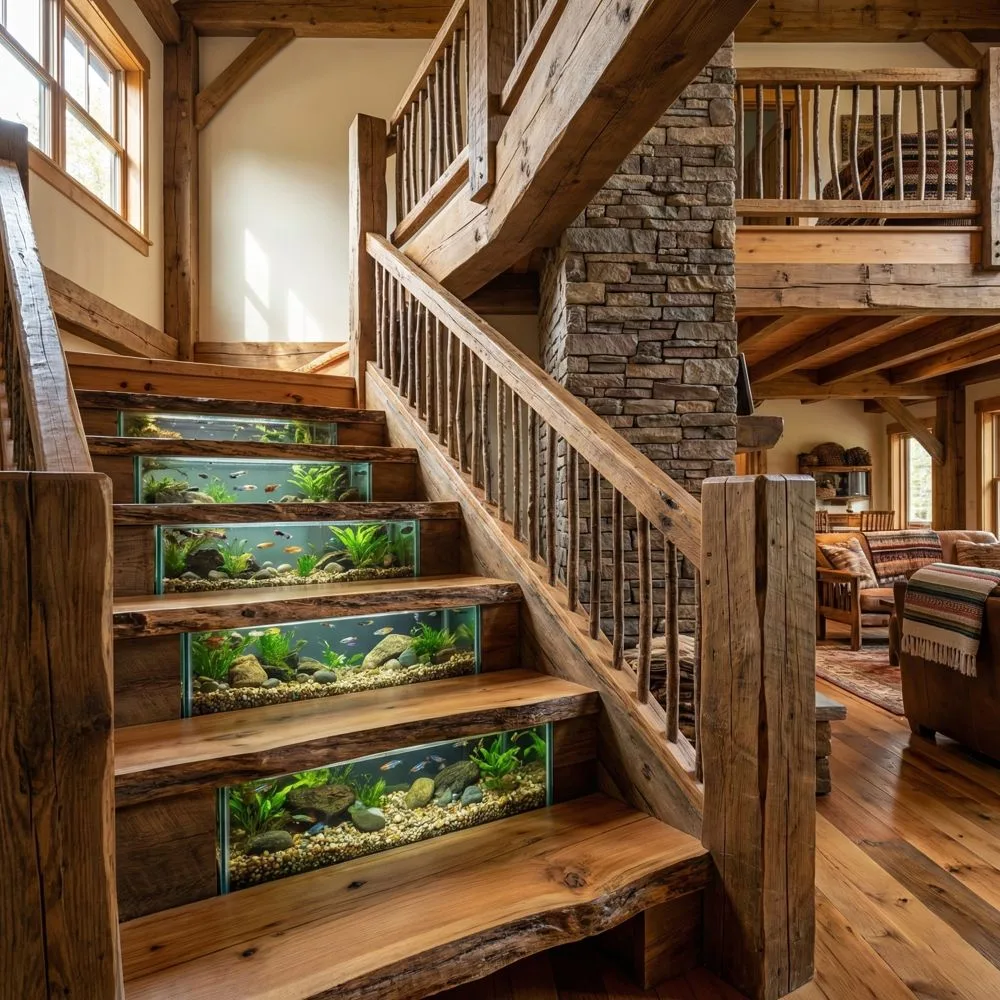
Imagine walking up a staircase where each step brings you face to face with the serene beauty of an aquarium, all encased within the natural, organic beauty of live edge wood slabs. This is not just a dream for design enthusiasts anymore. The wood slab aquarium staircase represents one of the most innovative and breathtaking trends in contemporary home design, merging natural elements with modern living spaces in ways that captivate and inspire.
This architectural marvel combines the raw, untamed beauty of natural wood with the calming presence of aquatic life, creating a focal point that transforms an ordinary staircase into an extraordinary experience. Whether you are a homeowner looking to make a bold statement, an interior designer seeking fresh inspiration, or simply someone who appreciates unique craftsmanship, understanding how to conceptualize and execute a wood slab aquarium staircase can open up new possibilities for your living space.
What Makes a Wood Slab Aquarium Staircase Special
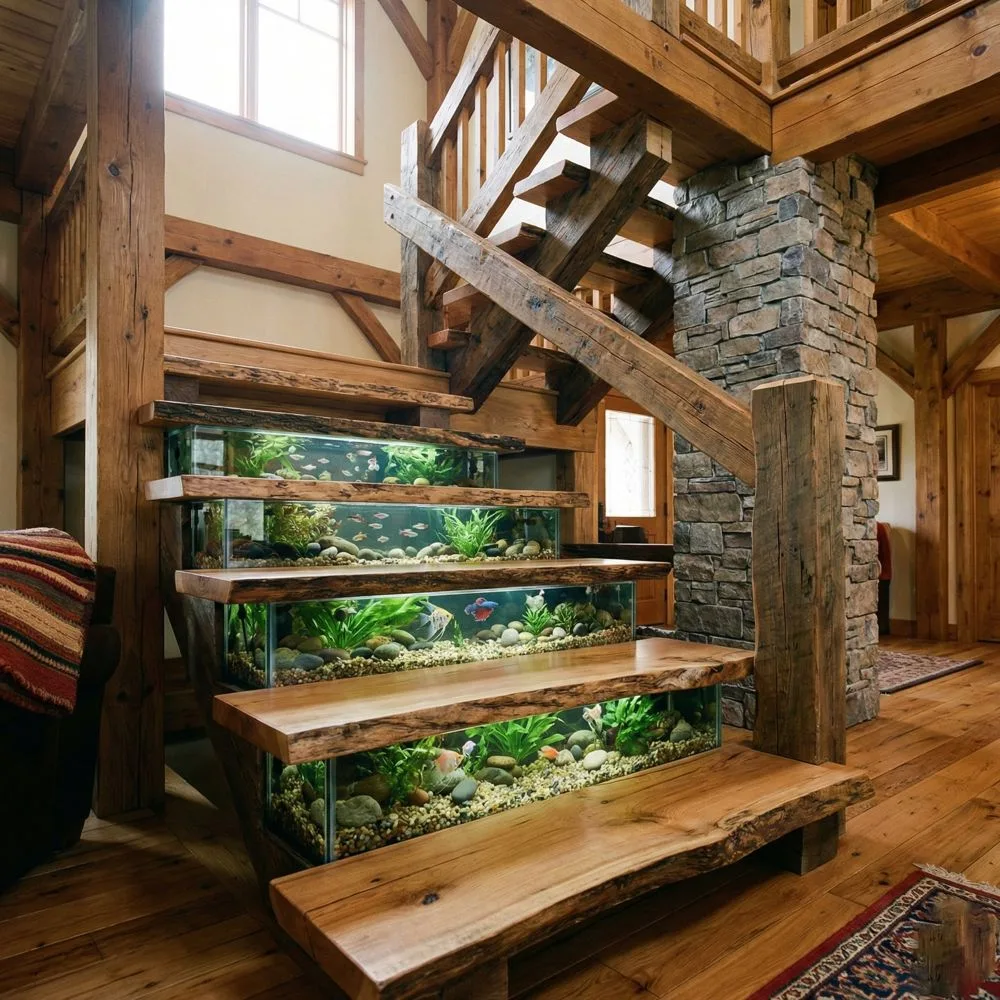
A wood slab aquarium staircase is more than just a functional element in your home. It represents the intersection of art, nature, and engineering. The concept involves integrating custom aquariums into a staircase structure that features live edge wood slabs as railings, treads, or decorative elements. The natural grain patterns, knots, and irregular edges of the wood create a striking contrast with the clean lines of glass aquariums and the fluid movement of water and fish.
The appeal lies in its ability to bring multiple natural elements together. Wood provides warmth and organic texture, while the aquarium introduces movement, life, and a sense of tranquility. When properly designed and installed, this combination creates an immersive sensory experience that changes throughout the day as light filters through the water and fish glide past wooden surfaces.
Design Considerations for Your Custom Installation
Choosing the Right Wood Species
The foundation of any successful wood slab aquarium staircase begins with selecting the appropriate wood species. Not all woods are created equal when it comes to proximity to water and humidity. You need species that can withstand moisture without warping, rotting, or degrading over time.
Hardwoods like walnut, oak, and maple are popular choices due to their durability and stunning grain patterns. Teak and cedar offer natural water resistance, making them excellent options for this application. Each species brings its own character: walnut offers rich, dark chocolate tones; oak provides strength and prominent grain; maple delivers a lighter, contemporary feel.
The live edge aspect of the wood adds another dimension to the design. Live edge refers to the natural, uncut edge of the wood that retains the tree’s original shape, including bark, sapwood, and the organic contours formed during growth. This feature creates visual interest and ensures that no two installations are exactly alike.
Structural Engineering Requirements
Safety must be the top priority when incorporating aquariums into a staircase design. Water is heavy, with each gallon weighing approximately eight pounds. A moderate sized aquarium can easily add several hundred pounds to your staircase structure, not including the weight of the wood slabs, substrate, decorations, and equipment.
Professional structural assessment is absolutely essential. An engineer needs to evaluate your existing staircase framework or design a new structure that can handle the additional load. This often involves reinforcing joists, adding support beams, and ensuring that weight distribution does not compromise the integrity of your home’s foundation or flooring.
The placement of aquariums also requires careful planning. Will they be integrated into risers, positioned along the side as a living balustrade, or incorporated into landings? Each approach has different structural implications and aesthetic outcomes.
Aquarium Integration Methods and Styles
Riser Mounted Aquariums
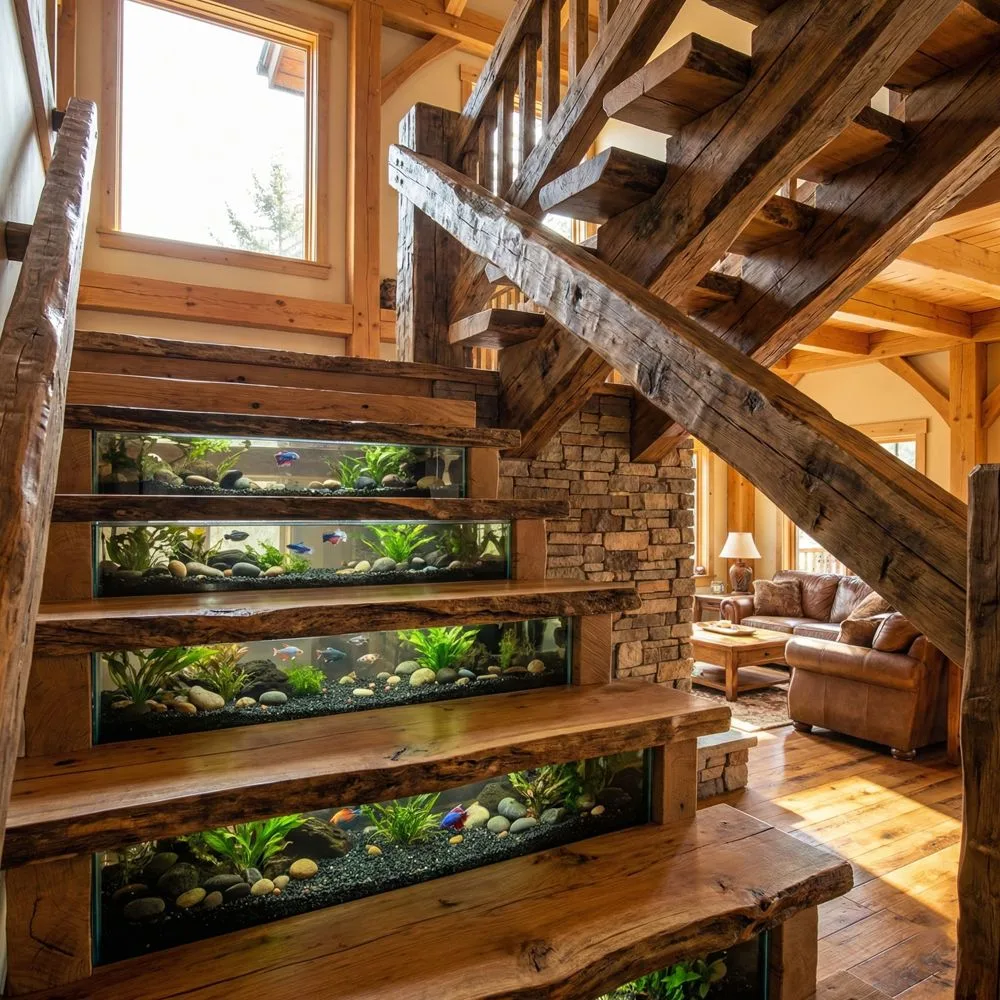
One popular approach involves installing slim aquariums into the vertical risers between steps. This creates the visual effect of walking through an underwater world as you ascend or descend the stairs. Each riser becomes a window into aquatic life, with fish swimming horizontally across your field of vision.
This method requires custom made aquariums with precise measurements to fit the riser dimensions. The tanks are typically shallower than traditional aquariums but can still house a variety of small fish species, aquatic plants, and decorative elements. LED lighting integrated into each step can illuminate the aquariums from above or below, creating dramatic effects during evening hours.
Live Edge Wood Balustrade with Side Aquariums
Another striking design features a large aquarium running parallel to the staircase, with live edge wood slabs forming the handrail and decorative elements. This approach creates a dramatic statement piece that serves as both safety railing and living art installation.
The wood slab typically sits atop the aquarium, with its natural edge creating a organic silhouette against the glass and water. This juxtaposition of materials highlights the beauty of both elements. The aquarium can be designed with viewing access from multiple angles, allowing you to observe aquatic life from the staircase, adjacent rooms, or lower levels of your home.
Landing Feature Aquariums
For homes with staircase landings, these platforms offer excellent opportunities for larger, more elaborate aquarium installations. A substantial wood slab can serve as a bench or ledge alongside a floor to ceiling aquarium, creating a rest point where residents and guests can pause and observe the aquatic environment.
This approach allows for more complex aquascaping, larger fish species, and elaborate filtration systems since space constraints are less restrictive than with riser installations.
Technical Requirements and Maintenance Considerations

Water Quality and Filtration Systems
Maintaining pristine water quality is crucial for the health of your aquatic inhabitants and the visual appeal of your wood slab aquarium staircase. Unlike standalone aquariums, staircase installations present unique challenges for equipment placement and maintenance access.
Filtration systems need to be powerful enough to handle the water volume while remaining discreet and quiet. Many designers opt for sump filtration systems located in basement spaces or utility rooms, with plumbing running through walls to connect to the display aquariums. This approach keeps equipment hidden while maintaining efficiency.
Canister filters offer another solution, particularly for smaller riser aquariums. These units can be tucked into nearby closets or basement areas with inlet and outlet tubes running inconspicuously to the tanks.
Water changes, a necessary part of aquarium maintenance, require advance planning. Installing drains and water supply lines during construction simplifies this routine task considerably. Some high end installations include automated water change systems that replace a percentage of water daily, maintaining optimal conditions with minimal manual intervention.
Protecting Wood from Moisture Damage
While the aquarium itself is sealed, the proximity of wood to water and humidity created by aquariums requires protective measures. All wood surfaces should receive multiple coats of marine grade sealant or epoxy resin. These finishes create a waterproof barrier that protects the wood while enhancing its natural beauty and color depth.
Regular inspection and resealing every few years ensures long term protection. Pay special attention to joints, end grains, and any areas where wood meets glass or metal fixtures, as these are most vulnerable to moisture infiltration.
Proper ventilation also plays a critical role. Aquariums release humidity through evaporation, which can affect surrounding materials over time. Installing ventilation fans or ensuring good air circulation helps manage moisture levels and prevents mold or mildew growth.
Selecting Fish and Aquatic Life

The fish species and aquatic plants you choose significantly impact both the maintenance requirements and visual appeal of your wood slab aquarium staircase. For riser installations with limited tank depth, small schooling fish like neon tetras, ember tetras, or celestial pearl danios create beautiful moving displays without requiring extensive space.
Planted aquariums add another layer of natural beauty, with green foliage complementing the wooden elements. Low maintenance plants like java fern, anubias, and moss varieties thrive in various lighting conditions and help maintain water quality by consuming nitrates.
For larger side mounted or landing aquariums, you have more flexibility. Colorful community fish like guppies, platies, and dwarf cichlids add vibrant hues, while bottom dwellers like corydoras catfish provide activity at different levels. Some homeowners opt for single species biotope displays that recreate specific natural habitats, offering educational value alongside aesthetic appeal.
Cost Considerations and Investment Value
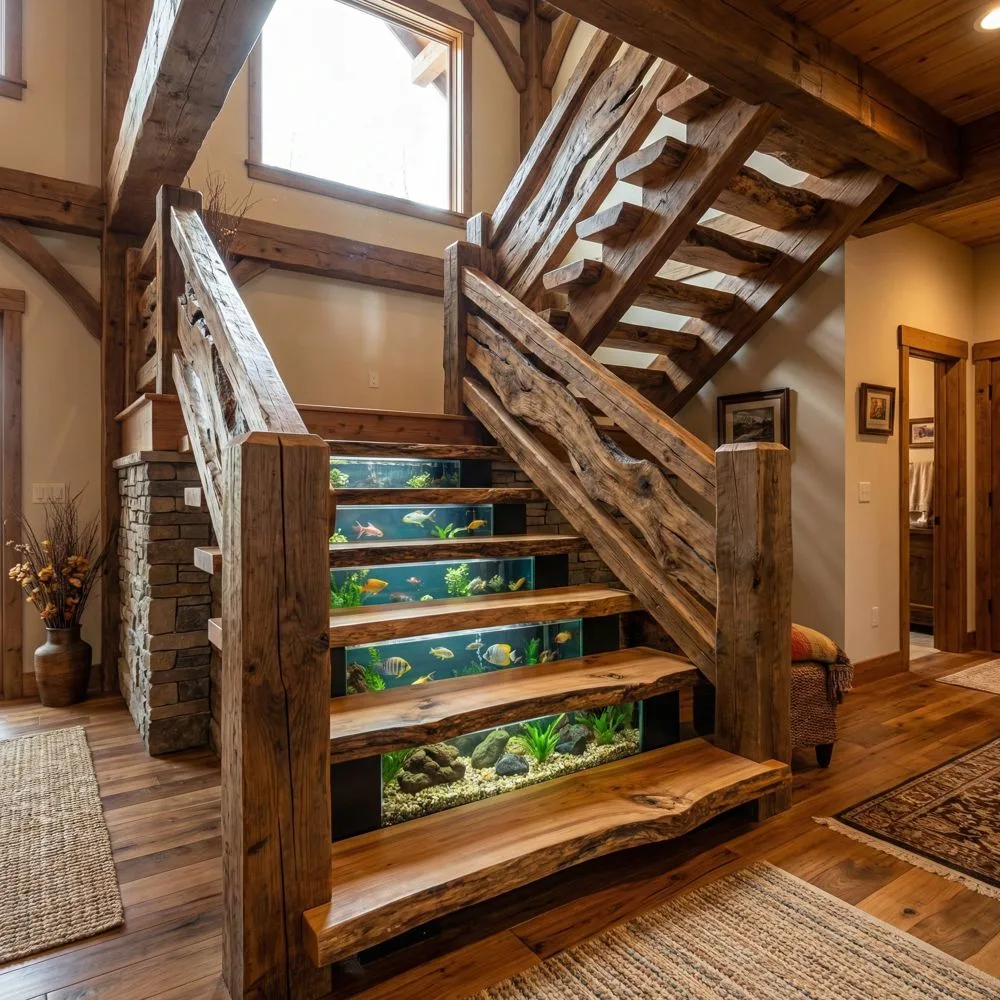
Creating a wood slab aquarium staircase represents a significant investment, with costs varying widely based on scope, materials, and complexity. A basic installation might start around ten thousand dollars, while elaborate custom designs can exceed fifty thousand or more.
Major cost factors include custom aquarium fabrication, structural modifications, high quality live edge wood slabs, professional installation, filtration equipment, and ongoing maintenance. However, this investment often pays dividends in home value and daily enjoyment.
Unique architectural features like this appeal to buyers seeking distinctive properties and can significantly differentiate your home in competitive real estate markets. Beyond monetary value, the daily experience of living with such a striking design element provides immeasurable quality of life benefits.
Working with Professional Designers and Installers
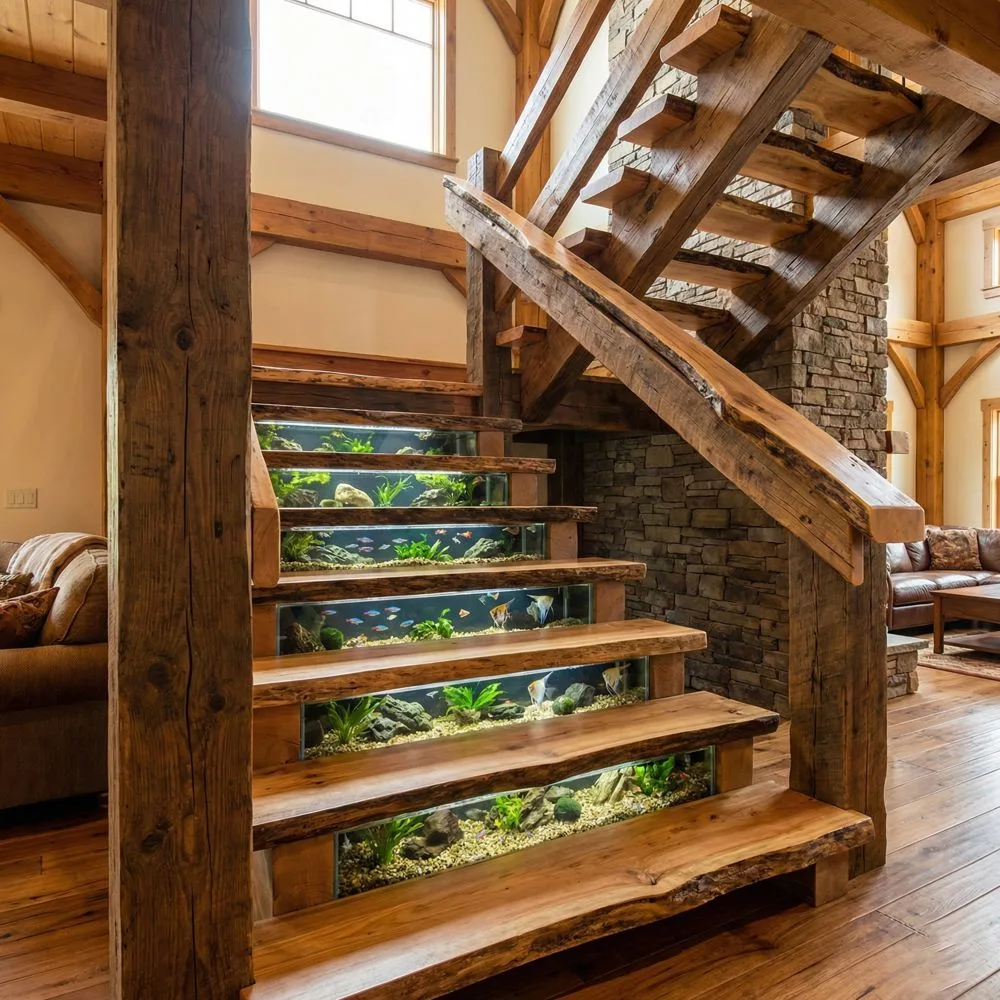
Given the complexity of integrating aquariums into staircases while incorporating live edge wood, professional expertise is invaluable. Look for teams that include structural engineers, aquarium specialists, and woodworkers with experience in custom installations.
During initial consultations, professionals should assess your space, discuss your vision, address structural concerns, and provide detailed proposals outlining design concepts, materials, timelines, and costs. Request portfolios of previous work and client references to evaluate their capabilities and reliability.
A quality installer will also provide guidance on long term maintenance, warranty information for components, and emergency protocols should any issues arise with the aquarium systems.
Lighting Design for Maximum Impact
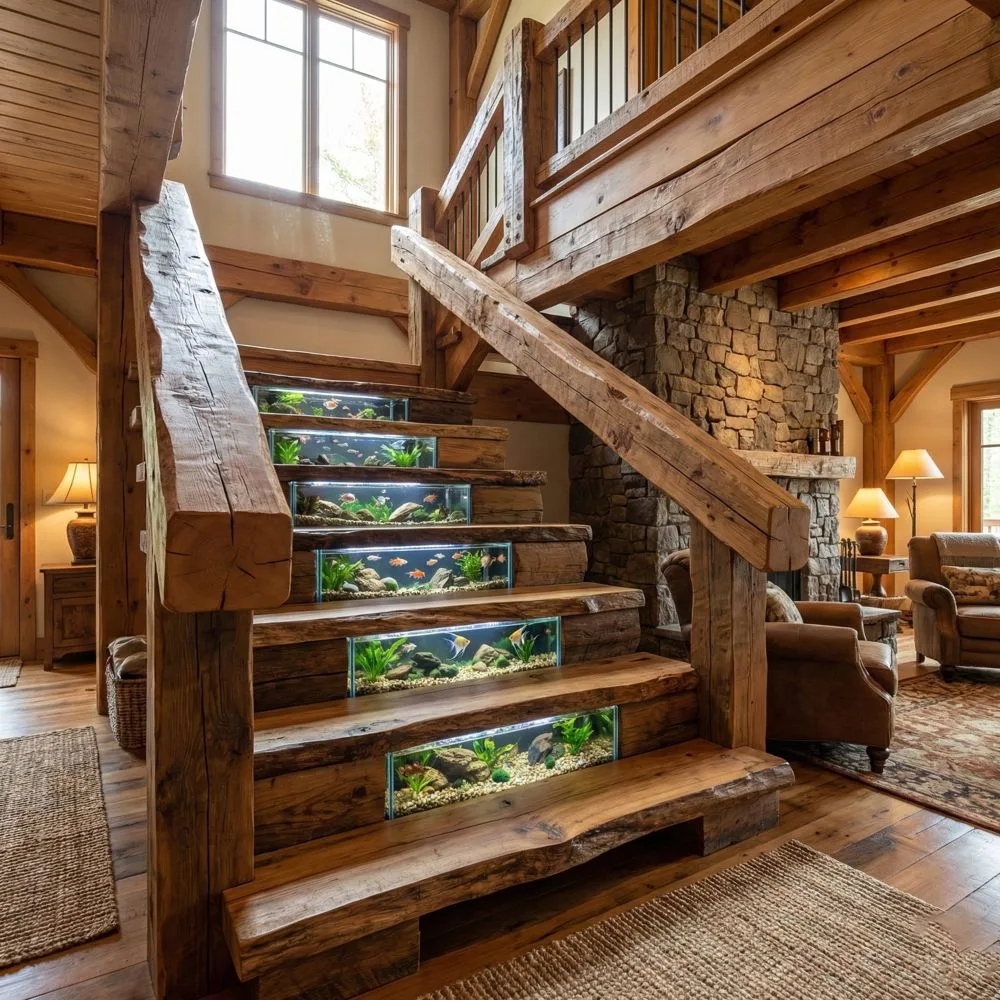
Strategic lighting transforms your wood slab aquarium staircase from impressive to absolutely mesmerizing. LED technology offers energy efficient options with programmable features that can simulate natural day night cycles for aquatic life while creating stunning visual effects.
Underwater LED strips highlight fish and plants while making water appear to glow. Uplighting beneath wood slabs emphasizes grain patterns and live edges. Accent lighting positioned above the staircase can create dramatic shadows and depth. Many systems now include smart controls that allow you to adjust colors, intensity, and timing from mobile devices.
Consider how natural light interacts with your installation throughout the day. Windows or skylights can create beautiful dappled effects as sunlight filters through water, though direct sunlight may require management to prevent algae growth and temperature fluctuations.
Bringing Your Vision to Life: A Masterpiece of Design
A wood slab aquarium staircase represents the pinnacle of creative home design, where natural materials, living ecosystems, and architectural necessity converge into something truly extraordinary. This unique feature transforms the simple act of moving between floors into an immersive experience that connects you with nature every single day.
The journey from concept to completion requires careful planning, professional expertise, and attention to countless details. Yet the result is a one of a kind installation that reflects your personal style while pushing the boundaries of what is possible in residential design. Every time you or your guests use those stairs, you will be reminded that home can be not just a place to live, but a canvas for artistic expression and a sanctuary that nurtures the soul.
Whether you are in the early dreaming stages or ready to begin your project, understanding these principles ensures that your wood slab aquarium staircase will be both beautiful and functional for years to come. This is more than renovation; it is the creation of a living artwork that breathes, moves, and evolves with time, making your home truly unforgettable.