
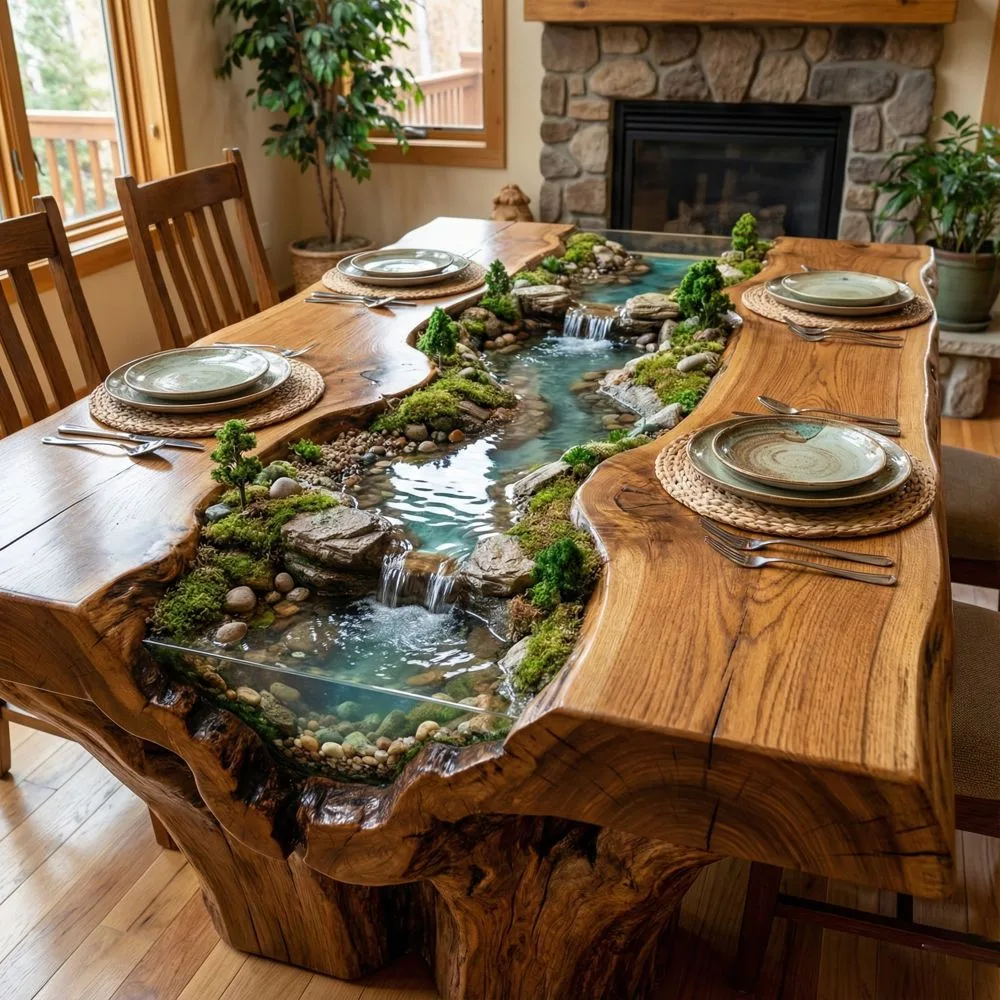
Walking into a dining room and seeing a wooden river dining table for the first time creates an unforgettable moment. The translucent resin flowing through natural wood grain resembles a river cutting through a landscape, bringing the raw beauty of nature directly into your home. These stunning pieces have transformed from niche artisan creations into must have furniture that combines traditional woodworking with contemporary design innovation.
The appeal goes beyond aesthetics. Each wooden river dining table tells a unique story through its wood selection, resin color, and organic edge patterns. No two tables are identical, which means your dining space features a one of a kind centerpiece that guests will remember long after dinner ends.
What Makes Wooden River Dining Tables Special
The magic happens when craftsmen take live edge wood slabs and fill the natural gaps, cracks, or deliberately created channels with colored epoxy resin. This technique preserves the organic beauty of the wood while creating a smooth, functional surface perfect for dining. The resin often includes metallic pigments, creating depth and shimmer that changes with lighting throughout the day.
Live edge refers to wood that maintains its natural outer edge rather than being cut into uniform rectangles. These irregular edges showcase the tree’s original shape, complete with natural curves and character marks that industrial furniture strips away. When combined with flowing resin rivers, the result resembles aerial views of waterways cutting through forests.
Quality matters immensely with these tables. The best pieces use properly dried hardwoods like walnut, oak, maple, or exotic species that resist warping and cracking. The resin must be food safe, UV resistant, and expertly poured to avoid bubbles or weak spots. Professional makers spend years perfecting techniques that ensure your table remains beautiful for decades.
Choosing the Perfect Wooden River Dining Table for Your Space
Size and Seating Capacity
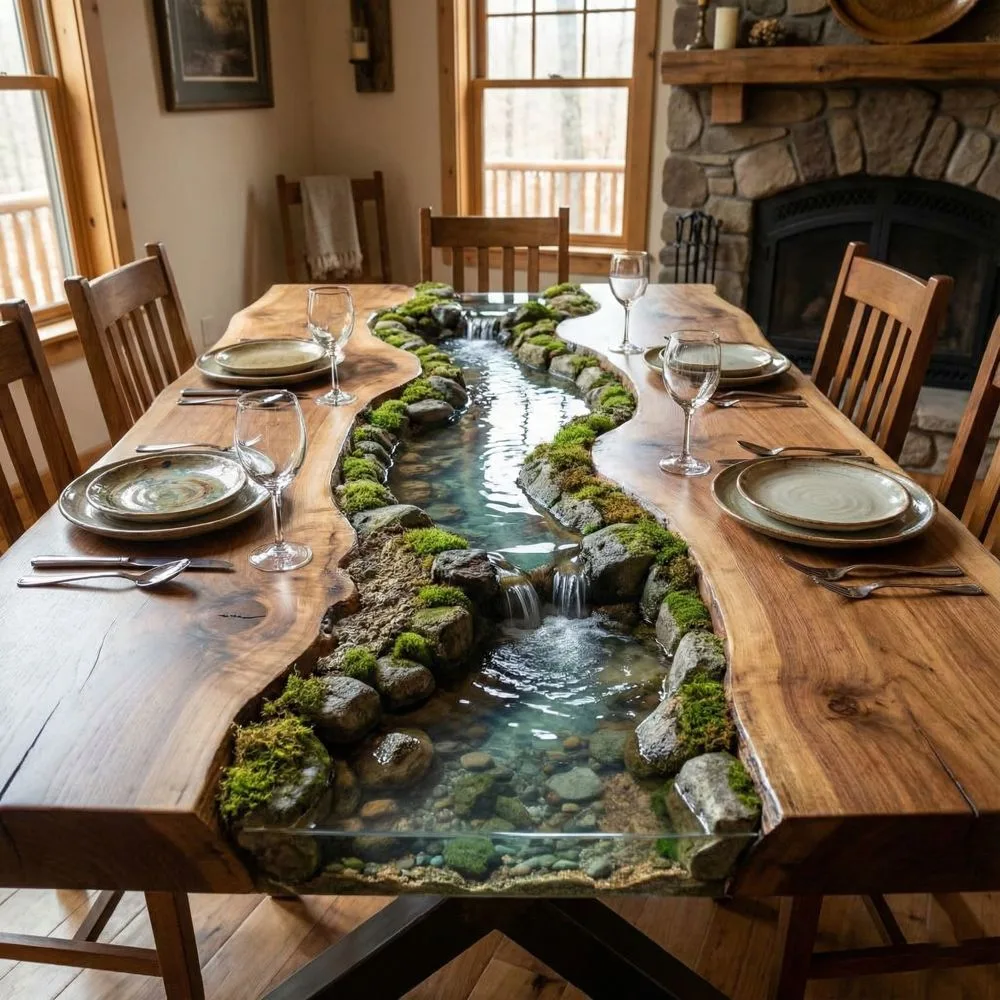
Before falling in love with a design, measure your dining area carefully. A wooden river dining table needs breathing room. Interior designers recommend at least 36 inches of clearance around all sides for comfortable chair movement. For a table seating six people, plan for roughly 72 inches in length and 36 to 42 inches in width.
Larger families or frequent entertainers might consider eight to ten person tables ranging from 84 to 120 inches long. The visual weight of live edge wood means these tables command attention without overwhelming spaces when properly sized. Rectangular shapes work best for most dining rooms, though some artisans create stunning round or oval river tables for unique applications.
Wood Species Selection
Walnut remains the most popular choice for wooden river dining tables because its rich chocolate tones create dramatic contrast with lighter resin colors. The wood’s straight grain and fine texture showcase epoxy rivers beautifully while providing excellent durability for daily use.
Oak offers lighter coloring with prominent grain patterns that create rustic character. White oak particularly resists moisture better than red oak, making it ideal for tables that will see heavy use. The open grain requires careful resin application but rewards with stunning depth.
Maple provides nearly white to light cream backgrounds that make colorful resin rivers pop dramatically. Hard maple ranks among the most durable options available, resisting dents and scratches better than softer woods. This makes it perfect for families with young children who might be less careful around furniture.
Exotic species like acacia, teak, or mesquite introduce unique colors and grain patterns. These woods often cost more but deliver unmatched visual interest. Some feature natural color variations within single slabs that create additional artistic effects when paired with resin.
Resin Color and Effects
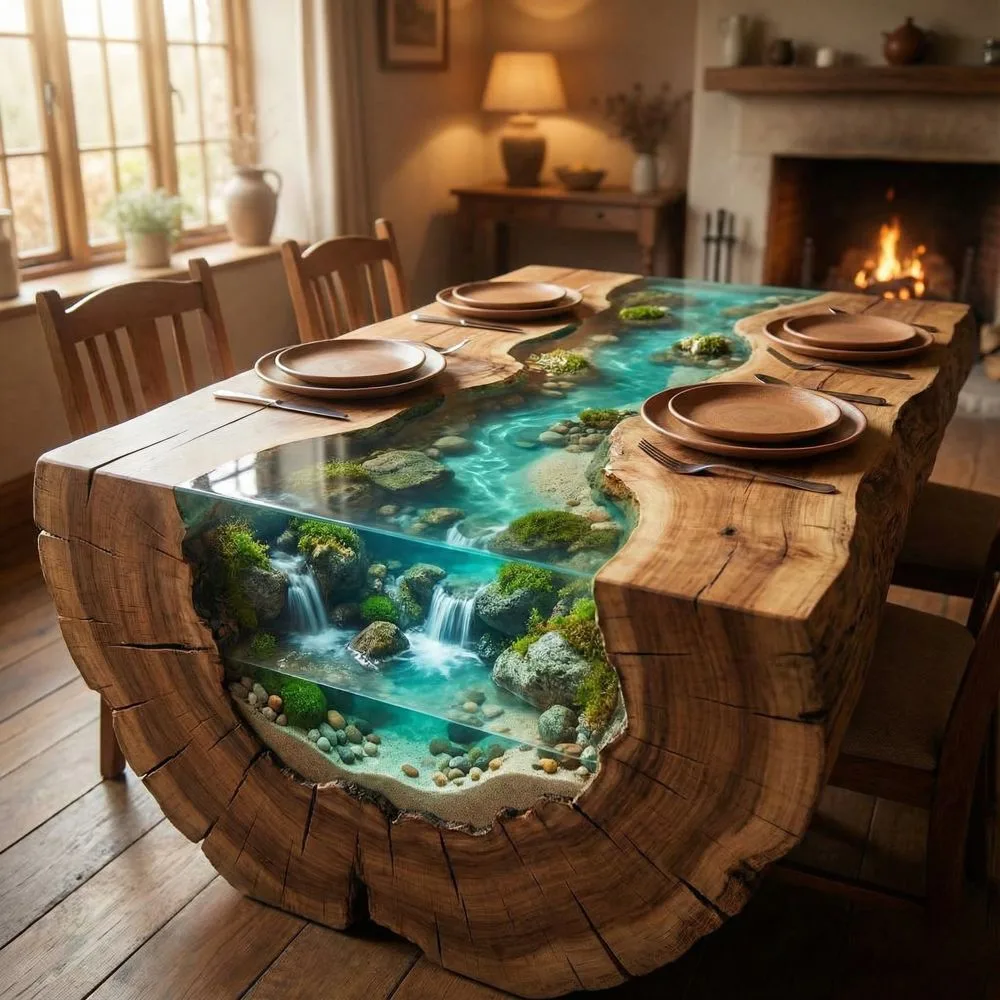
Clear or lightly tinted blue resin creates classic water effects that feel timeless and natural. The transparency lets you see through to the table base while maintaining the river illusion. Many makers add metallic powders that catch light, creating sparkle reminiscent of sunlight dancing on water.
Black resin delivers high contrast drama, especially with lighter woods like maple or ash. This combination creates a bold, modern statement perfect for contemporary interiors. The darkness also hides minor imperfections better than clear options.
Turquoise, emerald green, and deep ocean blues bring tropical or coastal vibes into dining spaces. These vibrant colors work particularly well in homes with beach or nature inspired decor themes. Some artisans layer multiple shades to create depth that mimics real water.
Metallic options in gold, silver, copper, or bronze add luxury and sophistication. These work beautifully with both traditional and modern decor styles. The reflective qualities change throughout the day as natural light shifts, creating dynamic visual interest.
Design Styles and Aesthetic Options
Modern Minimalist Approach
Clean lines meet organic beauty in modern wooden river dining tables. These designs feature straight cuts, minimal ornamentation, and sleek metal bases that let the wood and resin take center stage. The river itself often runs perfectly centered, creating symmetrical balance.
Base options include powder coated steel in matte black, brushed stainless steel, or minimalist wood legs that don’t compete with the tabletop. The overall effect feels sophisticated and uncluttered, perfect for urban lofts or contemporary homes.
Rustic Farmhouse Character
Emphasizing natural imperfections and weathered beauty, rustic river tables celebrate wood’s organic qualities. Expect to see more pronounced live edges, knots, burls, and natural cracks filled with resin. The wood often receives lighter finishing that showcases grain rather than creating glossy surfaces.
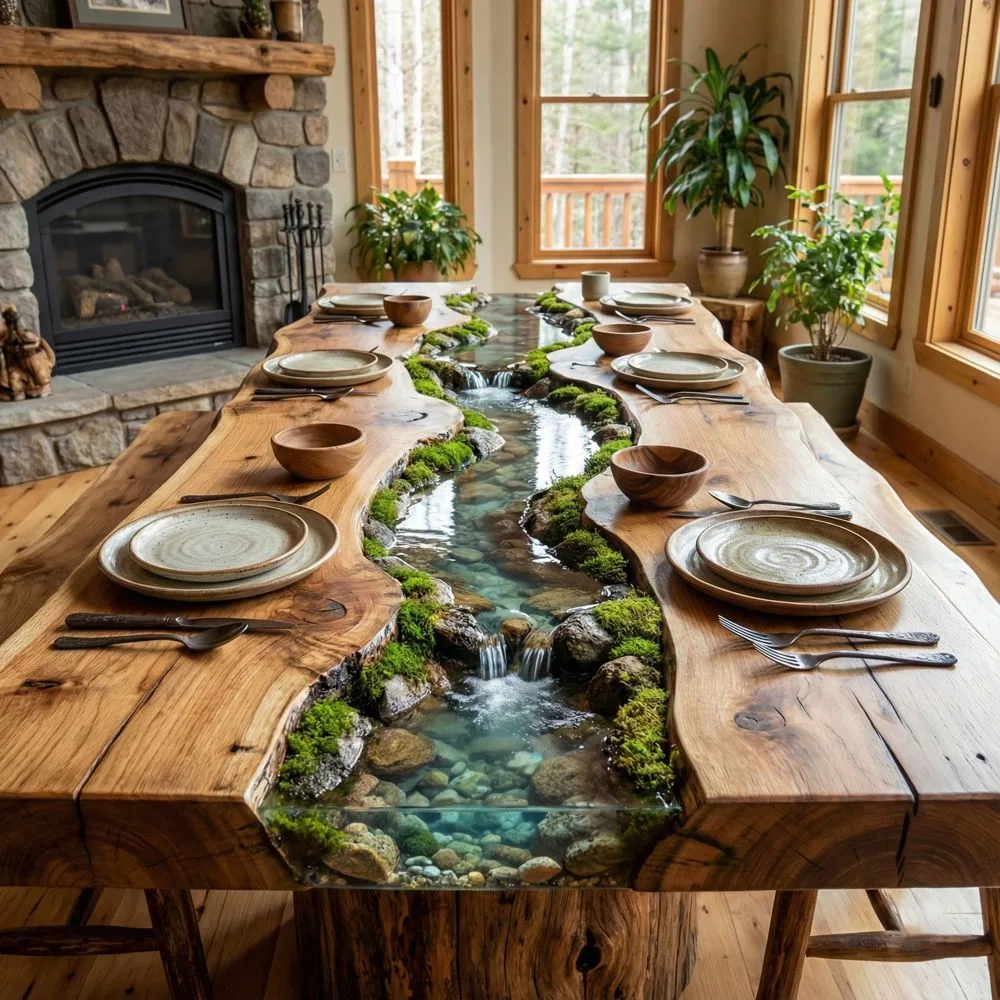
Bases might use reclaimed barn wood, chunky turned legs, or industrial pipe frames. These tables pair beautifully with mixed seating including benches and vintage chairs. The overall vibe feels warm, welcoming, and lived in.
Industrial Edge Design
Combining raw materials creates urban warehouse aesthetics. A wooden river dining table with this approach typically features dark stained wood, clear or black resin, and substantial metal bases made from I beams, flat steel, or geometric frameworks.
The contrast between refined epoxy work and industrial metal creates visual tension that many find appealing. This style works particularly well in converted loft spaces or homes with exposed brick and ductwork.
Natural Organic Flow
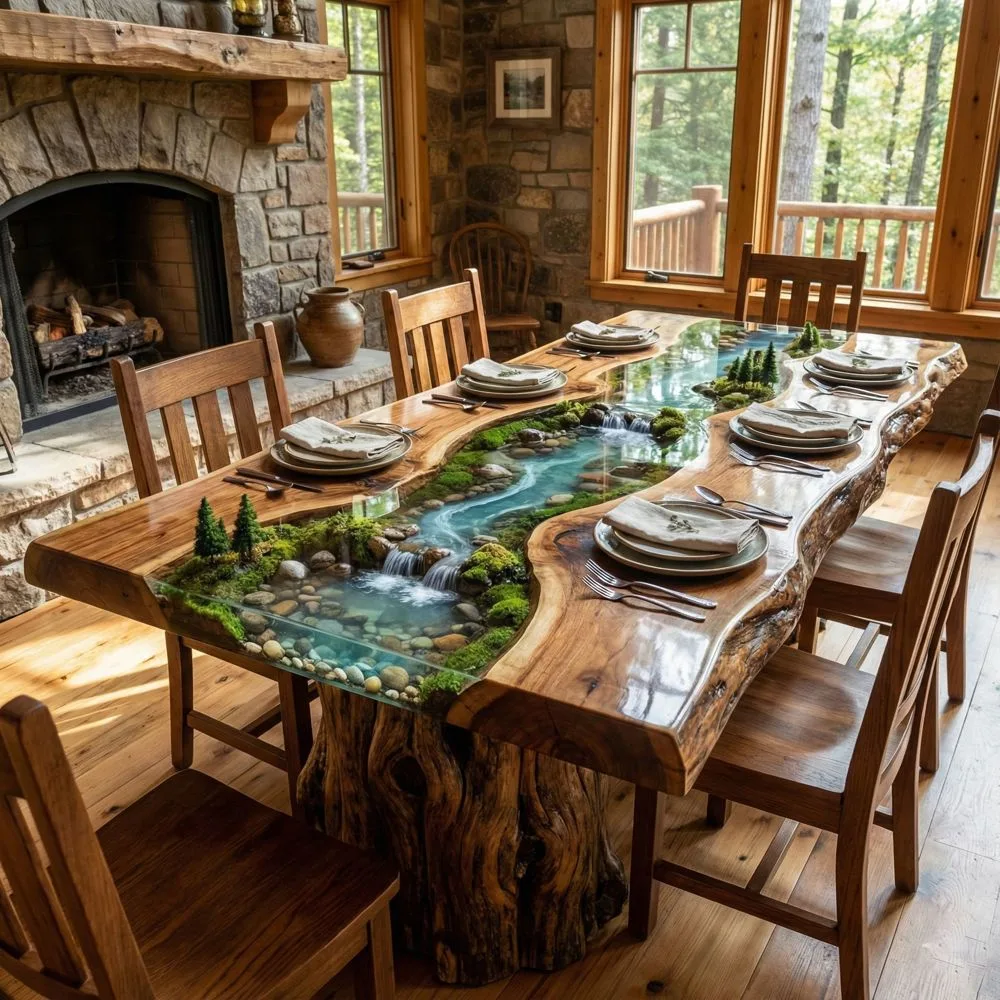
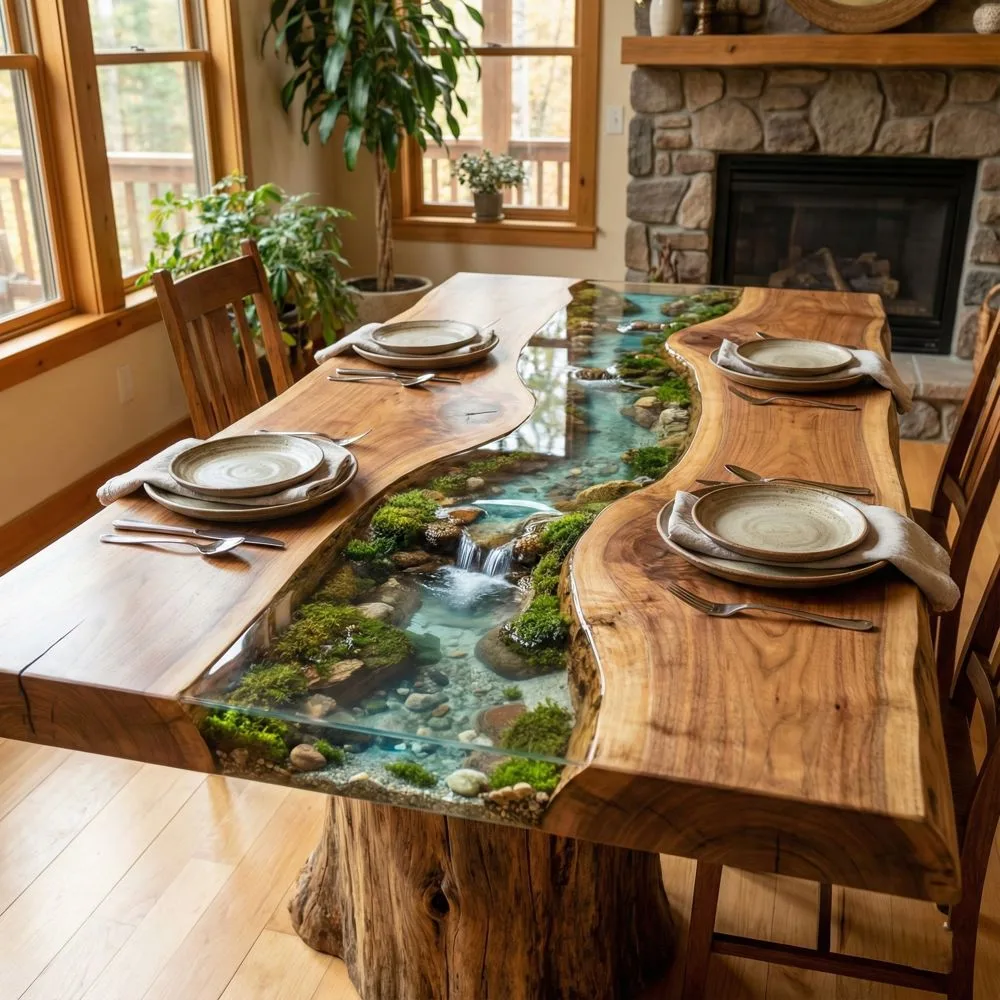
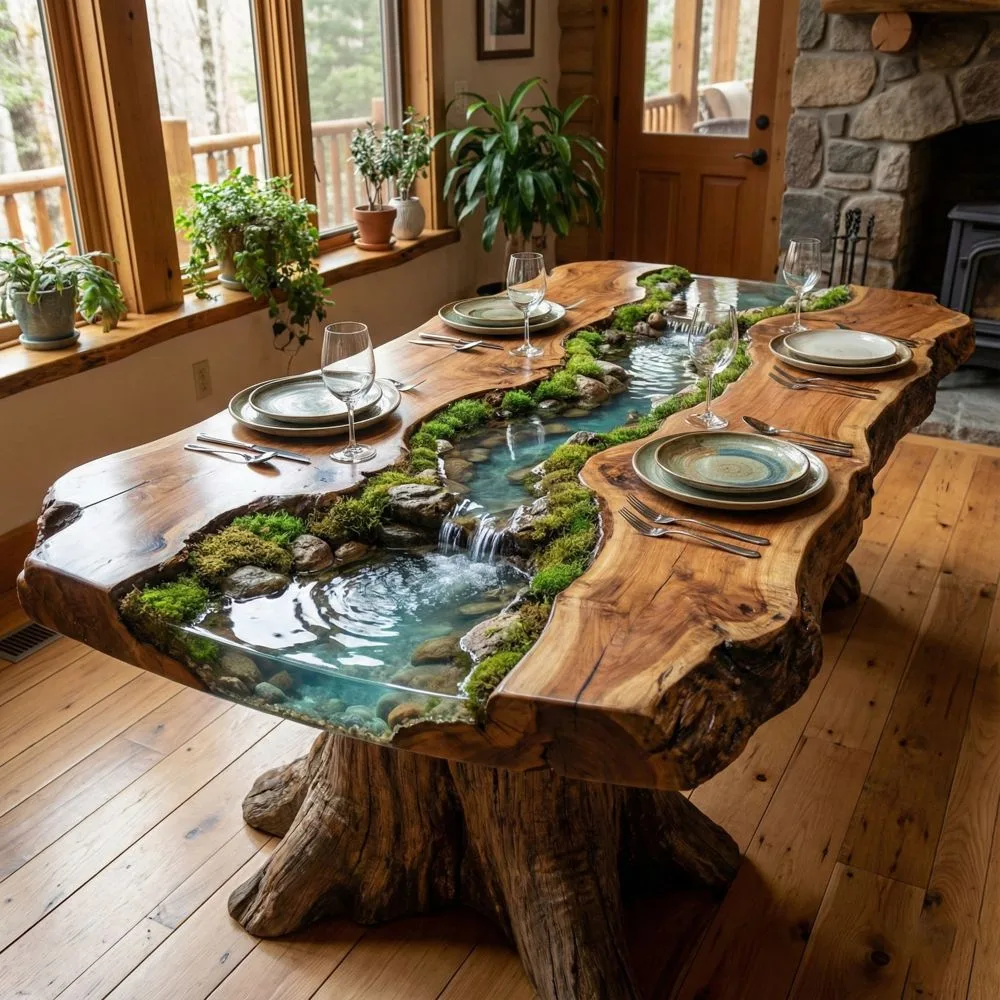
Some makers embrace maximum wood character with highly irregular live edges that create dramatic curves and unique shapes. The river follows the wood’s natural contours rather than running straight, creating pieces that feel more like functional art than traditional furniture.
These tables often use multiple wood species or incorporate other natural elements like stones, shells, or preserved moss within the resin. The result feels like bringing a piece of wilderness indoors, perfect for nature lovers who want something truly extraordinary.
Care and Maintenance Best Practices
Daily Cleaning Routine
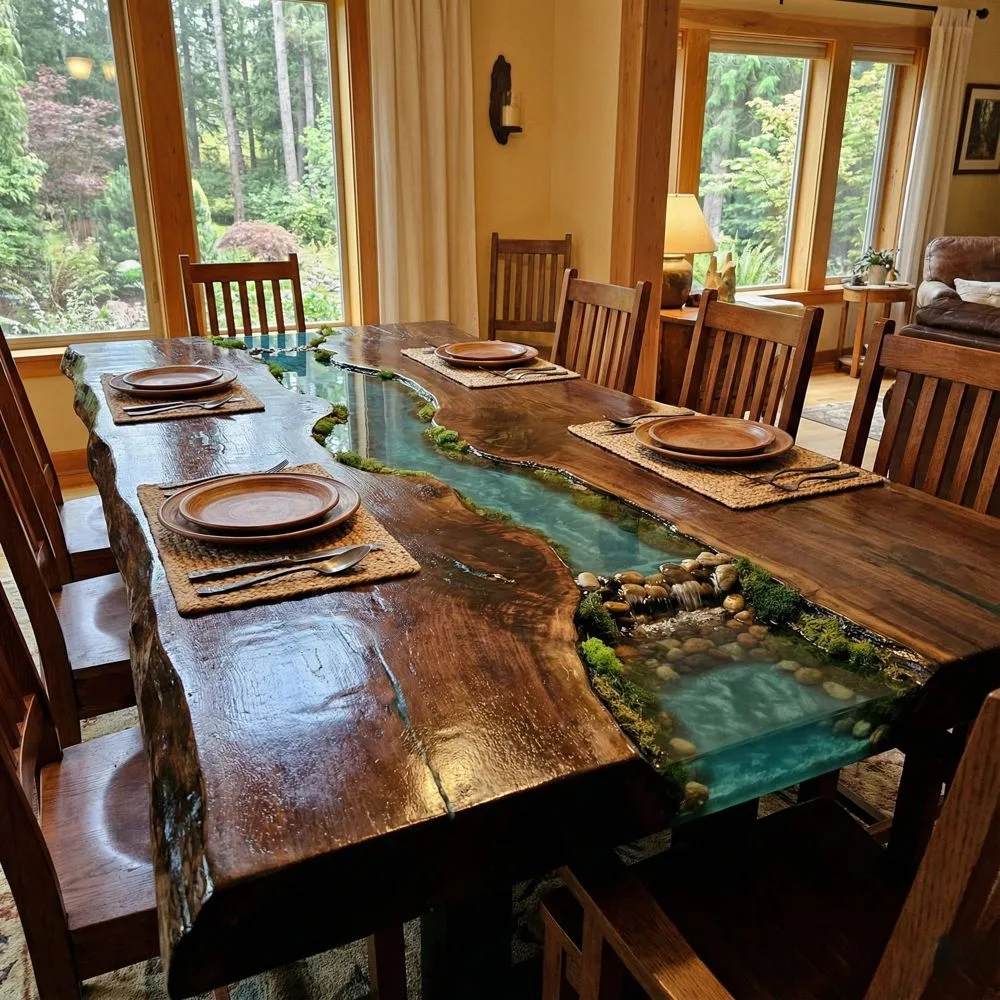
Keeping your wooden river dining table beautiful requires minimal effort with proper technique. Use soft microfiber cloths slightly dampened with water for everyday cleaning. Avoid abrasive scrubbers or harsh chemicals that can dull resin or damage wood finish.
For stuck on food, let warm water soften the debris for a minute before gentle wiping. Most quality epoxy resins resist staining from common foods and beverages, but immediate cleanup prevents any possibility of discoloration. Never use vinegar, bleach, or ammonia based cleaners on these tables.
Protecting the Surface
Despite their durability, wooden river dining tables benefit from basic protection. Use placemats, trivets, or coasters under hot dishes, as extreme heat can damage both wood finish and epoxy. While most modern resins resist heat to around 120 degrees Fahrenheit, why risk it with expensive furniture?
Felt pads under decorative items prevent scratching during movement. If you use the table for activities beyond dining, consider a clear table pad or tablecloth during crafts, homework, or game nights. These simple precautions extend your table’s beauty for generations.
Deep Cleaning Methods
Several times yearly, give your table a thorough cleaning with wood specific cleaners for the timber sections and mild soap solution for resin areas. Apply wood conditioner to live edges according to product instructions, typically every six to twelve months depending on your home’s humidity.
For the resin river itself, occasional buffing with automotive polish designed for clear coat finishes can restore brilliance if the surface becomes dull. Apply small amounts with soft cloth using circular motions, then buff to shine. This technique works wonders for maintaining that wet look clarity.
Handling Damage
Minor scratches in resin often buff out with fine automotive compound. Deeper damage requires professional repair where artisans sand the area and apply fresh resin layers. Wood sections can be sanded and refinished if needed, though this typically isn’t necessary for well maintained tables.
Addressing issues quickly prevents them from worsening. Contact your table’s maker or a qualified furniture repair specialist at the first sign of lifting resin, loose joints, or finish deterioration. Most quality builders stand behind their work and can advise on specific repair approaches.
Investment Considerations and Pricing
Understanding Cost Factors
A wooden river dining table represents significant investment, with prices ranging from fifteen hundred dollars for smaller pieces to well over ten thousand for large custom creations using premium materials. Several factors influence pricing beyond size.
Wood selection matters tremendously. Common domestic hardwoods cost less than rare exotic species or highly figured wood with exceptional grain patterns. Larger single slab constructions command premium prices compared to bookmatched pieces or multiple board compositions.
Resin complexity affects cost as well. Simple single color pours cost less than elaborate multi color designs with embedded objects or special effects. The amount of resin needed for wider rivers or multiple channels increases material costs substantially.
Customization adds to the price but ensures you get exactly what you envision. Custom sizes, specific wood choices, particular base designs, and special finishing techniques all require additional artisan time and expertise. Many buyers find the extra investment worthwhile for a perfect fit.
Finding Quality Makers
Research craftspeople thoroughly before commissioning work. Examine portfolio photos carefully, looking for smooth resin finishes, tight wood to epoxy bonds, and professional construction throughout. Read customer reviews and ask for references from previous clients.
Local woodworking guilds, craft fairs, and artisan collectives often connect buyers with talented makers. Online marketplaces feature river table specialists, though viewing pieces in person before purchasing helps ensure quality meets expectations. Some furniture galleries now carry these tables, offering the security of established businesses.
Request detailed information about materials, construction methods, and warranties. Reputable makers use food safe epoxy, properly kiln dried wood, and proven joinery techniques. They should explain their process and stand behind their work with guarantees against defects.
Value Retention
Unlike mass produced furniture that depreciates immediately, quality wooden river dining tables often maintain value well or even appreciate over time. The custom nature, quality materials, and skilled craftsmanship create pieces that many consider heirloom furniture worth preserving for future generations.
Tables from recognized artisans or those featured in design publications may increase in value as the maker’s reputation grows. Even unsigned pieces retain value better than factory furniture because they cannot be easily replaced with identical items from stores.
Environmental and Sustainability Aspects
Responsible buyers increasingly consider environmental impact when purchasing furniture. Many wooden river dining table makers prioritize sustainability by sourcing wood from certified sustainable forests, using reclaimed timber from old buildings, or salvaging urban trees removed for safety reasons.
Reclaimed wood adds character while reducing demand for newly harvested timber. Old growth wood from demolished structures often features tighter grain and greater stability than quickly grown modern lumber. These pieces carry historical significance while promoting environmental responsibility.
Epoxy resin traditionally derives from petroleum products, though some manufacturers now offer bio based alternatives made partially from renewable resources. While not perfect, these options reduce fossil fuel dependence. Ask makers about resin sources if environmental concerns matter to you.
The longevity factor matters environmentally too. A well built wooden river dining table lasting fifty years or more reduces furniture waste compared to replacing cheap tables every few years. Durability represents the ultimate sustainability when combined with responsible material sourcing.
Incorporating Your Table Into Interior Design
Complementary Seating Choices
The substantial presence of a wooden river dining table pairs well with varied seating options. Upholstered chairs in neutral tones let the table shine while providing comfort for extended meals. Leather seats add sophistication that complements wood’s natural elegance.
Mixing seating styles creates casual, collected looks that feel personal rather than showroom perfect. Combine wood chairs with upholstered end seats, or use a bench on one side with chairs opposite. The table’s uniqueness gives you freedom to experiment with eclectic combinations.
Metal chairs work beautifully with industrial style tables, while Windsor or ladder back designs enhance farmhouse aesthetics. For modern tables, consider acrylic ghost chairs or sleek molded plastic seats that maintain visual lightness around the substantial wood presence.
Lighting Considerations
Proper lighting showcases your wooden river dining table’s beauty while providing functionality. Pendant lights hung at appropriate heights create focal points without obstructing sightlines across the table. Consider fixtures that include dimmers for adjusting ambiance from bright family dinners to intimate gatherings.
The finish and materials of light fixtures should complement the table’s style. Industrial pendants suit tables with metal bases, while natural materials like rattan or wood harmonize with organic designs. Crystal chandeliers can work if balanced carefully to avoid overwhelming the space.
Natural light dramatically affects how resin rivers appear throughout the day. Position tables near windows when possible to enjoy changing light conditions. Morning sun might make the river sparkle, while afternoon glow creates warm wood tones and softer resin appearance.
Surrounding Decor Elements
Let your wooden river dining table set the room’s tone rather than competing with other statement pieces. Keep walls relatively neutral, allowing the table to command attention. Artwork can include nature themes that echo the organic qualities without literally matching.
Area rugs ground the dining space while protecting floors from chair movement. Choose sizes that extend beyond the table and chairs by at least 24 inches on all sides. Patterns should complement rather than clash with the wood’s natural grain, with colors pulling from the wood and resin tones.
Centerpiece styling can enhance your table’s beauty or detract from it. Simple arrangements work best, avoiding anything that blocks the river’s visual flow. Low bowls with seasonal elements, candle groupings, or minimal sculptural objects allow the table itself to remain the star attraction.
Bringing Natural Beauty Home
A wooden river dining table transforms ordinary dining spaces into memorable gathering places where meals become experiences. The combination of ancient wood and modern resin technology creates furniture that honors traditional craftsmanship while embracing contemporary design innovation. Every glance reveals new details in the grain patterns, every angle shows different resin depths, and every meal happens around something truly special.
Whether you choose bold black rivers cutting through pale maple or subtle clear resin highlighting walnut’s richness, your table reflects personal style while celebrating nature’s beauty. The investment in quality craftsmanship pays dividends in daily enjoyment and lasting value. These tables don’t just fill spaces in homes; they create gathering places where families build memories, friends share stories, and everyday moments become a little more beautiful.
Taking time to select the right size, style, and materials ensures your wooden river dining table serves you well for decades. With proper care and appreciation for the artistry involved, these remarkable pieces of functional art remain stunning centerpieces that you’ll never tire of admiring. The river flows through your dining room, bringing the serenity and majesty of nature into every meal.