
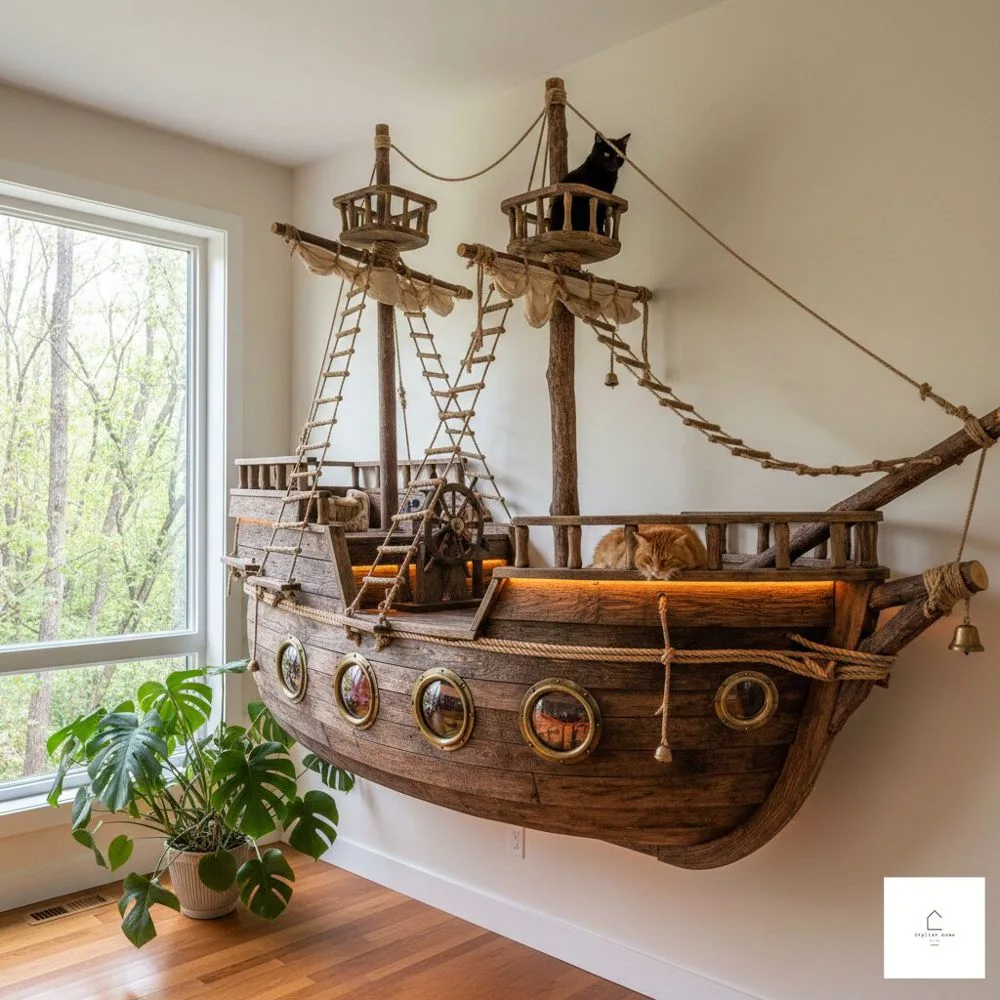
Every cat owner knows that felines are natural explorers with an innate need to climb, scratch, and survey their kingdom from elevated perches. What better way to satisfy these instincts than with a wooden ship cat playground that transforms your home into a nautical adventure? This comprehensive guide will navigate you through everything you need to know about creating the perfect maritime haven for your furry first mate.
Why Choose a Wooden Ship Design for Your Cat Playground
Cats possess an adventurous spirit that aligns perfectly with the swashbuckling theme of a pirate ship or sailing vessel. The multi-level design of a ship naturally accommodates the feline desire to climb and explore vertical spaces. Wood provides durability and stability that plastic alternatives simply cannot match, ensuring your investment lasts for years while supporting even the most energetic climbers.
The aesthetic appeal of a wooden ship cat playground cannot be overstated. Unlike traditional cat towers that clash with home decor, a well-crafted ship design becomes a conversation piece that seamlessly integrates into your living space. The natural texture of wood also appeals to cats’ scratching instincts, making it both functional and attractive.
Planning Your Wooden Ship Cat Playground Project
Before diving into construction or purchase, consider your available space and your cat’s personality. An active climber will appreciate tall masts and crow’s nests, while older cats might prefer lower platforms with easy access ramps. Measure your designated area carefully, accounting for tail-swishing room and the space cats need to leap between levels.
Think about the number of cats in your household. Multiple cats require additional perches and hiding spots to prevent territorial disputes. A ship design naturally offers various levels and compartments, making it ideal for multi-cat homes where each feline can claim their own station.
Budget considerations matter too. A wooden ship cat playground can range from an affordable DIY project using reclaimed materials to an elaborate custom-built masterpiece. Determine your spending limit early to guide your design choices and material selection.
Wooden Ship Cat Playground DIY: Building Your Own Nautical Paradise
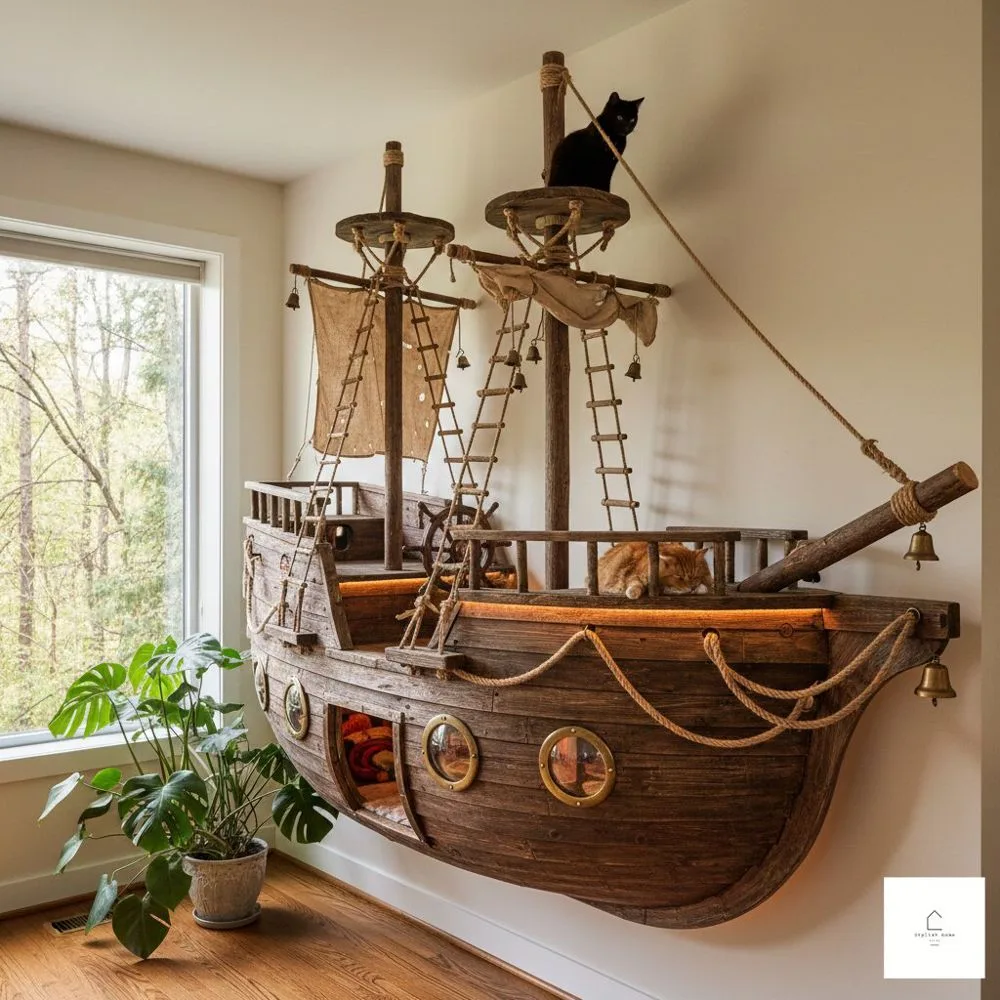
Creating a wooden ship cat playground DIY project offers immense satisfaction and customization opportunities. Start with a solid plan that includes detailed measurements and a materials list. Pine and plywood work well for beginners due to their affordability and ease of cutting, while hardwoods like oak provide superior durability for experienced woodworkers.
Essential tools include a saw, drill, sandpaper, wood glue, and screws. Safety should be paramount during construction. Sand all surfaces thoroughly to prevent splinters, and ensure all edges are rounded. Avoid toxic stains or paints; opt for pet-safe finishes or leave the wood natural with a food-grade mineral oil coating.
The basic structure should include a sturdy base that prevents tipping, even during enthusiastic play sessions. Build upward with platforms at varying heights, incorporating rope ladders made from sisal that double as scratching posts. Add a ship’s wheel that spins freely, providing interactive entertainment. Fabric sails can be attached to dowel rod masts, creating cozy hammocks where cats can nap while dreaming of ocean adventures.
Incorporate hidey-holes into the hull of your ship design. Cats love enclosed spaces where they feel secure, and these compartments serve as perfect retreat spots. Cut porthole windows into the sides for visibility and ventilation. These circular openings add authentic nautical flair while allowing cats to peek out at their surroundings.
For the crowning touch, construct a crow’s nest at the top level. This elevated perch satisfies the feline desire to survey their territory from the highest vantage point. Make it spacious enough for comfortable lounging, with raised edges to prevent accidental tumbles during sleep.
Wooden Ship Cat Playground Outdoor: Weathering the Elements
An outdoor wooden ship cat playground outdoor installation creates an enriching environment for cats who enjoy fresh air and sunshine. Outdoor structures require weatherproof materials and construction techniques that withstand rain, snow, and temperature fluctuations.
Choose pressure-treated lumber or naturally weather-resistant woods like cedar or redwood. These materials resist rot and insect damage without requiring toxic chemical treatments that could harm your pets. Apply an outdoor-safe sealant annually to extend the life of your structure and maintain its appearance.
Elevate the base of your outdoor ship playground several inches off the ground to prevent moisture absorption and allow for proper drainage. This elevation also deters unwanted visitors like rodents or snakes from taking up residence in the lower compartments.
Position your outdoor wooden ship cat playground in a location that offers both sun and shade throughout the day. Cats enjoy sunbathing but need retreat options when temperatures rise. Consider adding a removable canvas canopy over certain sections to provide adjustable shade coverage.
Secure outdoor structures firmly to prevent toppling during strong winds. Anchor the base to concrete footings or use ground stakes driven deep into the soil. The nautical theme works beautifully in gardens, creating a whimsical focal point that delights visitors while providing endless entertainment for your cats.
Include weatherproof features like covered compartments where cats can shelter during unexpected rain showers. Install drainage holes in platforms where water might accumulate. These practical considerations ensure your outdoor playground remains safe and comfortable year-round.
Wooden Ship Cat Playground Ideas: Creative Design Inspiration
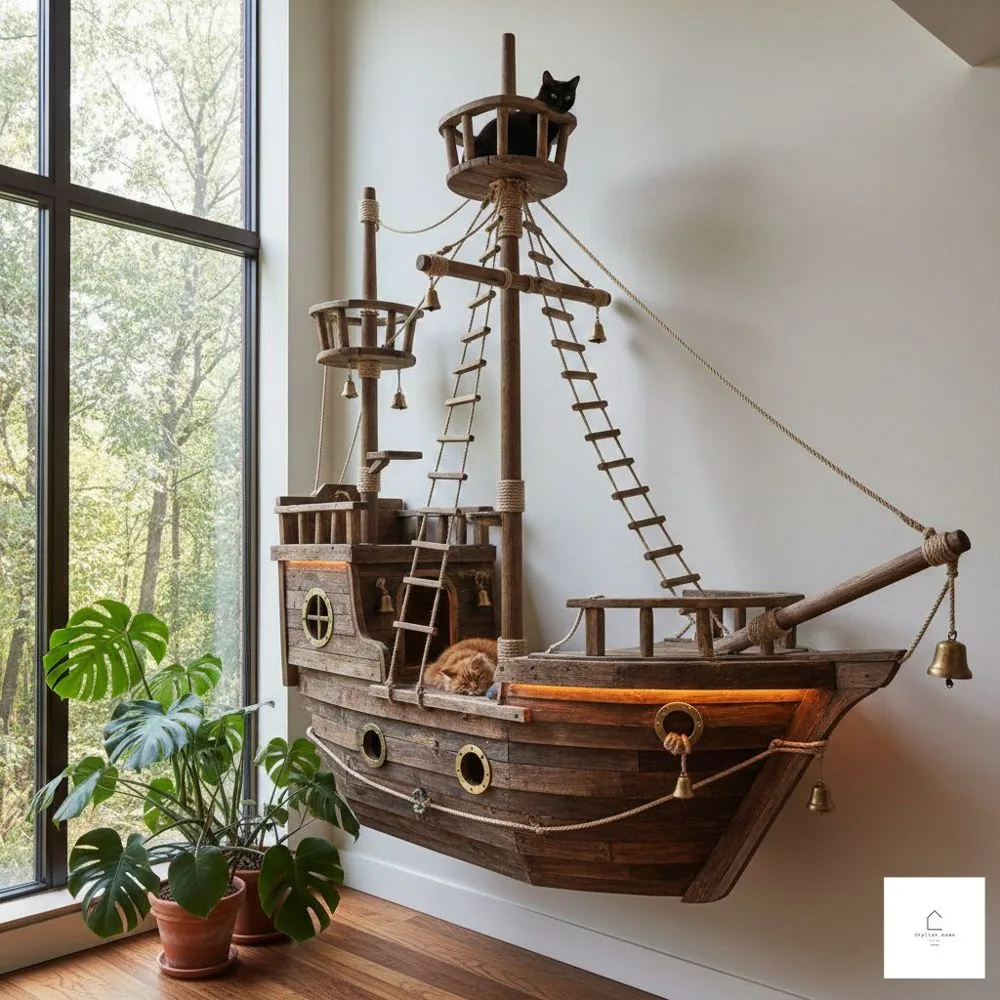
Innovative wooden ship cat playground ideas can transform a basic structure into an extraordinary adventure zone. Consider a galleon design with multiple decks connected by rope bridges and gangplanks. Each level can represent a different section of the ship, from the cargo hold to the captain’s quarters.
Incorporate moving parts to stimulate your cat’s hunting instincts. Attach dangling rope toys from yardarms, or install a pulley system with hanging toys that can be raised and lowered. These interactive elements keep cats engaged and provide mental stimulation alongside physical exercise.
Theme each section differently for variety. The bow could feature a figurehead that doubles as a scratching post. The stern might include a ship’s wheel mounted on a platform where cats can sit and “steer” their vessel. Midship areas can house cozy cabins with soft bedding for napping between adventures.
For households with limited floor space, consider a vertical ship design that maximizes height rather than footprint. A tall, narrow galleon with spiral ramp access allows cats to climb high without consuming excessive square footage. This approach works particularly well in apartments or smaller homes.
Add authentic details that enhance the maritime atmosphere. Miniature anchors, rope railings made from sisal, and tiny flags flying from mast tops create visual interest. These decorative touches delight human observers while providing additional textures and features for cats to explore.
Wooden Ship Cat Playground Indoor: Bringing the High Seas Inside
A wooden ship cat playground indoor installation must harmonize with your interior design while meeting your cat’s needs. Indoor structures offer the advantage of climate control and protection from predators, making them ideal for cats who stay exclusively inside.
Scale your indoor ship appropriately for the room where it will live. Measure ceiling height to determine maximum mast length, and ensure adequate clearance for cats to jump onto the highest platforms without hitting their heads. Floor space should accommodate the base while leaving walking paths for human family members.
Indoor playgrounds can incorporate more delicate features than outdoor versions. Upholstered cushions on platforms add comfort, while fabric sails in colors that complement your decor create a cohesive look. Choose fabrics that are machine washable for easy maintenance.
Lighting considerations enhance both functionality and ambiance. Position your indoor wooden ship cat playground near windows to provide natural light and entertainment through bird watching opportunities. Alternatively, add small battery-operated LED lights to create a magical nighttime atmosphere that helps cats navigate safely in darkness.
Sound dampening becomes important for apartment dwellers or homes with multiple floors. Place rubber mats or carpet remnants under the base to absorb impact noise when cats jump down from upper levels. This consideration keeps peace with neighbors while protecting your flooring.
Storage integration adds practicality to indoor ship designs. Build compartments into the hull that hold cat toys, treats, or grooming supplies. Hidden storage maintains the clean aesthetic while keeping pet supplies organized and accessible.
Wooden Ship Cat Playground Equipment: Essential Components and Accessories
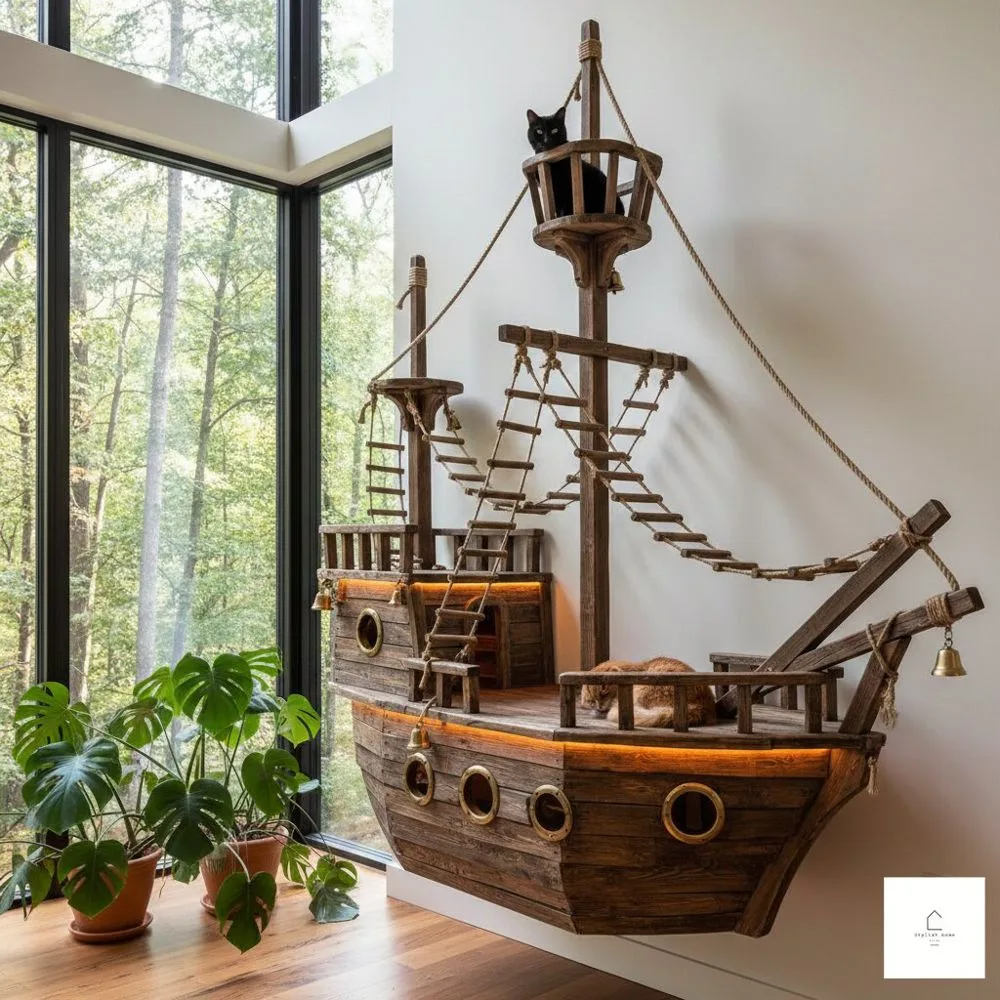
Quality wooden ship cat playground equipment makes the difference between a basic structure and a truly engaging environment. Scratching posts are non-negotiable; cats need appropriate outlets for this natural behavior. Wrap posts in sisal rope, securing it tightly to prevent unraveling. Replace worn sections promptly to maintain effectiveness.
Ramps and stairs provide accessibility for cats of all ages and abilities. Angle ramps no steeper than 45 degrees, and add traction strips or carpet runners to prevent slipping. Stairs should have shallow risers that accommodate short feline legs comfortably.
Hammocks create irresistible lounging spots that appeal to cats’ love of suspended rest areas. Canvas or heavy-duty fabric works well, suspended from sturdy anchor points that support your cat’s full weight plus a safety margin. Position hammocks at various heights to offer choice.
Perches come in numerous styles, from simple platforms to cushioned beds mounted on supports. Vary the sizes and shapes to provide options for different activities. Small perches work for observation, while larger platforms accommodate stretching out for serious napping sessions.
Interactive elements like dangling toys, treat puzzles mounted to the structure, or incorporated tunnels boost engagement. Rotate these features periodically to prevent boredom and maintain novelty. Fresh challenges keep cats mentally sharp and physically active.
Wooden Ship Cat Playground Wall: Maximizing Vertical Space
A wooden ship cat playground wall installation offers a brilliant solution for space-challenged homes. Wall-mounted components create a three-dimensional climbing environment without consuming valuable floor space. This approach works especially well in combination with floor-based elements, creating a complete ecosystem.
Begin with proper wall anchoring. Locate wall studs and use heavy-duty mounting hardware rated for significantly more weight than your cats. Remember that dynamic forces from jumping create stress far beyond static weight calculations. Safety must guide every installation decision.
Design your wall playground to tell a visual story. Create the impression of a ship’s side with portholes serving as pass-through tunnels. Add horizontal walkways representing decks, connected by vertical sisal-wrapped posts that function as masts and scratching surfaces. The result resembles a cross-section of a sailing vessel.
Corner installations maximize space efficiency by utilizing areas often left empty. Wrap shelves and perches around corners to create continuous pathways that encourage exploration. Cats can circuit the room at elevation, surveying their territory from every angle.
Include varied textures on your wall-mounted wooden ship cat playground wall components. Carpet-covered platforms provide traction and warmth, while bare wood offers scratching opportunities. Rope elements add another texture that cats find satisfying to grip with their claws.
Modular wall systems offer flexibility for future adjustments. Mount components with standardized hardware that allows repositioning as your cats age or their preferences change. This adaptability ensures your investment remains relevant throughout your pets’ lives.
Material Selection and Safety Considerations
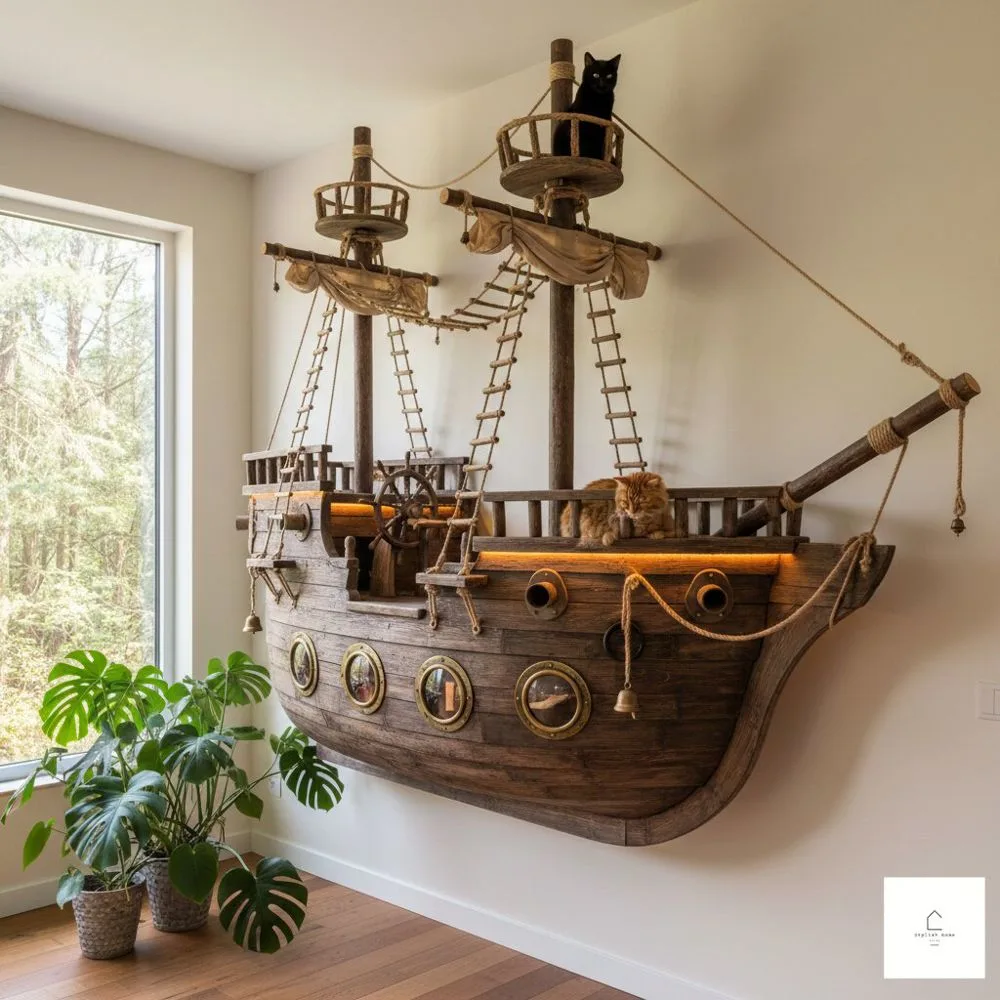
Choosing appropriate materials protects your cats while ensuring longevity. Solid wood outperforms particle board or MDF, which can contain formaldehyde and other harmful chemicals. If budget constraints necessitate engineered wood products, select those with low VOC emissions and seal all cut edges to minimize off-gassing.
Hardware selection matters tremendously. Use wood screws rather than nails, which can work loose over time. Countersink screw heads below the surface and fill holes with wood putty to eliminate sharp edges. Check all fasteners monthly, tightening any that have loosened from vibration and use.
Rope components should be natural fiber sisal rather than synthetic alternatives. Sisal provides superior grip and satisfies scratching urges without releasing microplastics when shredded. Inspect rope regularly for excessive wear, replacing sections before they fail completely.
Avoid decorative elements that present choking hazards or toxic risks. Skip metal bells, plastic beads, or painted details that could flake off and be ingested. Keep the design clean and simple, allowing the natural beauty of wood to shine while maintaining safety.
Test stability rigorously before allowing cat access. Push and pull the structure from various angles, simulating the forces cats generate during play. A properly built wooden ship cat playground should not wobble, tip, or flex excessively under stress.
Maintenance and Upkeep for Longevity
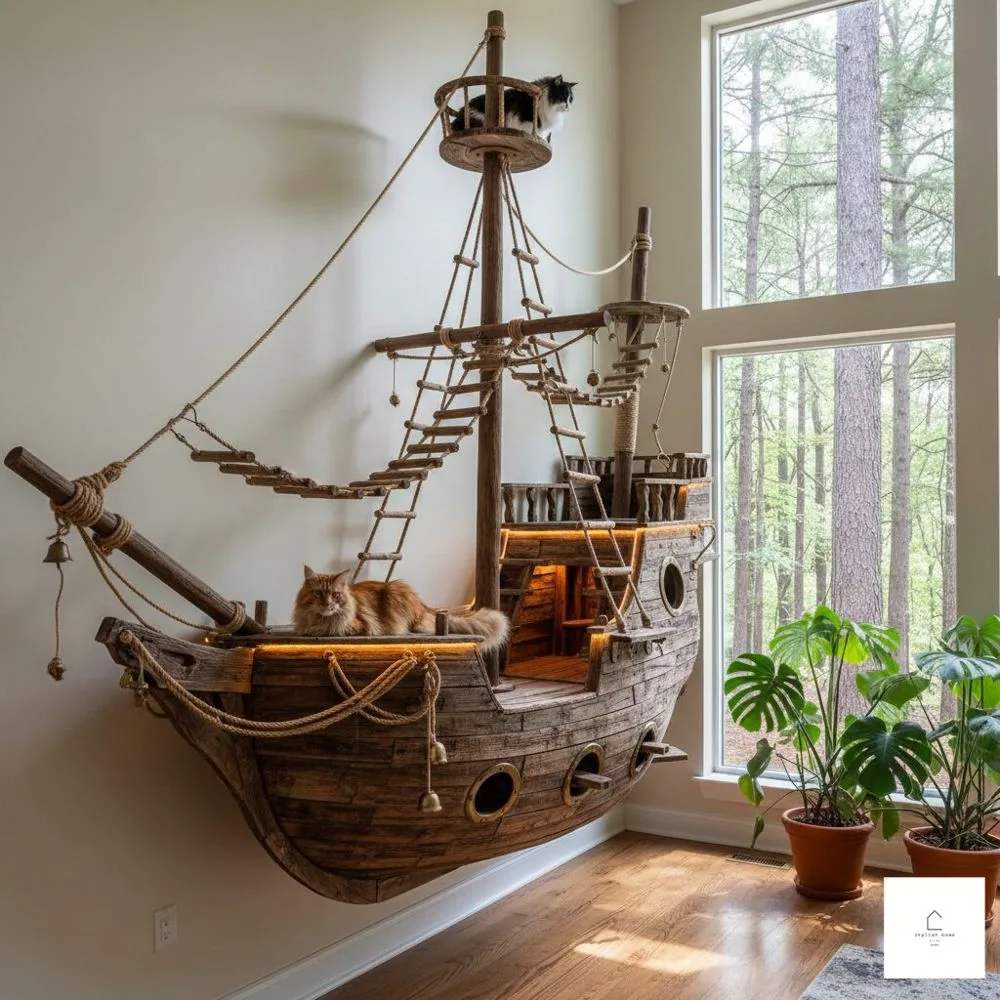
Regular maintenance preserves your wooden ship cat playground’s appearance and functionality. Vacuum platforms and compartments weekly to remove shed fur and litter tracked from paws. This simple habit prevents buildup that can harbor bacteria or attract pests.
Deep clean monthly using pet-safe enzymatic cleaners that break down organic matter and eliminate odors. Avoid harsh chemicals that might leave residues harmful to cats who groom themselves after contact with treated surfaces. Rinse thoroughly and allow complete drying before permitting access.
Inspect the structure during cleaning sessions. Look for splintered wood that needs sanding, loose fasteners requiring tightening, or worn rope sections needing replacement. Address minor issues immediately before they escalate into safety hazards or expensive repairs.
Outdoor structures demand additional attention. Reapply weatherproof sealant annually, timing application for dry weather that allows proper curing. Check for wood rot, especially in areas where water tends to accumulate. Replace damaged sections promptly to maintain structural integrity.
Update soft components like fabric hammocks or cushions when they become excessively soiled or worn. Having backup pieces allows immediate replacement, ensuring your cats never lose access to favorite spots during washing or repairs.
Cost Analysis: Investment vs Value
Understanding the financial commitment helps set realistic expectations for your wooden ship cat playground project. DIY efforts typically cost between one hundred and five hundred dollars depending on size, materials, and complexity. This option maximizes customization while minimizing expense for those with woodworking skills and necessary tools.
Purchasing pre-made wooden ship cat playgrounds ranges from three hundred dollars for modest designs to several thousand for elaborate custom pieces. Evaluate whether the convenience and professional finish justify the premium over DIY construction for your situation.
Consider long-term value when making budget decisions. A well-built wooden structure lasts years longer than cheaper alternatives made from carpet-covered cardboard tubes. Calculate the cost per year of use rather than focusing solely on initial outlay. Durability translates to better value despite higher upfront investment.
Factor in the health benefits that justify playground expenses. Cats with adequate environmental enrichment experience fewer behavioral problems, reduced obesity risk, and better mental health. Veterinary costs avoided through preventive enrichment often exceed playground expenses many times over.
Placement and Integration into Your Home
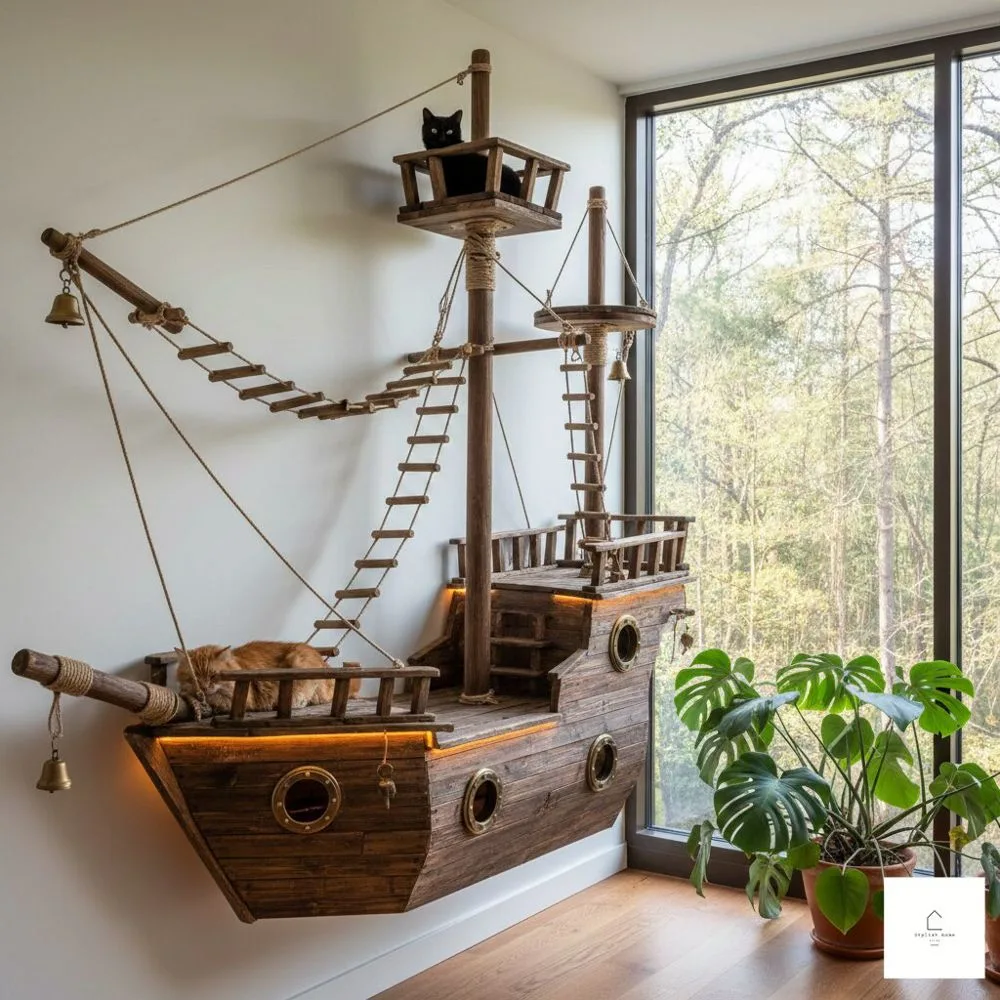
Strategic placement maximizes both cat enjoyment and aesthetic appeal. Position indoor structures where cats naturally congregate, typically near windows with interesting views or in main living areas where family activity occurs. Cats are social creatures who want to participate in household life, even from elevated perches.
Consider traffic flow through your home. Avoid placing large structures in narrow hallways or areas where collisions seem likely. Ensure adequate clearance for doors to open fully and for humans to move comfortably around the playground.
Balance visibility with quiet zones. While cats enjoy watching household activity, they also need retreat spaces away from noise and commotion. Position at least some compartments or perches facing away from high-traffic areas, offering escape options when overstimulation occurs.
Climate control matters for cat comfort. Keep playgrounds away from heating vents that blast hot air directly onto resting cats, and avoid drafty areas near poorly insulated windows. Stable temperatures encourage use and prevent health issues related to temperature extremes.
Integration with existing furniture creates a cohesive look. A wooden ship cat playground can complement nautical-themed rooms or contrast beautifully with modern decor as an intentional statement piece. Choose finishes and colors that harmonize with your overall design scheme.
Multi-Cat Household Considerations
Households with multiple cats require thoughtful playground design that prevents conflicts. Provide more perches than you have cats, ensuring everyone can access elevated spaces simultaneously without competition. Multiple entry and exit points to each level prevent one cat from blocking another’s movement.
Incorporate various hiding spots at different elevations. Subordinate cats need safe retreat spaces where they can escape dominant housemates without being cornered. Enclosed compartments with rear exits offer security and peace of mind.
Distribute resources throughout the structure rather than concentrating them in one area. Place scratching posts at multiple heights and locations, preventing resource guarding that can trigger fights. Similarly, space perches far enough apart that personal space boundaries remain respected.
Observe interactions after installation to identify bottlenecks or conflict zones. Be prepared to modify the layout if certain areas generate tension. Adding alternative pathways or additional platforms often resolves territorial disputes before they become serious.
Training Cats to Use Their New Playground
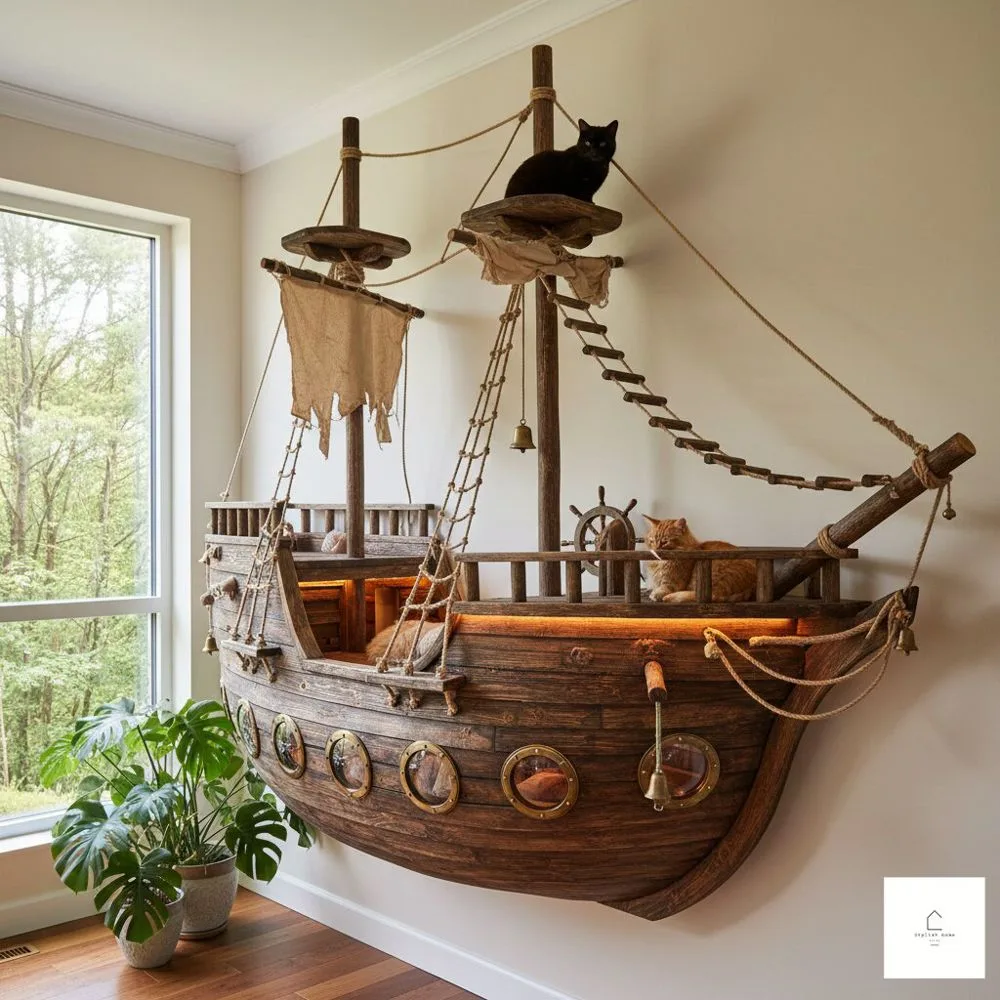
Most cats explore new structures instinctively, but some need encouragement. Make the wooden ship cat playground appealing by sprinkling catnip on platforms and inside compartments. The herb’s scent lures cats onto the structure, creating positive first associations.
Place favorite toys or treats at various levels, rewarding cats for climbing and exploring. As confidence builds, position rewards higher to encourage reaching the uppermost perches. Celebrate their achievements with praise and gentle petting when they reach new heights.
For hesitant cats, create a gradual approach path. Position the playground near furniture they already climb, making it a natural extension of familiar territory. Some cats need several days or even weeks to warm up to major changes in their environment.
Never force a cat onto the playground or punish reluctance to use it. Patience and positive reinforcement work far better than coercion. Each cat acclimates at their own pace; respecting individual personalities builds trust and eventually leads to acceptance.
Play interactive games that incorporate the structure. Use feather wands or laser pointers to lead cats through different sections, teaching them available pathways and features. These play sessions build familiarity while providing bonding opportunities.
Anchoring Your Cat’s Happiness with the Perfect Wooden Ship Playground
Creating a wooden ship cat playground represents more than building pet furniture; it demonstrates commitment to your cat’s physical health and mental wellbeing. Whether you choose a DIY project that showcases your woodworking skills, an outdoor adventure zone that connects your cat with nature, or a space-saving wall installation that maximizes vertical territory, the investment pays dividends in feline happiness and household harmony.
The nautical theme adds whimsy and charm to your living space while fulfilling every instinctual need your cat possesses. From satisfying the urge to climb and scratch to providing safe observation posts and cozy hiding spots, a well-designed ship playground becomes the centerpiece of an enriched environment.
As you embark on this journey, remember that the best playground design reflects your unique situation, available space, budget, and most importantly, your cat’s individual personality. Take inspiration from the ideas presented here, but don’t hesitate to adapt and innovate based on what works for your household.
Your cat’s enthusiastic use of their new wooden ship cat playground, whether they’re scaling the masts like a pirate seeking treasure or napping peacefully in the captain’s quarters, will confirm that you’ve successfully created something special. Set sail on this project with confidence, knowing that the destination is a happier, healthier, and more engaged feline companion who rules their maritime kingdom with whiskers held high.