
There are moments in history when a single idea cuts through everything we thought we knew and rewrites the rules entirely. The electric inflatable car is one of those ideas.
It sounds like something pulled from the pages of a science fiction novel — a vehicle you can deflate, fold, tuck under your arm, and pump back into shape whenever you need it. Yet here we are, standing at the threshold of a design and engineering movement that is making exactly that concept a reality. The electric inflatable car isn’t just a novelty. It’s a statement about how we live, how we move, and how desperately the world needs a smarter, lighter, more human approach to personal transportation.
This isn’t about replacing the car you already love. It’s about filling in the spaces your current car can never reach.
What Exactly Is an Electric Inflatable Car?
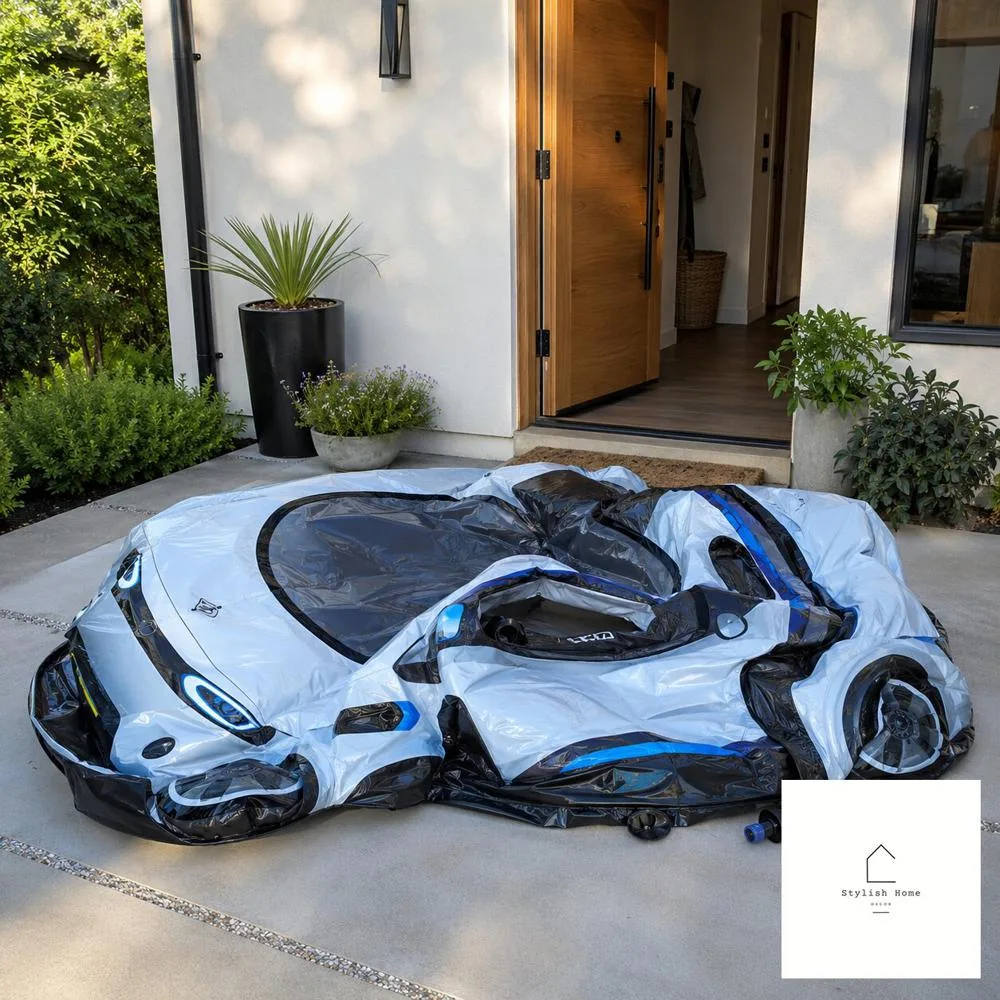
Before we dive into the emotional and practical dimensions of this technology, it helps to ground ourselves in what the electric inflatable car actually is.
At its core, an electric inflatable car is a compact, lightweight personal vehicle built around an air-filled structural framework — similar in concept to the technology used in high-performance inflatable kayaks or architectural air beams — combined with an integrated electric motor and battery system. The result is a vehicle that is both structurally sound and dramatically lighter than any conventional automobile.
The materials driving this revolution are largely advanced polymer composites and reinforced TPU (thermoplastic polyurethane) fabrics capable of withstanding significant pressure and load without compromising flexibility. These aren’t the party balloons of your childhood. These are engineered air chambers designed to absorb impact, distribute weight, and maintain shape under the stresses of real-world travel.
How the Structure Works
The inflatable chassis functions like a series of interconnected pressure chambers. When inflated to operating pressure — typically via an electric air car pump — the structure achieves a rigidity that rivals many lightweight aluminum frames. Deflate it, and the vehicle collapses into a fraction of its operational size, ready to be stored in a bag, a closet, or the trunk of another car.
Electric motors, which are already compact and mechanically simple compared to combustion engines, are ideal partners for this kind of structural design. With no gearbox, no exhaust system, and minimal moving parts, the electric drivetrain integrates cleanly into the inflatable frame without adding unnecessary bulk or weight.
Why the World Is Ready for the Electric Inflatable Car
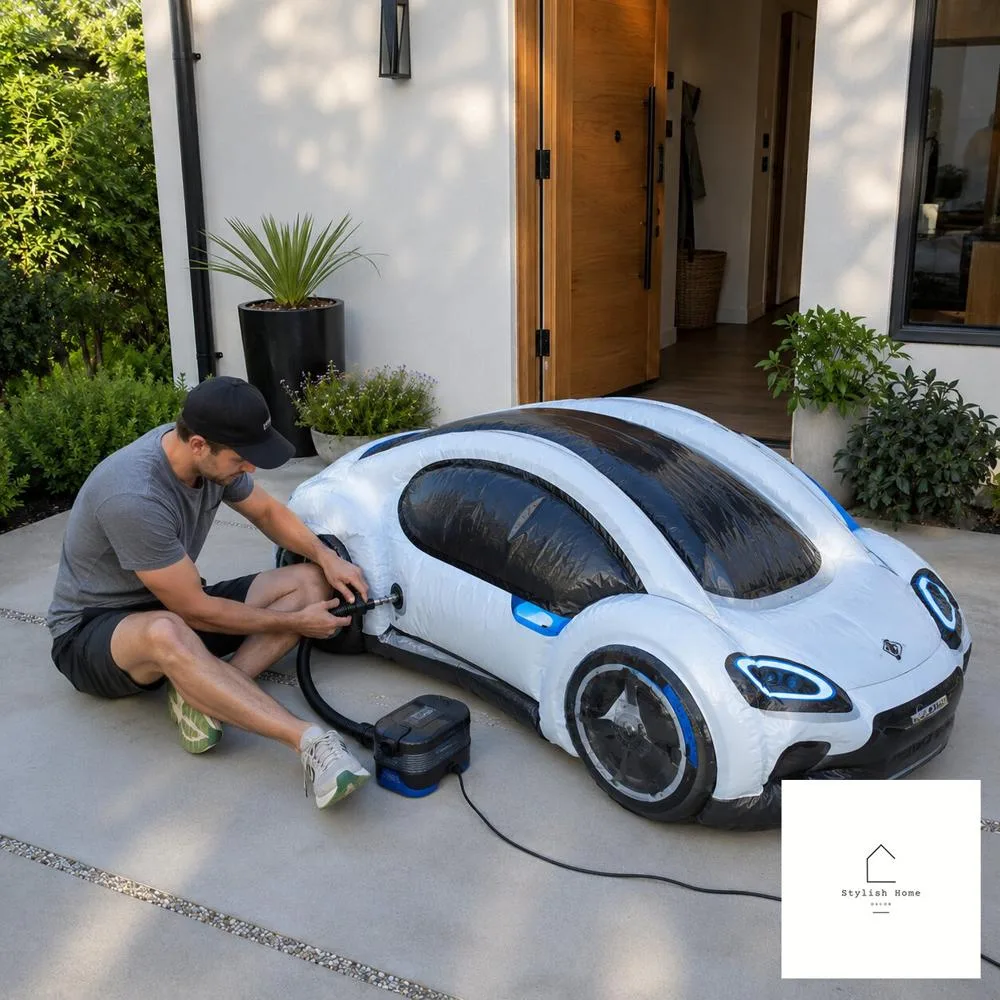
We are living through a mobility crisis hiding in plain sight. Cities are choking on traffic. Parking has become a luxury product. Carbon emissions from personal vehicles continue to be one of the most significant contributors to urban air pollution. And yet, the mainstream automotive industry continues to produce solutions that are essentially heavier, shinier versions of what came before.
The electric inflatable car is a direct and radical answer to that stagnation.
Urban Density Demands Smaller Solutions
The average car spends 95% of its life parked. When it is moving, it often carries just one person. The infrastructure costs of accommodating that reality — roads, parking structures, traffic management systems — are staggering, both financially and environmentally.
An inflatable electric vehicle reclaims space. It parks in a fraction of the footprint. It weighs less, which means less road wear and less energy consumed per mile. In the dense, vertical cities that are home to more than half the world’s population, this isn’t just convenient. It’s transformative.
The Emotional Weight of Lightness
There is something profoundly freeing about the idea of a car you can carry. The electric inflatable car strips away the psychological heaviness that conventional vehicles carry — the maintenance anxiety, the fuel dependency, the sheer immovability of two tons of steel sitting in your driveway. In its place, it offers something rare in the automotive world: a sense of lightness, both physical and emotional.
Imagine arriving at a train station, deflating your vehicle, packing it into its carry case, riding the train, and then inflating it again at your destination. No rental cars. No ride-sharing surcharges. No dependence on infrastructure that may or may not exist where you’re going. Just you, your vehicle, and the freedom to move on your own terms.
The Role of the Electric Air Car Pump: Small Tool, Big Impact
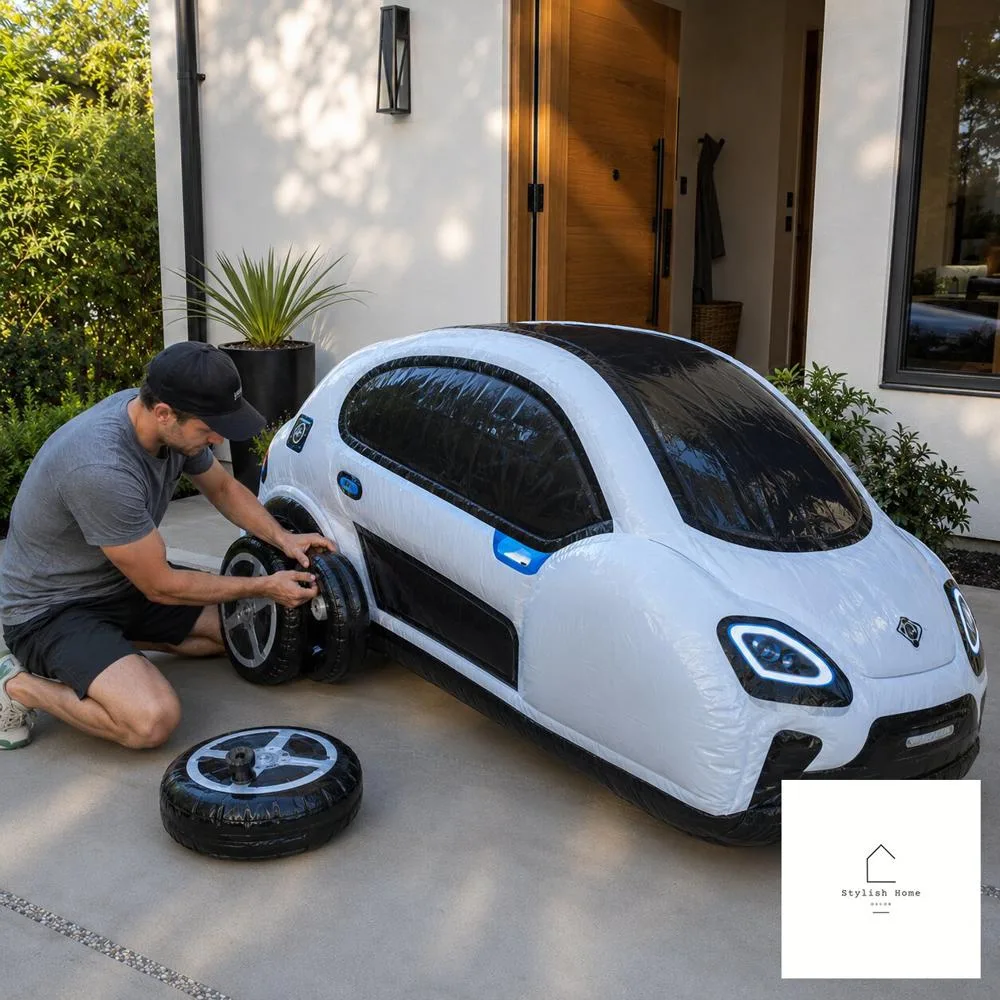
No discussion of the electric inflatable car is complete without celebrating the unsung hero of the entire system: the electric air car pump.
In conventional inflatable products, the pump is an afterthought. But in the world of electric inflatable vehicles, the pump is a critical piece of engineering. Modern electric air car pumps designed for vehicular use are capable of reaching operating pressures far beyond what standard recreational pumps can achieve, often in a matter of minutes, while drawing power from the vehicle’s own battery system or a standard USB-C power source.
What Makes a Great Electric Air Car Pump?
The best electric air car pumps combine:
- High pressure output — typically 10 to 20 PSI or more for structural chambers
- Rapid inflation cycles — full inflation in under five minutes for most designs
- Automatic pressure regulation — sensors that cut off inflation at the precise target pressure
- Portability — compact enough to store inside the vehicle’s carry case
- Dual functionality — capable of both inflation and deflation to speed up the packing process
For users of electric inflatable cars, the pump is the gateway between a folded piece of engineered fabric and a fully operational personal vehicle. It deserves far more attention than it typically receives.
Electric Air Car Jack: Redefining Roadside Assistance
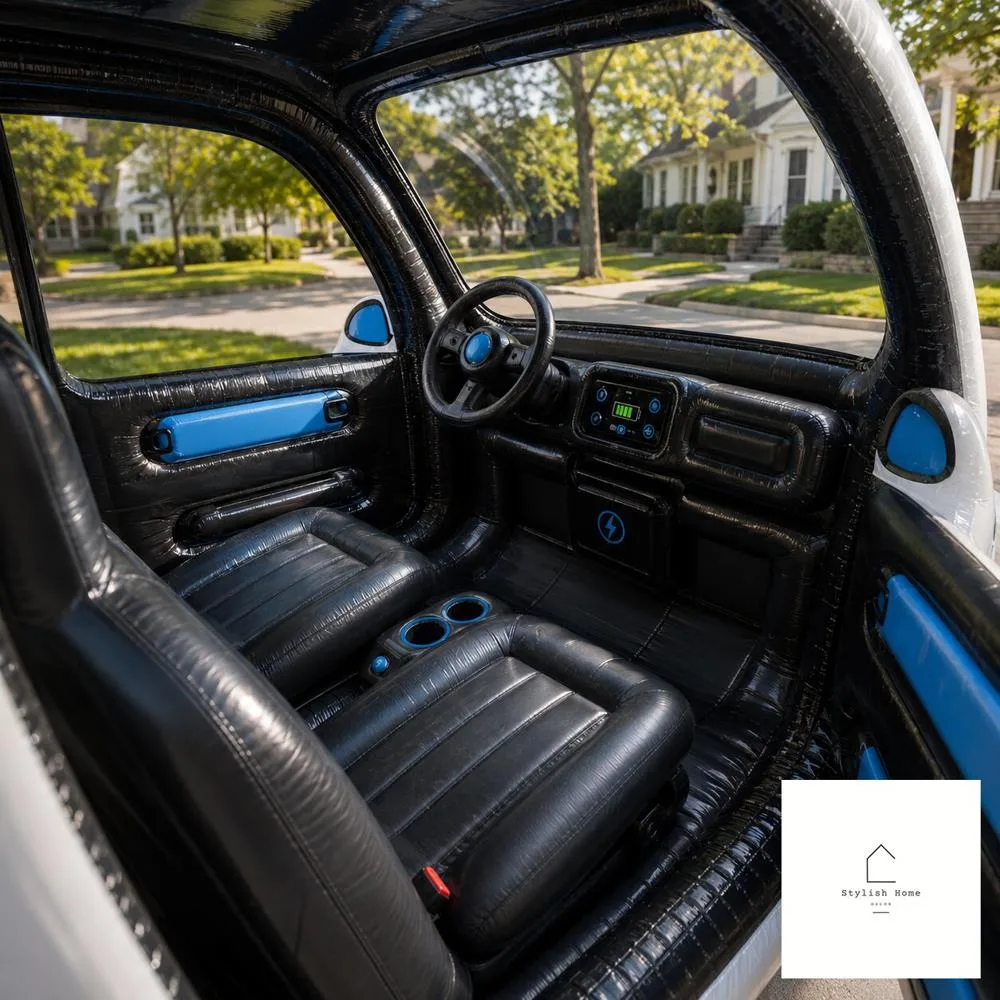
Alongside the pump, the electric air car jack represents another quiet revolution in how we think about vehicle maintenance and emergency support.
Traditional car jacks are heavy, mechanical, and require both strength and a degree of technical confidence to use safely. The electric air car jack — already widely used in conventional automotive contexts and now being reimagined for inflatable vehicle platforms — changes that equation entirely.
How the Electric Air Car Jack Works
An electric air car jack uses compressed air or an electric motor to lift a vehicle with minimal physical effort from the operator. For inflatable electric vehicles, this technology is being adapted to work with the unique structural properties of air-framed chassis, providing stable lifting points without compromising the integrity of the inflatable structure.
Benefits of the Electric Air Car Jack for Inflatable Vehicles
- Lightweight and portable — no more lugging a heavy scissor jack in your trunk
- Safe for air-frame structures — specially designed contact points prevent puncture or deformation
- Fast operation — lifts a vehicle in seconds rather than minutes
- Accessible for all users — eliminates the physical demands of manual jacking
For solo travelers, elderly drivers, or anyone navigating a roadside situation without mechanical expertise, the electric air car jack is not just convenient. It is empowering.
Design, Sustainability, and the Future We Deserve
The Environmental Case for Going Inflatable
The environmental advantages of the electric inflatable car extend well beyond the obvious benefit of zero tailpipe emissions. Consider the manufacturing footprint. Traditional vehicles require enormous quantities of steel, aluminum, glass, rubber, and dozens of other materials, all of which carry significant embodied carbon from extraction and processing.
Inflatable electric vehicles use a fraction of those materials. The polymers and composites involved are increasingly being produced from recycled or bio-based sources. And because the vehicle weighs so much less, its battery can be significantly smaller — reducing the lithium and cobalt demands that have been a legitimate environmental concern in the broader EV transition.
Aesthetic Possibilities Without Limits
Here is where things get genuinely exciting from a design perspective. When you’re not constrained by the rigid geometry of stamped metal body panels, the aesthetic possibilities become extraordinary. Inflatable structures can take organic, flowing forms that are impossible with conventional manufacturing. Curves, spheres, asymmetric shapes — the electric inflatable car opens a design vocabulary that has never been available to automotive designers before.
Some concept vehicles in this space look like something between a soap bubble and a spacecraft. Others take a more minimal, almost architectural approach, treating the vehicle’s form as a study in geometric precision. In every case, the result is something that feels genuinely new — not just a car restyled, but a vehicle reimagined from first principles.
Current Concepts, Pioneers, and What’s Coming
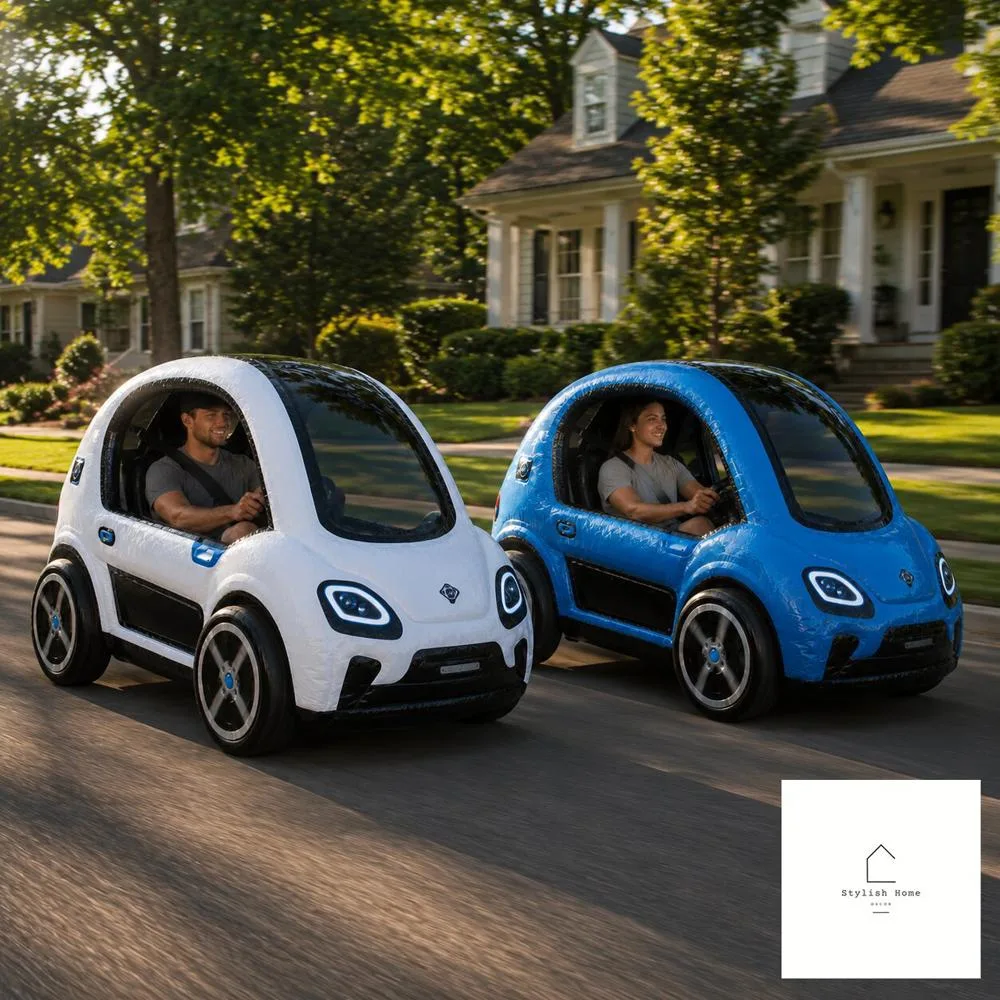
The electric inflatable car remains, for now, largely in the concept and early prototype phase. But the names attached to this movement are serious ones. Academic institutions, independent design studios, and forward-thinking mobility startups across Europe, Asia, and North America have all published credible research and concept work in this space.
Notable explorations include ultra-lightweight urban micro-vehicles designed for last-mile connectivity, emergency response vehicles that can be airdropped into disaster zones and inflated on-site, and recreational personal vehicles designed for off-grid adventure travel where conventional vehicles simply cannot go.
What Needs to Happen Next
For the electric inflatable car to move from visionary concept to mainstream reality, several developments need to converge:
- Material science advances — continued improvement in the strength-to-weight ratio of inflatable structural materials
- Battery miniaturization — smaller, lighter, more energy-dense batteries that suit the weight constraints of inflatable frames
- Regulatory frameworks — safety standards specifically designed for inflatable vehicle structures, which don’t yet exist in most markets
- Consumer education — helping the public understand that “inflatable” doesn’t mean fragile, unstable, or unsafe
Each of these is actively in progress. The timeline is not decades. It is years.
The Human Truth Behind the Technology
At the end of the day, what makes the electric inflatable car genuinely moving — in every sense of the word — is not the engineering. It’s what the engineering means for real human lives.
It means the student in a packed city who can’t afford a car and can’t rely on the bus. The elderly traveler who needs independence without the burden of a full-size vehicle. The adventurer who wants to reach places no road was ever built for. The family in a flood-prone region who needs transportation that can be packed and evacuated in minutes.
The electric inflatable car is not a luxury product. At its most idealistic — and idealism is where all great innovation begins — it is a vehicle built around the actual shape of human need, rather than the inherited assumptions of an industry that hasn’t fundamentally changed its thinking in over a century.
Where Lightness Meets the Future: Final Thoughts on the Electric Inflatable Car Revolution
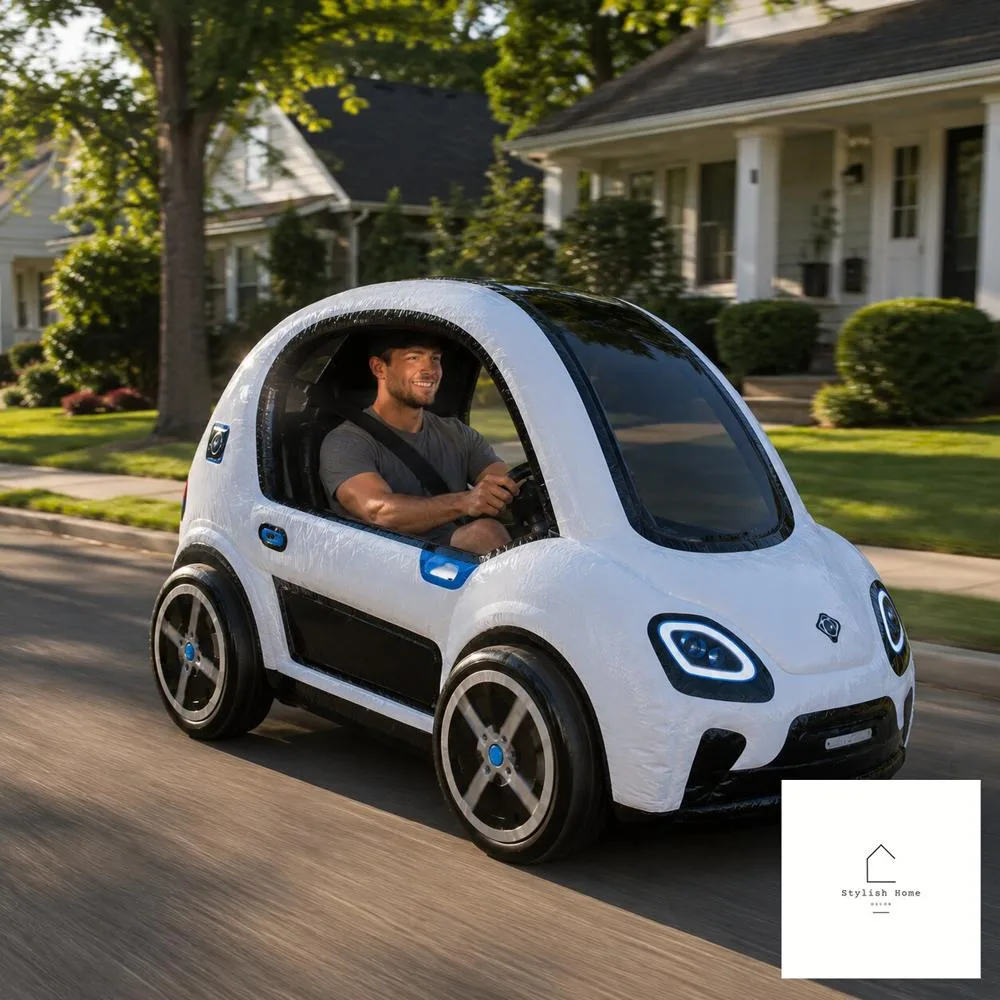
The electric inflatable car is more than a transportation concept. It is a mirror held up to the way we have always assumed mobility must work — heavy, fixed, expensive, and immovable — and it asks, quietly but insistently, whether any of those assumptions were ever actually necessary.
The answer, it turns out, is no. They weren’t.
With the electric air car platform, supported by the precision of the electric air car pump and the practical genius of the electric air car jack, we are watching the outline of a genuinely different future take shape. One that is lighter, cleaner, more beautiful, and more deeply human than anything the last century of automotive design managed to produce.
The road ahead has never looked more open.
Discover More Ideas That Change Everything
What you just read is only the beginning. If this kind of forward-thinking design sparks something in you — that quiet excitement when imagination and practicality finally find each other — then there’s a place built exactly for that feeling.
StylishhomeIdea.net is where artificial intelligence meets aesthetic vision, turning concepts that once lived only in dreams into design destinations you can actually explore. Whether it’s transformative art, statement decor, or digital creations that make you look twice, Stylish Home Ideas exists to bring the extraordinary into your everyday space.
Step inside a world where innovation isn’t just admired — it’s lived.
Facebook: facebook.com/stylishhome
Instagram: @trendingartworks
Pinterest: pinterest.com/trendingartworks
Because your home — and your world — deserves ideas worth dreaming about.